
What Gaelic Football Odds Really Cost in 2026
 Available in US
*Current as of October 30, 2026 · licence claims verified against the Gambling Commission’s public register.*
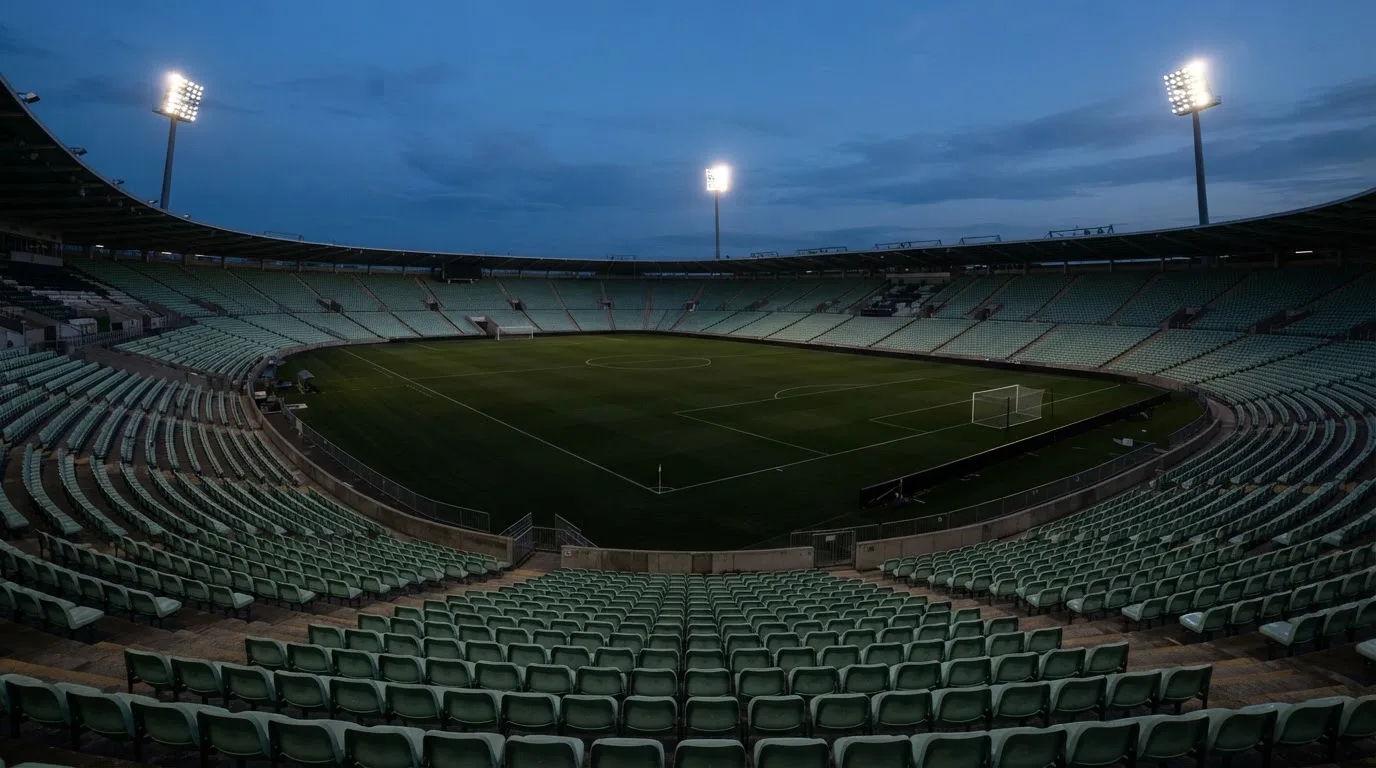
Gaelic football is a small sport on a British betting menu, but its odds behave the way odds behave everywhere else: a slice of every stake stays with the bookmaker, the rest is paid back when the bet wins, and the slice is the only number on the slip that nobody advertises. The tournament calendar runs through summer, with the 2026 All-Ireland Senior Football Championship final played on 26 July 2026 at Croke Park, Dublin, where Mayo beat Kerry 1–20 to 1–17 for their fourth title. Every figure and offer on this page sits against that backdrop — a sport played by teams of 15, on pitches 130–145 metres long, with shots from outside the 40-metre arc worth two points since 2025 — and against the British frame in which every online bettor is verified before their first deposit. Read it as a cost audit before it is anything else.

How a Gaelic football price actually settles when the whistle goes
A Gaelic football match does not produce a 1/0 scoreline the way association football does: a goal is worth three points, a point over the crossbar is worth one, and a final score such as 1–20 reads as 23 points, six of them from the single goal. Two 35-minute halves decide the senior inter-county game, and a bookmaker’s market — most often a draw-no-bet-style handicap or a margin of victory — sits over a scoring system that is its own kind of handicap. Markets tend to settle in one of three ways. A simple match-winner pays on the team with the higher points total, with the draw as a third line. A handicap asks the bettor to attach a spread of points to the favourite before the game and pays the points-adjusted winner. A total asks whether the game goes over or under a points line — the spread for the bookmaker and the line that lets the same fixture reach both sides of the book.
The price on each outcome is decimal by default on British-licensed sites, written as a single number that already includes the stake (3.00 means a £10 stake returns £30, of which £20 is profit). Fractional odds (5/1, evens at 1/1) appear on older slips and on horse racing pages; the conversion is the same arithmetic in every case — fractional a/b reads as decimal a ÷ b + 1, so 5/1 becomes 6.00, 11/4 becomes 3.75, evens becomes 2.00. Where the bookmaker’s menu is fractional, the decimal sits one click away on most sites; the price is identical.
Two prices, one market, one slice that the punter never sees
The header on a Gaelic game reads “Mayo 1.90 / Draw 3.40 / Kerry 1.90” — and that 1.90 / 1.90 with the third outcome’s higher price is the visible part. The hidden part is what the three prices add up to. For an illustrative two-way market at 1.90 / 1.90 (fractional 9/10), the arithmetic behind the slip looks like this: take 1 ÷ 1.90 = 0.5263 for each side, add them, and the sum is 1.0526. The reciprocal is the payout share — 1 ÷ 1.0526 = 0.95 to two decimals — and the margin is 1 − 0.95 = 0.05, or 5 %. That is the slice the bookmaker keeps, in pounds and pence, on every pound staked across the two outcomes before the third line is added. On a two-way market near evens the band runs from roughly 2 % to 8 % for liquid sports; Gaelic football sits at the wider end for most of its calendar because the bookmaker’s handle is thinner than for association football.

What a 5 % margin actually does to a £10 stake
The 5 % lands on a punt of £10 as follows: the bettor pays 50p, in expectation, every time the bookmaker books a balanced line on this market. A winning bet at 1.90 returns £19 (the £10 stake plus £9 profit), and the bookmaker makes money not by losing more often than the bettor — it doesn’t, by construction — but by keeping a 5p cut from every pound routed through both sides. The size of the cut is the difference between this bookmaker and a tighter one: on the same illustrative game at 1.95 / 1.95 the margin falls to about 2.6 %, and on a 1.85 / 1.85 line it rises to roughly 8 %. Prices near 1.90 are the natural resting place for a two-way line with a balanced book, but Gaelic football rarely lines up this neatly — its fixtures tend to draw the favourite a touch shorter and the outsider longer, and the wider the spread, the larger the margin.
A band, not a number, on a single fixture
The figure above is illustrative, not quoted for an event. Research does not carry a price for any specific Gaelic football fixture with a snapshot date; a margin stated in those terms would be selling the reader fiction. The right reading is a band: a tight two-way line on this sport runs from about 3 % to 5 %, an average handicap or total market runs from 5 % to 8 %, and an exotic or small-card market can push higher than that. The difference between 3 % and 8 % on a £10 stake over 100 bets is roughly £50 in expected cost — the same fixture, ten bets at the same stake, and one bookmaker keeps about a fiver more than the other over that run.
Markets a British bookmaker actually offers on Gaelic football
The licensed bookmakers in this list carry Gaelic football under a remote general betting standard (real events) licence, which permits betting on real sporting events under the Gambling Commission’s regime; it does not list which sports must be offered, only which licence category the operator falls under. Each operator’s own menu is the answer, and the menus on these brands range from a few moneylines during the All-Ireland summer to a fuller card through the provincial championships.
The match-winner market and its draw third line
The match-winner is the staple: a three-way line with home, draw and away. On Gaelic football’s smaller fixtures the third line stays expensive — 3.40 or longer is common — because draws happen often enough to be priced, not folded into a draw-no-bet convenience line. A bettor who wants a near-evens price on either side is reading a market where the draw has taken a third of the implied probability, and that is why the headline two-way favourites never sit at 1.50 / 2.50 on a genuine three-way Gaelic game.
Handicap, total points and the goal-point swing
The handicap market is where the goal worth three points earns its keep: a side starts at -3 (minus three points) or +3 (plus three points), the handicap is applied after the final score is converted to a points total, and a goal-heavy win for the favourite clears the spread in a single moment. The total points market is the line that lets the same fixture reach both sides of the book, and it tends to settle inside the high teens to low twenties of points for senior inter-county games — a 1–20 to 1–17 final is 37 points in the points-tally sense. Recent seasons have run hot: the 2026 final alone landed 37 combined points.
The novelty lines and the props that appear on bigger fixtures
Props become useful from the All-Ireland quarter-final stage onward: first goalscorer, player performance markets (a forward’s expected total of points and goals), team to score a goal in each half, and a margin-of-victory line that pays on bands rather than an exact score. The liquidity question matters more here than on the headline lines — a wider margin on a novelty market is the rule, not the exception — and a bettor who wants real price rather than apparent choice should check the listed handicap the moment a player-prop opens, because lines that walk 5 % are common once a fixture is set.
In-play: the same markets, narrower prices, faster clocks
Gaelic football in-play markets are a smaller version of association football in-play: the match-winner line updates goal by goal, the handicap line moves with each score, the total pushes with each point. The depth of the in-play book is thinner than the depth on association football — fewer customers per minute means fewer liabilities the bookmaker wants to carry — but the same market rules apply. A bettor who takes an in-play price between the goals pays the same margin as pre-match on a comparable line; the price is shorter, but the percentage the bookmaker keeps is in the same band.
Live betting and the cash-out window on a Gaelic football match
Live betting on Gaelic football is offered by most of the licensed bookmakers in this set, and cash-out — a feature that lets a bettor settle a bet before the final whistle at a price the bookmaker sets at that moment — travels with the live menu. Both features are positioned as tools for control, and both come with a price tag.
Live betting: how the prices run while the match is unfolding
Live markets on Gaelic football update at the speed of the scoring: every goal shifts the match-winner by a measurable tick (a three-point swing), every point shifts the handicap by one, and the book is rebuilt between scores. The bookmaker’s right to suspend a market is part of its licence conditions: a price can come out of the menu for the ten seconds it takes the book to rebalance after a goal, and the bettor who wanted the price at that moment gets nothing. The wider the lines were pre-match, the less the live book smooths out under in-play pressure, and a Gaelic football game with thin liquidity makes for a stuttering in-play menu — prices pulled, markets suspended, fewer runner lines to back. The honest framing for a reader: live betting is offered, the prices are fair to the bookmaker, and the betting window is narrower than it looks on a snappier sport.
Cash-out: a feature worth naming in the conditions, not on the banner
The cash-out feature is a bookmaker-set price on the bettor’s own position, struck at the moment of button-press. Two things matter. The first is when the button offers itself: some bookmakers pin it for the entire match, some turn it off once a team is past a goal ahead, and a reader who wants a feature should read the terms on that exact point. The second is how the cash-out price is built: a bookmaker paying out 90p in the pound on a position that would return £1 at full-time is taking roughly the same margin twice (once on the bet, once on the cash-out), and a bettor who presses the button at half-time is paying for the convenience of certainty in a sport where the half-time lead is fragile. The cost is real and worth measuring against the win you are locking in.
Predictions, tips and forecasts that don’t move the line by a millimetre
A bookmark full of Gaelic football predictions and tipsters does not move the published line — the price is set by the bookmaker’s risk team, not by the market of casual punters, and that is the framing on which this section rests.
What a “tip” actually is, on this sport
A Gaelic football tip is a forecast, usually in the form of a side, a handicap or a total, occasionally as a score prediction, and almost always paired with a stake suggestion in units. The tip’s value to the reader is not the prediction itself — a future outcome that cannot be known in advance is the textbook shape of a tip that ages badly — but the reasoning attached to it: form, fixture congestion, head-to-head record, the venue, the weather. None of those inputs is a fact, and no tip is endorsed or named below. A reader who follows a tip is following that tipster’s reasoning; on a sport as small as Gaelic football the reasoning is even thinner than it is on association football, because the dataset is shorter and the form cycles are longer.
The strategy frame that this sport rewards
Three habits serve a reader well on Gaelic football, and none of them is a system that wins. First, the bookmaker’s margin is wider on smaller fixtures than on the bigger ones — the All-Ireland final is priced sharply; a fourth-tier club championship fixture is not — and betting on the biggest matches available is the cheaper way to play the sport. Second, the handicap market is where the three-points-per-goal scoring system pushes the line from a near-evens face-off into a meaningful price, and a handicap of -3 or +3 turns a 1.90 / 1.90 match-winner into a 1.85 / 1.95 line that costs the bettor less in margin. Third, the in-play menu is thin, and a reader who waits for the live price rather than the pre-match one is buying a smaller margin of edge against a smaller field of customers.
Why the line moves, briefly
The line moves when the bookmaker’s risk team sees weight on one side and shortens it, when team news lands (an absent forward shifts the headline price by a measurable amount), when weather moves (an open Croke Park in December is a different game from the same fixture in August), and when stakes come in late from sharper customers. None of those is a tip; all of them are pieces of information a tip might have used. The cheapest way to read the price is the way a bookmaker sets it, and the cheapest way to think about a tip is to take it for the reasoning and ignore the stake suggestion.
Reading the betting market from the edge of a price
A betting market is a band of liability the bookmaker is willing to hold across the outcomes of an event. The size of that band is the bookmaker’s margin, and the size of the slice it keeps on every pound is the difference between one operator and another on the same fixture.
Singles, doubles, trebles and accumulators on a Gaelic football card
A single is one bet on one outcome. A double is two selections, both must win, and the price multiplies (1.90 × 1.90 = 3.61). A treble is three, and an accumulator (or “acca”) is four or more; the price accumulates per leg, and so does the implied probability of winning — a five-fold acca at 1.90 per leg is priced at 24.76, but the implied probability of all five landing is roughly 4 %. The bet is fun to place and more common than the single on this sport, because accas are the format in which promotions (price boosts, acca insurance, free-bet offers tied to a four-fold) are sold. The bookmaker’s margin on an acca is the sum of each leg’s margin, and a five-fold with each leg at a 5 % margin carries roughly a 25 % total margin — the long-priced ticket is the higher-margin ticket.
Each-way and the two-stake structure
Each-way bets are a horse-racing staple but appear on selected Gaelic football ante-post markets (a season-long outright on the All-Ireland winner, for example). The stake is doubled — one stake for the win, one stake for the place — and the payout at the place end varies by the operator’s place terms. On a sport with as few runners as Gaelic football outrights, the place terms often pay only on first and second, and the place price is the headline price cut by a fraction. A £10 each-way bet at 25/1 is £20 in stakes, with the win leg paying only if the side wins outright and the place leg paying on top if it places.
Spread betting, financial and otherwise
Spread betting is a separate product on Gaelic football: a bookmaker such as Sporting Index quotes a spread (the range in which it expects a total or a margin of victory to land), the punter decides whether the result lands above or below, and the winnings are stacked by how far past the spread the result landed. Two facts matter. First, the spread-betting bookmaker’s liability is unbounded on a single game — a heavy winning margin pays out many multiples of the stake — and Sporting Index’s own site spells out that spread betting losses can exceed the deposit. Second, financial spread betting on other markets (indices, FX, commodities) is regulated by the Financial Conduct Authority, not the Gambling Commission, and the two regimes do not interchange. A reader who buys a sport spread on Gaelic football is buying an FCA-supervised product on the same FCA-supervised account.
The British legal frame for betting on Gaelic football in 2026
Gaelic football sits inside the British betting regime without a sport-specific carve-out. The Gambling Commission licenses the whole market; the operator holds the licence; the customer pays no tax on winnings. Three points drive the rest of this section.
The Gambling Commission and the public register
The Gambling Commission (UKGC) is the regulator for gambling in Great Britain, sponsored by the Department for Culture, Media and Sport and operating under the Gambling Act 2005. The Commission’s public register is the official list of every operator licensed to take remote bets from British customers, and it is searchable by business name, trading name, domain or account number. Every brand in this comparison is on that register against a remote general betting standard (real events) licence, which permits betting on real sporting events under the Commission’s licence conditions and codes of practice (the LCCP).
The point-of-consumption rule
Since 2014, an operator serving customers in Great Britain needs a Gambling Commission licence wherever the operator itself is based. A Curaçao, Maltese or Gibraltar licence is not a substitute for the GB licence, and an operator on a foreign licence alone cannot lawfully take bets in GB at the point of consumption. The licensed set in this article all hold GB licences; unlicensed brands do not appear.
What the licence gives, and what it costs
A GB licence is a hard frame on the operator: name, address and date of birth verified before the first deposit (since May 2019), no credit cards (banned since April 2020), bonus wagering capped at 10x (since 19 January 2026), GAMSTOP enrolment for online play, and a financial vulnerability check in operation once deposits minus withdrawals cross £150 in a rolling 30 days (in force since 28 February 2025). These are not editorial preferences; they are part of the Commission’s licence conditions. The trade-off is real: a licensed punter pays those conditions in friction — a sign-up photo of an ID, a 30-day deposit tally, a refusal of credit-card funding — in exchange for the protection of the British regime. An unlicensed site offers anonymity and friction-light signup, but no GAMSTOP coverage, no Commission complaints route, no ADR body for disputes, and no recourse if funds are withheld. Neither is “the safe choice” by default.
What the player pays: nothing on winnings
Betting winnings in Great Britain are not taxed in the player’s hands. General Betting Duty is the operator’s tax, currently 15 % of gross profits on most bets, with a separate remote betting rate of 25 % applying from 1 April 2027. The player pays neither duty nor levy; a professional gambler should ask HMRC or an adviser, but the casual bettor’s winnings arrive gross. Whether operators pass the duty on through tighter odds is not established and the page does not claim it.
Responsible gambling: the limits a GB-licensed bookmaker has to give a player
A GB-licensed bookmaker is bound by the LCCP’s social responsibility code to offer a set of player-protection tools. None of the limits is optional, and none of the optional extras is on the regulator’s list by accident.
GAMSTOP, the national self-exclusion scheme
GAMSTOP is the multi-operator self-exclusion scheme covering online gambling in Great Britain. Every GB-licensed online operator is a member. A punter can register a six-month, one-year, five-year, or five-year-with-auto-renewal exclusion, and once the minimum period ends the exclusion stays in place for a further seven years unless the customer asks GAMSTOP to remove it. GAMSTOP covers online sites and apps; the betting shops use a separate self-exclusion service. A punter who has registered with GAMSTOP cannot deposit or bet on any operator in this comparison while the exclusion is live.
The financial vulnerability check
The financial vulnerability check (LCCP condition 3.4.4) took effect on 30 August 2024 and was extended in scope from 28 February 2025: when a customer’s deposits minus withdrawals cross £150 in a rolling 30 days, the operator runs a public-record check against bankruptcy and county-court judgment data. It is not an income check and not a credit-reference check. The check is meant to surface punters who are gambling beyond their means without needing their payslips. A punter hit by the check is asked to provide some financial information before further deposits clear.
Deposit limits
Operators must offer a gross deposit limit on a fixed time frame under the Remote Technical Standards (RTS 12). The first changes to deposit-limit handling applied from 31 October 2025; a second phase was postponed to 30 September 2026, and the live status of that second phase is not established. The deposit limit is the customer’s choice — there is no state-set maximum — and a customer who asks for a £50 weekly limit will hit a wall at £50 even if the operator is willing to take more.
Help, when self-management is not enough
GamCare runs the National Gambling Helpline. GambleAware funds treatment and education across Great Britain. The NHS runs specialist gambling clinics. Gamblers Anonymous provides peer support. The licensed bookmakers in this comparison link to these services from their safer-gambling pages. None of the links is a substitute for asking, and the help is free and confidential.
Crypto, e-wallets and the means of payment at a licensed Gaelic football bookmaker
The licensed bookmaker list does not anonymise a customer. Identity is verified before the first deposit, and the source-of-funds question comes at higher spends. Crypto sits inside that frame in a particular way on a British licence: a deposit in Bitcoin is a deposit in pounds once it has cleared, the same source-of-funds rules apply, and the operator carries the same AML obligations regardless of the rail.
What a debit card and an e-wallet do
A debit card deposit is the cheapest, fastest and most-used rail at British-licensed bookmakers. E-wallets (PayPal, Skrill, Apple Pay, Trustly, Paysafecard) are widely accepted; the minimum deposits vary by operator, and DAZN Bet’s published minimums run from £5 by debit card, Apple Pay, Paysafecard, Trustly and Skrill to £20 by PayPal. None of the operators in the licensed set charge a deposit fee on the standard rails.
Crypto at a licensed operator
Crypto acceptance at a GB-licensed bookmaker is not established in research; the standard practice on these brands is fiat-only deposits, with the deposit rails above listed in each operator’s own terms. A punter who buys crypto on an exchange, transfers it to a wallet, and tries to deposit into a GB-licensed account is likely to hit either a blocked rail or a request for source-of-funds documentation at onboarding. The reader’s right framing: licensed GB operators run on pounds, and a crypto-funded deposit routes through an exchange’s conversion rather than directly into the betting account.
The credit-card ban
Credit cards cannot be used for gambling in Great Britain (since 14 April 2020), and that ban extends to credit-card-funded e-wallet top-ups — funding an e-wallet with a credit card and then transferring to the betting account is still a credit-funded deposit. Debit cards are not covered by the ban; bank-based rails (Open Banking, Trustly) are not covered; e-wallet balances funded by debit are not covered. A punter who wants to manage spend by rail is in the wrong room: the limit is the deposit limit on the account, not the card.
Bonus offers on Gaelic football: what they cost the punter
The licensed bookmakers in this comparison each run a sports welcome offer; the offers are described here as each operator’s own terms state them and the cost of clearing them is described from the wagering rules those terms impose. No promo code appears on this page.
The mechanics of a sports free-bet offer
A sports free-bet offer is two things at once: a stake the operator gives back, and a set of clearing conditions the operator imposes. BetUK’s published sports welcome offer runs as four £10 free bets (two football accumulators of 4+ selections and two multiples of 2+) on a £10+ deposit and a first bet within 7 days, valid for 7 days, with opt-in required. Betboro’s published sports welcome offer is a 100 % matched free bet up to £25 on the first qualifying wager, with a debit-card deposit of at least £10, a first bet of £5 to £25 with at least three selections each at 3/5 (1.60) or higher. Each offer’s headline is the top of the page; the clearing terms are the bottom of the page.
What the clearing terms cost
A free bet whose stake is not paid back with a win is the standard structure on these offers, and the value of that free bet is the win amount discounted by the edge of the market it is placed on. For a £10 free bet at 1.90 (1/1 in fractional terms shorter than evens) on a market with a 5 % margin, the average value is roughly £10 × (1.90 − 1) ÷ 1.90 × 0.95, or about £4.50 — the punter wins on average half the headline face value of the ticket. BoyleSports’ published sports welcome is £20 in free bets when a £10 bet is placed (€30 in free bets for a €10 bet for Irish players), and the same arithmetic applies to the value of that £20 face value. The bettor who treats a free bet as a £20 stake is overpaying for a £9-ish edge.
The wagering cap on bonuses (since 19 January 2026)
The Commission’s bonus rules in force since 19 January 2026 cap wagering requirements on bonuses at 10x — a £10 bonus at 50x wagering needs £500 of bets to clear; under the cap, no more than £100 in wagering is needed on a £10 bonus. Mixed-product promotions — an offer that requires gambling on more than one product type (a football bet paired with a free-spin, say) — are banned. A welcome offer that gives bonus funds in pounds and asks for them to be turned over ten times on a single product is the format the Commission now permits; a reader who sees a 35x requirement is being shown an offer from a non-GB-licensed brand or an offer no longer legal in GB.
The deposit-gated structure
Most welcome offers in this set are deposit-gated: the bonus value depends on the deposit, the deposit must clear via a permitted rail, and the first bet must be placed within a window. Octobet’s published sportsbook welcome is 50 % back as a free bet up to £50, with a £10 casino bonus alongside; the structure is a deposit-gated package with a sports leg and a casino leg. A punter who values the sports leg alone reads that 50 % back as a free bet, with the cap framing the maximum win.
What an enhanced odds, acca insurance and a price boost really cost
Three promotions sit beside the welcome offer and earn their keep by feel rather than by arithmetic. An enhanced odds offer raises the headline price on a single outcome for a short window (a Manchester derby at 5/1 instead of 4/1, a Grand National favourite at 10/1 instead of 8/1); the stake is usually paid back in free bets or bonus funds, and a winning enhanced odds bet returns less than the headline implies if the free-bet structure is the settlement. An acca insurance offer refunds a stake (as a free bet, not as cash) if one leg of an accumulator loses; the refund is the stake of the failed acca, and the value of that refund is the free-bet arithmetic above. A price boost raises the price on a single leg or an accumulator, and the settlement rule determines whether the stake is paid back or paid back as bonus. None of these is a margin-cutting mechanism; all of them are a different sale on the same offer.
The operators reviewed
Ten brands sit on the registered GB-licence list and are reviewed below. Each name carries the gambling comparison’s standard verdict: what the operator does well, what its offer looks like in pounds, and which reader it suits.
Ladbrokes — the long-running big-menu brand
The Ladbrokes sports app is published by Entain Operations Limited and is rated 4.66 from 101,255 ratings in the GB App Store. The licence is held by LC International Limited under Commission account 54743, with both remote general betting standard (real events) and remote betting intermediary (exchange) categories on the register. Ladbrokes is the kind of operator a bettor finds when they want a familiar name with a long menu, a well-stocked racing card and a deep in-play football book. Gaelic football appears during the summer; the menu is unlikely to be deep off-season. A reader who wants the familiar shop-floor feel with a GB-licensed exchange under the same roof gets it here; a reader looking for a sharp Gaelic football price does not get a special reason to pick Ladbrokes over any other big-menu brand.
Paddy Power — the punchy headline-price brand
Paddy Power’s sports app carries football, horse racing, boxing, rugby, tennis, golf, darts, snooker and F1, and the licence is held by PPB Counterparty Services Limited under Commission account 39439. Paddy Power is positioned as the brand with the headline-grabbing price and the cheeky social marketing, and the menu covers Gaelic football during the All-Ireland summer. A reader who values a punchy headline price and a recognisable brand gets the standard Paddy Power experience here; a reader who wants a specialist Gaelic football menu will look elsewhere.
DAZN Bet — the streaming-aligned brand
DAZN Bet takes deposits from £5 by debit card, Apple Pay, Paysafecard, Trustly and Skrill, and from £20 by PayPal, with no processing fees, under the licence held by DZBT Limited against Commission account 48756. DAZN Bet is positioned as the brand aligned with the DAZN streaming subscription, which makes it a natural second-screen option on the sports it covers. The seamless integration with the streaming service makes it an obvious choice for regular DAZN subscribers, particularly those who appreciate its low minimum deposit thresholds.
BetUK — the football-shaped welcome
BetUK’s published sports welcome is four £10 free bets on a £10+ deposit and a first bet within 7 days, structured as two football accumulators of 4+ selections and two multiples of 2+, with a 7-day free-bet validity and opt-in required. The licence is held by LeoVegas Gaming PLC under Commission account 39198. The football-shaped welcome lands well for a reader who bets on football accas regularly and less well for a reader who bets on singles; the 7-day window on both the qualifying bet and the free bets shortens the runway. A football-focused reader should weigh the welcome against its clearing; a reader of Gaelic football singles has the offer’s football-shape working against them.
Sporting Index — the fixed-odds-and-spread brand
Sporting Index lets customers switch between fixed odds and spread betting, with in-play betting, a Bet Builder for football, auto cash-out and Multi-Markets — a feature set wider than the standard fixed-odds book. The licence is held by Sporting Index Limited under Commission account 27343, and the financial side of the offering is regulated by the FCA as well as the Commission. The Irish reader on the same cross-border brand gets the Irish version. A punter who wants both fixed odds and spread betting in one place will find it here, though the added complexity may be unnecessary for those who stick strictly to fixed-odds markets.
BoyleSports — the Irish heritage under the GB licence
BoyleSports’ published sports welcome for UK players is £20 in free bets when a £10 bet is placed, with €30 in free bets for a €10 bet for Irish players. The licence is held by Boylesports Enterprise under Commission account 39469. BoyleSports is positioned as the Irish heritage brand with a strong racing card, and Gaelic football sits in that card naturally. This Irish heritage brand is well-suited for those following the racing card, though Gaelic football fans should inspect the depth of its summer markets before committing.
Lottoland — the lottery, casino and sports combo
Lottoland’s UK app combines casino, lottery betting, sports betting and scratchcards, with the licence held by EU Lotto Limited under Commission account 38991. Lottoland is positioned as the brand where a lottery-first reader can also place a sports bet without opening a second account; the menu on Gaelic football may be thin outside the All-Ireland peak, because the sports book is not the headline product. Those seeking a one-stop shop for lottery and casino play alongside their sports bets will appreciate the setup, but sports-focused bettors might prefer a dedicated bookmaker.
Octobet — the sportsbook-focused new entrant
Octobet’s published sportsbook welcome is 50 % back as a free bet up to £50, with a £10 casino bonus alongside, and the licence is held by Octopus Game Limited under Commission account 62545. The 50 % match is on the lower end of the matched-deposit scale, but the sportsbook focus means a deeper menu than the lottery-combo brands. While its sportsbook-first approach is refreshing, those who desire a broader range of casino or lottery products might find alternatives elsewhere more fulfilling.
Kwiff — the trademarked new-wave brand
Kwiff is licensed by the UK Gambling Commission under the trademark operated by Spryme Ltd, with a 17+ App Store age rating, and the licence is held by Eaton Gate Gaming Limited under Commission account 44448. Kwiff is positioned as the new-wave brand with a marketing-led price-boost experience, and the menu on Gaelic football is offered in season. This brand offers a distinct, boost-heavy experience that appeals to those after something different; traditionalists may still prefer the stability of established giants like Ladbrokes.
Betboro — the multi-selection free-bet brand
Betboro’s published sports welcome is a 100 % matched free bet up to £25 on the first qualifying wager, requiring a debit-card deposit of at least £10 and a first bet of £5 to £25 with at least three selections each at 3/5 (1.60) or higher. The licence is held by Webmedia Development N.V. under Commission account 44181. The multi-selection requirement shortens the menu on a single bet to sports with at least three events; Gaelic football matches can be combined into a three-fold acca, but the welcome’s structure is acca-shaped. A punter who bets on multi-selection accumulators gets the welcome; a punter who bets on singles has the offer’s structure working against them.
A side-by-side look at how these operators frame their offer and licence
The table below pairs each reviewed operator with the licence line that authorises its GB remote business and a one-line summary of the key fact on its published terms. The two are not the only things that matter, but they are the things a reader should check first.
| Brand | Gambling Commission remote licence | What the operator’s own terms state on the headline offer |
|---|---|---|
| Ladbrokes | 054743-R-330863-014 (LC International Limited) | App rated 4.66 from 101,255 ratings in the GB App Store |
| Paddy Power | 039439-R-319330-013 (PPB Counterparty Services Limited) | Sports app covers football, horse racing, boxing, rugby, tennis, golf, darts, snooker and F1 |
| DAZN Bet | 048756-R-327274-019 (DZBT Limited) | Deposits from £5 (debit card, Apple Pay, Paysafecard, Trustly, Skrill); £20 by PayPal; no processing fees |
| BetUK | 039198-R-319450-029 (LeoVegas Gaming PLC) | Four £10 free bets on a £10+ deposit and a first bet within 7 days; 7-day validity |
| Sporting Index | 027343-R-308898-011 (Sporting Index Limited) | Fixed-odds and spread betting on one account, with Bet Builder, auto cash-out and Multi-Markets |
| BoyleSports | 039469-R-319383-025 (Boylesports Enterprise) | £20 in free bets on a £10 qualifying bet (£30 in free bets for €10 for Irish players) |
| Lottoland | 038991-R-319408-020 (EU Lotto Limited) | UK app combines casino, lottery betting, sports betting and scratchcards |
| Octobet | 062545-R-337248-006 (Octopus Game Limited) | 50 % back as a free bet up to £50, plus a £10 casino bonus |
| Kwiff | 044448-R-323408-017 (Eaton Gate Gaming Limited) | Operated under the trademark held by Spryme Ltd, GB-licensed, 17+ App Store age rating |
| Betboro | 044181-R-324363-007 (Webmedia Development N.V.) | 100 % matched free bet up to £25, £10 debit-card deposit, first bet £5 to £25 with three-plus selections at 1.60 or higher |
Each licence number on this table can be verified against the Commission’s public register, which is the whole test of whether a brand holds a GB licence. A register lookup takes longer than the marketing claim, but it is the only test.
Putting the cost frame around an offer the marketing makes
The arithmetic on a Gaelic football offer stops one step before the headline. Take BoyleSports’ £20 in free bets on a £10 qualifying bet: the headline is £20, the value is roughly £9 in expected edge on a market with a 5 % margin, and the difference is what the reader is paying for the chance to win the bigger headline. The same frame applies to a £10 free bet on BetUK (£10 face value, roughly £4.50 expected edge at 1.90), and to Betboro’s £25 face-value matched free bet (roughly £11.25 at the same price). Each headline is double the expected value, because each offer is sold on the face value, not the expected value, and the difference is the cost of taking the offer.
The honest reading of a welcome offer on this comparison is what it would cost the same reader to forgo it: a punt on the same market at the same stake, made without the offer, costs the same in margin but saves the friction of clearing. A reader who bets infrequently has the welcome’s clearing requirements pushing them toward more bets than they would normally place, and the marginal bets are the highest-margin bets in their account. A reader who bets frequently has the welcome’s window (7 days on the qualifying bet, 7 days on the free bet) shaping the run rather than the season. Both readers pay the welcome’s cost; the question is whether the cost is worth the run it imposes.
The two payment traps the licence prevents, but the reader can still fall into
The first trap is the credit card. Credit cards have been banned for gambling in Great Britain since 14 April 2020, including credit-card-funded e-wallet top-ups, and a punter who tops up an e-wallet with a credit card and then transfers to the betting account is still funding the account with credit. The ban is enforced by the operator; a punter who tries it twice has a closed account. The right read: debit cards, bank-based payments, and e-wallet balances funded by debit are the permitted rails.
The second trap is the bonus condition. The Commission’s wagering cap of 10x (in force since 19 January 2026) and the ban on mixed-product promotions apply to every welcome offer on the licensed set, and a punter who sees a 35x requirement is being shown a non-licensed offer. The right read: a GB-licensed welcome has a single product, a 10x cap, and a clear settlement rule on whether the stake is paid back in cash, free bets or bonus funds.
Frequently asked questions
How does someone bet on Gaelic football?
Choose a GB-licensed bookmaker from the Commission’s register, register an account, complete the verification (name, address, date of birth) before the first deposit, deposit by a permitted rail (debit card, bank transfer, e-wallet; no credit card), pick a Gaelic football fixture, place a bet on the market you want (match-winner, handicap, total), and the bet settles after the whistle on the points-as-points basis the market quoted.
How can a reader check that a bookmaker holds a Gambling Commission licence?
Go to the Commission’s public register, search by the operator’s business name or the licence number, and confirm the licence categories on the register cover the kind of betting the operator offers. Every brand in this comparison holds a remote general betting standard (real events) licence under the licence holder named on the register, and the licence number is the verification.
How is the return on a bet worked out from the stake and the odds?
The return on a winning bet is the stake multiplied by the decimal odds: a £10 stake at 1.90 returns £19 (the £10 stake plus £9 profit). For a combination bet (an accumulator), the prices multiply across the legs (1.90 × 1.90 = 3.61 for a double), and the same formula applies to the multiplied price.
What is the bookmaker’s margin, and how does it show in the odds?
The margin is the slice of every pound staked that the bookmaker keeps, regardless of which outcome wins. It is calculated from the implied probabilities of all outcomes (the reciprocal of the decimal odds), which add up to more than 100 %; the surplus is the margin. On an illustrative two-way market at 1.90 / 1.90, the implied probabilities are 52.63 % each, summing to 105.26 %, meaning an overround of 5.26 % and a margin of 5.0 %.
How do fractional odds such as 5/1 convert to decimal odds such as 6.00?
The conversion is the same arithmetic every time: divide the first number by the second, then add 1. Fractional 5/1 reads as 5 ÷ 1 = 5, plus 1, which is 6.00. Fractional 11/4 reads as 11 ÷ 4 = 2.75, plus 1, which is 3.75. Evens (1/1) reads as 1.00 ÷ 1.00 = 1, plus 1, which is 2.00.
Which tools for controlling play does a licensed bookmaker have to offer?
A GB-licensed bookmaker has to offer GAMSTOP for self-exclusion (six months, one year, five years, or five years with auto-renewal), a deposit limit on a fixed time frame, timeouts and reality checks, a financial vulnerability check once deposits minus withdrawals exceed £150 in a rolling 30 days, and links to GamCare, GambleAware and the NHS gambling clinics. Safer-gambling is a licence condition rather than an optional extra, and the tools vary by operator only in their format, not in their presence.
Rugby, cricket & Gaelic – Icehockeyoddshub.com
Content created by the «Icehockeyoddshub.com» team
