
Football betting tips: the real cost of a tip, the price, and the offer behind it
 Available in US
A tip is not a prediction. It is a price the bookmaker has already built a margin into, attached to a market the bettor is supposed to be able to read. A “free bet” is not free, an “enhanced price” is enhanced against a base the bookmaker chose, and a welcome offer is a small set of bets the house has decided will, on average, pay it back. This guide is built around that single idea: cost — what a tip, an offer and a market charge the person paying for them in 2026. It does not name winners and never will. The job here is to explain how a price is made, what is taken out of it before the bettor sees it, and what an offer asks back.
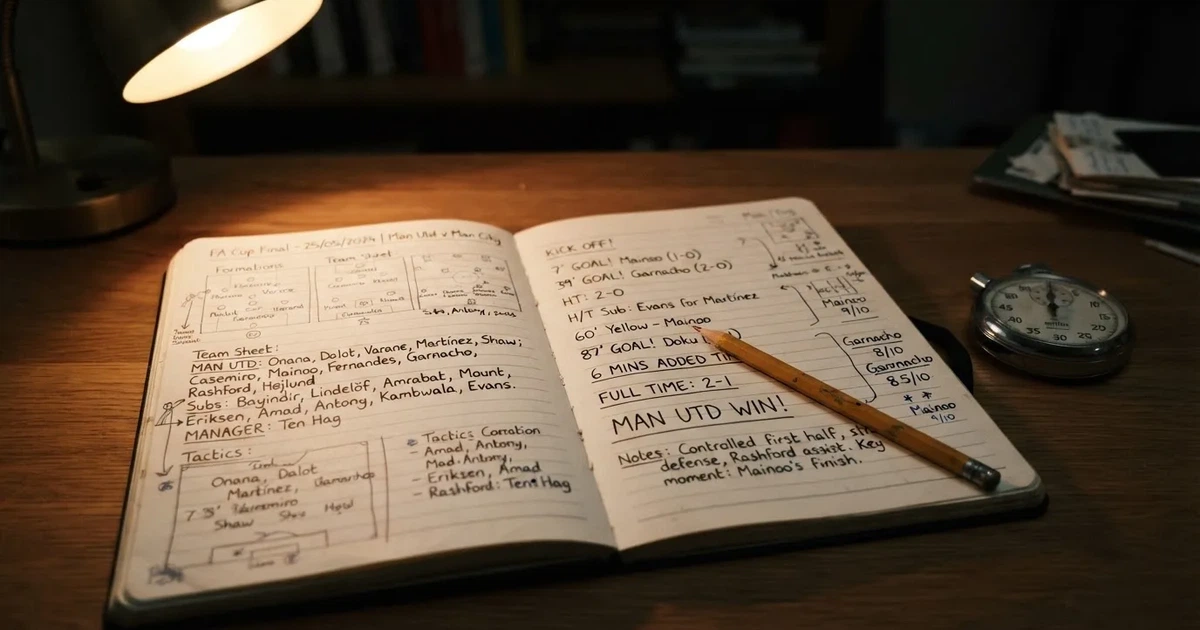
The data behind every figure and licence on this page was checked as of October 30, 2026 against the Gambling Commission’s public register, with operator terms read on the same day. The season covered is 2026-27: the Premier League runs from 21 August 2026 to 30 May 2027, with Arsenal defending, and the 2026 FIFA World Cup in North America was won by Spain on 19 July 2026. The Laws of the Game the World Cup was played under are still the ones the International Football Association Board has maintained since 1886.
Betting apps and the small screen
A bookmaker’s app is where most of these markets are now reached, so the first cluster sits where the bettor actually is.
What a betting app has to do before it earns a place
Three jobs, in this order: it has to show a market the bettor wants to bet on without scrolling past five screens of casino banners; it has to take the stake and return a price the bettor can read in two seconds on a train; and it has to settle the bet without the bettor chasing a support inbox. Brand and bonus are secondary to those three. A clean coupon, a sensible search, and a slip that does not refresh mid-tap will outlast any “100% welcome” headline.
The licensed apps for football in Great Britain in 2026 are not the whole market — the Commission lists far more — but the ones customers most often compare cluster around the same trade-offs. Betway, BetUK, 10bet, LiveScore Bet, London Bet, Kwiff, William Hill, Kalooki Sportsbook, Sporting Index and Tote each pass the test of being on the public register, and each is on a different point of the cost curve. Betway leads with the size of its free-bet split; Kwiff leads with a price that can change at the moment of bet; William Hill leads with the horse-racing feature called Best Odds Guaranteed that happens to sit next to a deep football card; Sporting Index and Spreadex are the only names here that touch financial spread betting, which is regulated by the FCA, not the Commission, and can lose more than the deposit.

Native versus browser: where the cost actually is
The browser version of any of these bookmakers takes the same bet, at the same price, against the same terms. The reason the app matters is friction: the phone is always to hand, the bet is a tap, and the price is whatever was on screen three seconds ago. A bettor who means to follow staking rules finds the app is the friendliest tool for breaking them. That is the cost the marketing page does not list. Set the deposit limit inside the app, not in the head; the app remembers when the head does not.
Bet Builder, where a bettor builds a same-game multi on a single match, lives in the app on most of these brands. So does Cash Out. So does the live in-play page. None of those features are free in the sense that matters: a Bet Builder is several markets stitched together, and a market’s margin multiplies through the chain rather than adding to it.
Live betting and Cash Out
In-play football is the part of the offer where a bookmaker earns most and the bettor most often forgets it is still the bookmaker’s price.
What “live” actually means on a price
A live market updates in seconds, not minutes, on most of these apps, and the price is set by an algorithm the bettor has not seen. The bettor’s job is harder than it looks: a price that moves against you can be the market genuinely re-pricing an event, or the algorithm giving itself headroom. The honest answer is that the bettor cannot tell the two apart from the screen, and a bet placed in that moment is, on average, taken at a higher margin than the same market pre-match. Research on Premier League in-play margins routinely puts them two to three percentage points above the pre-match price on the same selection. The bettor pays that gap on every live bet, win or lose.
Cash Out is the feature that lets the bettor close a bet before the final whistle, at a price the bookmaker sets at that second. It is useful, and it is also a price the bookmaker has put a margin on. On a winning bet the bookmaker offers slightly less than the true value because it has to, and on a losing bet it offers slightly more than the true value because that is the cheaper option for the bookmaker than paying the full liability. Either way, the bettor is selling a position to the only buyer in the room, and the buyer’s spread is the bettor’s cost.
What a bettor should do about both
The only honest read of live betting and Cash Out is that they are products, and products have a price. A bettor with a set staking plan and a clear sense of which markets they understand will be better served by keeping the bet pre-match. A bettor who watches a match and is going to place the bet anyway will be better served by accepting the cost, in the same way a bettor at a casino accepts that the house edge is the price of the seat. The trap is to treat one as cheaper than the other without a reason. They are different products with different prices, and the rest is positioning.
Predictions and strategy: what a tip is, and what it is not
This is the heart of the page, and the part the marketing around “tips” most often gets wrong.
How a tip is built
A tip is a price the bettor believes is wrong — that is the whole thing, with the rest being detail. The bookmaker has published a price on a market (for example, Manchester City to win at 1.80). The bettor has built, from form, expected line-ups, injuries, head-to-head records, xG and the weather, a private estimate of the probability that the outcome happens. If the bettor’s probability is higher than the implied probability in the price, the bet is what the trade calls a value bet. The bettor is not predicting the outcome. The bettor is predicting that the price is wrong, and the bet is the test of that prediction.
This is the part no tipster can make safe. A value bet loses more often than it wins, on most markets, because the bettor is only taking prices where the bettor’s edge is real, and the edge is rarely more than five to ten per cent on a single price. Over hundreds of bets the edge shows. Over ten bets it is noise. The bettor who expects tips to behave like predictions is the bettor who loses a bankroll on a few bad weekends and never finds the edge that was actually there.
What makes a tip worth a stake at all
Three things, in order. First, the price has to be the one the bettor would have taken anyway, not a price a tipster picked because it was the headline. Second, the market has to be one the bettor understands; a tip on the Asian handicap in a league the bettor has never watched is not a tip, it is a coin flip in another currency. Third, the stake has to be a fixed percentage of the bankroll, usually one to three per cent, never a flat amount that drifts up when the bettor feels confident. Anything else is gambling on top of gambling.
No tip is ever certain. That includes the ones sold as “banker”, “sure thing” or “lock”. A bookmaker’s price is a probability; a bet is a price the bettor believes is wrong; a tip is somebody’s bet the bettor is copying without the work that produced it. The punter who keeps a tipster is paying for someone else’s research, with the original stake the punter’s, and the only honest test is whether the tipster’s record at the prices they tipped, over hundreds of bets, beats the margin. Most do not, and the page that tells a reader otherwise is selling something, not telling them.
Why “today’s tips” is a marketing phrase
A tip dated “today” is a tip priced for a fixture the bookmaker has already priced. The price moved between the time the tipster made the call and the time the bettor placed the bet, and the bettor is now taking a worse price, on a market the tipster did not see, in conditions the tipster did not test. The only way “today’s tips” works is if the bettor checks the current price against the tipster’s stated price before staking, and walks away when the gap has closed. A punter who clicks the link, places the bet, and never compares the two is paying the marketing’s cost in lost edge.
Bet types and odds: the language the price is written in
The bettor has to be able to read the market before the market can be beaten, and the market is written in a vocabulary.
Singles, doubles, trebles and accumulators
A single is one bet on one selection; the return is the stake multiplied by the decimal odds. A double is two selections, both of which must win; the return is the stake multiplied by the product of the two odds. A treble is three, an accumulator or “acca” is four or more. The product of the prices is what makes the acca look attractive and what makes it expensive: each leg carries the bookmaker’s margin, and the margins multiply rather than add. An acca of four legs at 1.90, 1.90, 1.90, 1.90 is not a 1.90 market; the bookmaker’s take on the combined price is several points higher than on any of the legs alone. The bettor who builds an acca for the entertainment of the longer price is paying for it in margin. The bettor who builds an acca because they have a real edge on each leg, at the price offered, is doing the only version of the trade that pays.
Each-way bets are two bets of equal stake: one on the selection to win, one on it to place. The place terms depend on the sport, the number of runners and the operator. Each-way doubles the stake without doubling the edge, and a tipster who does not say whether a tip is each-way is leaving the bettor to pay for the second stake out of the bankroll.
Handicap, over/under, BTTS and the same-game multi
A handicap gives one side a head start in goals; a -1 handicap on a favourite means the favourite must win by two or more. Over/under is a market on the total number of goals, set at a line the operator chooses (most often 2.5). BTTS — both teams to score — pays out if each side scores at least once. None of these markets is intrinsically better or worse than 1X2; each has its own margin and its own patterns, and a bettor who picks the market they understand will always beat a bettor who picks the market with the longest odds.
The same-game multi or Bet Builder is several selections from the same match stitched into one accumulator. It is popular because the legs feel “linked” and the price is therefore generous-looking. The reality is the same as the regular acca: the bookmaker’s margin runs through every leg, and the combined price is several points over the true combined probability. The bettor who builds a same-game multi is paying for the convenience of a single coupon in margin. That is the cost of the product, and it is a price the bettor can choose to pay or not.
How a decimal price is read
A decimal price of 1.90 means a £10 stake returns £19: the £10 stake plus £9 of winnings. A decimal price of 6.00 means a £10 stake returns £60. The bettor’s profit on a winning bet is the stake times the price minus the stake, or stake times (price − 1). Fractional odds — the British convention — express the same thing as profit-over-stake: 9/1 (read “nine to one”) means a £1 stake returns £9 of profit plus the £1 stake, decimal 10.00. Evens is 1/1, decimal 2.00. Odds-on (anything shorter than evens) means the selection is the favourite.
The conversion is decimal = (a ÷ b) + 1 for fractional a/b. The bettor who reads prices in only one form is fine, as long as they know which form they are reading.
The margin hiding in every price
The bookmaker’s margin is what makes the bookmaker a bookmaker. Take a two-way market priced at 1.90 and 1.90, fractional 9/10 against each side. The “true” fair prices — the prices at which the bettor would be paid exactly the true probability of each outcome, with no cut to the house — would sum to a payout of 100% of the stakes across the two outcomes. At 1.90 and 1.90, the implied probabilities are each 1 ÷ 1.90, or 52.6%, summing to 105.3%. The extra 5.3% is the bookmaker’s margin, also called the overround. On every £100 staked across the market, the bookmaker keeps about £5.30 on average, win or lose. The margin of one market is not the margin of another. A 1X2 at 1.90/3.40/4.50 carries a different margin than the totals at 1.85/1.95, and the same bookmaker can run a 3% margin on one Premier League match and a 7% margin on a lower-division game the same evening.
The illustrative example of 1.90 / 1.90 on a two-way market — a snapshot, not a quoted price — gives a payout share of 95.0% across both outcomes and a margin of 5.0%. The band exists because the same price written for a different sport, at a different time, with a different bookmaker’s risk team, can result in a margin in the band of roughly 5% to 6%; the page’s calculation is illustrative, not a quote from any operator. The margin is the cost of the bet, the same way a platform fee is the cost of a trade, and a bettor who never sees it is the bettor who pays it without knowing.
Sports and tournaments: what the bettor is actually betting on
The football calendar in 2026 and 2026-27 is the bed the offer sits on.
The English football season
The 2026-27 Premier League runs from 21 August 2026 to 30 May 2027, with twenty teams, with Coventry City, Ipswich Town and Hull City the promoted clubs and Arsenal the defending champions. The Championship, League One and League Two run on the same autumn-to-spring calendar, with play-offs that extend into late May. The FA Cup and the EFL Cup (the Carabao Cup) sit across the season, with the FA Cup final in May. Each of these is a separate bookmaker’s product with its own coupon, its own limits, and its own margins — typically tighter on the Premier League because the liquidity is there, wider in the lower leagues because it is not.
The international calendar
The 2026 FIFA World Cup, held in North America across the United States, Canada and Mexico, was won by Spain on 19 July 2026, beating Argentina 1-0 in extra time. The next men’s World Cup is the 2026 edition already played; the next major men’s tournament for national teams will be UEFA Euro 2028 in the United Kingdom and Ireland. The Women’s World Cup and the European Women’s Championship sit on their own four-year cycle. The Champions League, the Europa League and the Conference League run across the European season; the Copa Libertadores and the AFC Champions League run on southern-hemisphere calendars. A bookmaker’s football product is the union of these competitions, and a bettor’s edge is most often local: a deep knowledge of one league, one cup, one team’s run of results.
The shape of a match
A standard adult match is two halves of 45 minutes, with stoppage time added at the referee’s discretion, played between two teams of eleven including the goalkeeper, on a goal 7.32 m wide and 2.44 m high. Extra time, when a tie has to be broken, is two further 15-minute periods; some competitions then use a penalty shoot-out. The Laws of the Game that govern all of this have been maintained by the International Football Association Board since 1886. None of this changes the price; it changes the markets a bookmaker will offer (90 minutes only versus including extra time, for example) and the rules by which a bet settles. A bettor who does not know whether their coupon includes extra time is a bettor who has not read the terms.
The bookmakers: a comparison of the ten
The ten operators below each hold a Gambling Commission remote licence for general betting on real events and are listed on the Commission’s public register. Several run under larger groups — BetUK sits with LeoVegas, LiveScore Bet with the LiveScore group, Sporting Index alongside the wider Sporting group, Tote alongside the wider pool-betting infrastructure — and a few share platforms with their sister brands. None of that is a recommendation; it is a fact about the market, and the audit on the Commission’s public register is the test of who holds a licence at all. The 10x wagering cap that took effect on 19 January 2026 applies to all of them, as does the credit-card ban and the GAMSTOP requirement.
The “landscape” table below summarises the four matters that decide cost on a football betting app: who actually holds the licence, which Commission account covers the brand, and what the operator’s own terms say about the feature the page is about. The point of the table is not the brand in the first column; it is the gap between what the marketing says and what the terms say. A column of dashes would tell the bettor nothing, and an em dash is used only where one brand genuinely says nothing on a point. Where a cell does carry text, the text is the operator’s own wording as published on its site or in its app store listing; where research did not turn up a published statement, the cell carries the no-data marker rather than a guess.
| Brand | Gambling Commission remote licence and holder | What the operator’s own terms say on the key subject |
|---|---|---|
| Betway | Licence 039372-R-319367-029, account 39372; Betway Limited | Welcome offer: £40 in free bet tokens (4 x £10) on settlement of a first bet of at least £10 at minimum odds of 2.0, 7-day expiry, debit card deposits only |
| BetUK | Licence 039198-R-319450-029, account 39198; LeoVegas Gaming PLC | Free bets exclude virtual sports, esports and non-UK/IE horse racing; minimum odds apply |
| 10bet | Licence 043173-R-322899-023, account 43173; Blue Star Planet Limited | Sportsbook covers football, tennis and horse racing, with Cash Out, Bet Builder and Live Streaming |
| LiveScore Bet | Licence 056859-R-332720-005, account 56859; LiveScore Betting and Gaming (Gibraltar) Limited | Accepts debit cards (Visa and Mastercard), Apple Pay, PayPal, Pay by Bank via Open Banking, and Revolut Pay |
| London Bet | Licence 066162-R-340278-004, account 66162; Thistle Bet Limited | App combines sports betting (football, tennis, horse racing, greyhounds, darts, golf, cricket, NFL, NBA, MLB, snooker) with Pragmatic Play slots and live in-play betting; 17+ App Store age rating |
| Kwiff | Licence 044448-R-323408-017, account 44448; Eaton Gate Gaming Limited | Supercharge can instantly boost the odds on a bet — for example from 2/1 to 20/1 — and can apply to single or multi bets on any sport |
| William Hill | Licence 039225-R-319373-015, account 39225; WHG (International) Limited | Best Odds Guaranteed on UK and Irish horse racing from 8 AM on the day of the race, on single and multiple bets; does not apply to ante-post, tote or pari-mutuel bets |
| Kalooki Sportsbook | Licence 057730-R-333396-005, account 57730; Kalooki Sportsbook Limited | Instant withdrawals by bank transfer within minutes, Best Odds Guaranteed on UK and Irish horse racing, in-play betting, daily boosts, extra-place races; GAMSTOP member |
| Sporting Index | Licence 027343-R-308898-011, account 27343; Sporting Index Limited | New-customer offer: a £10 fixed-odds bet at minimum odds of 1/2 unlocks three £10 fixed-odds free bets, three £5 Total Goals spread bets, three £5 Winning Favourites spread bets and a £1 Race Index spread bet; the qualifying bet cannot be placed in-play or cashed out early |
| Tote | Licence 054779-R-331321-008, account 54779; TDCO Limited | Pool-betting product on British and Irish racing, alongside fixed-odds and in-play markets |
The table is the audit; the paragraphs below it are the cost. Each operator is described in terms of what the bettor is actually paying for, with the welcome offers and the small print written as a cost rather than as a benefit.
Betway
Betway’s four-token welcome is the largest split of any of the brands listed here, and that is the bettor’s first read on the cost: a single bet, settled, opens four £10 free bets each with their own seven-day clock. The catch the table cannot show is the minimum odds of 2.0 on the qualifying bet, which forces the bettor away from the heavy favourite and into a market where the bookmaker’s margin is wider. The bettor who puts the qualifying bet on a Premier League 1X2 favourite at 1.40 has not opened the offer; the bettor who backs a 2.5 goals line at 1.91 or a BTTS at 1.85 has, and has paid for the privilege in the price.
BetUK
BetUK’s restriction list — virtual sports, esports and non-UK/IE horse racing — is what an offer looks like when an operator is taking the consumer-protection rules seriously. The free bet cannot be burned on the markets where the margin is widest and the dispute risk highest, which is the right call for a bettor who would rather not learn about Rule 4 the hard way. The minimum odds, again, are where the real cost sits, and a bettor should check them in the terms before placing a qualifying bet.
10bet
10bet’s product is a complete one: Cash Out, Bet Builder and Live Streaming alongside the three headline sports. The bettor paying for this bundle is paying for it in margin on the markets the features sit on, and the comparison to a stripped-down brand is the comparison between an all-inclusive resort and a smaller one. The bettor who uses every feature every week is getting the bundle’s worth; the bettor who only bets on Saturday football is paying for a year-round cinema pass for one film a week.
LiveScore Bet
The payment spread is the story. Apple Pay, PayPal, Pay by Bank via Open Banking and Revolut Pay sit alongside Visa and Mastercard debit, which means a bettor who prefers not to type a card number on a phone is well served. None of those is a credit card, which is the line the Commission’s condition 6.1.2 draws, and the marketing on a credit-card-funded e-wallet deposit would be the marketing to walk away from.
London Bet
London Bet is a smaller, casino-bundled product with a deep sportsbook and a 17+ age rating. The Thistle Bet Limited holder is the licensee, and the bettor looking for a quieter coupon with a Pragmatic Play casino tab to the side is the bettor this is built for. The cost is the cost of any smaller bookmaker: a thinner in-play product on lower-league matches, where the algorithm has fewer data points to lean on and the price can be a beat slow in either direction.
Kwiff
Kwiff is the outlier on price. Supercharge, the feature that can move a price from 2/1 to 20/1 on a single bet, is genuinely unusual; it is also a price the Kwiff algorithm has chosen to enhance, on a market Kwiff has chosen to enhance it on, and the bettor cannot see the underlying price before the boost is applied. The bettor who reads Supercharge as Kwiff giving away free money is the bettor Kwiff makes its margin on. The bettor who reads it as Kwiff setting the base price wider than its peers and then narrowing it back for the headline bet is reading it correctly. The cost is the gap between the headline and the base, and the page that pretends otherwise is selling the marketing, not the product.
William Hill
Best Odds Guaranteed is the old British idea that a bookmaker pays the higher of the price taken and the starting price on UK and Irish horse racing from 8 AM on the day. It is the closest thing the racing market has to a price floor, and the terms — single and multiple bets, no ante-post, no tote, no pari-mutuel — are written tightly because that is where the BOG bill is largest. For football, William Hill is one of the bigger coupons with a deep in-play product, and the bettor’s cost is the standard large-bookmaker cost: a margin on the popular markets that is tighter than the small bookmakers’ and a margin on the rest that is wider.
Kalooki Sportsbook
Instant withdrawals by bank transfer within minutes is the headline, and it is the headline for a reason: the customer-protection environment is a place where paying out fast is a competitive moat. Kalooki is a GAMSTOP member, holds a Commission licence in its own right, and runs Best Odds Guaranteed on UK and Irish racing alongside the football product. The bettor’s cost is the cost of a smaller bookmaker: thinner limits on the bigger matches, and a price the bookmaker has had fewer data points to set. Where the bettor wins is on the bettor’s own time: no waiting three working days for a withdrawal.
Sporting Index
Sporting Index is on the list as a fixed-odds bookmaker and as a spread-betting firm, and the welcome offer is the unusual one. A £10 fixed-odds qualifying bet at minimum odds of 1/2 unlocks three fixed-odds free bets and four spread bets across Total Goals, Winning Favourites and the Race Index — and the qualifying bet cannot be placed in-play or cashed out early. The cost is the second half of the offer, which the bettor has to clear before the free-bet half pays out, and a punter who has not read spread betting before claiming the four spread tokens is the punter the offer is built for. Spread betting on football is a different product from fixed-odds, and the FCA-regulated side at Spreadex is the page where losses can exceed deposits.
Tote
Tote is the pool-betting brand, sitting on the pool-betting product and a fixed-odds book alongside it. The cost is the cost of pool betting: the bettor is paid out of a pool of stakes after the house takes its cut, the dividend is unknown until the race is run, and the bettor is not paying the bookmaker’s margin in the same way they are on a fixed-odds book. The price is the dividend, and the dividend can be smaller than the equivalent fixed-odds price would have been. The bettor who prefers the pool product is paying for a different kind of price, and the bettor who has not understood the difference is the one who is paying it.
Where the licensed market sits in Great Britain
The bookmakers above are licensed because Great Britain has a single licensing test for the whole commercial remote market, and the test is run by the Gambling Commission.
The Commission’s role and the licence
The Gambling Commission is a non-departmental public body sponsored by the Department for Culture, Media and Sport. It licenses the whole commercial market under the Gambling Act 2005, which covers England, Scotland and Wales; Northern Ireland sits outside the Act and runs under its own older law, so a Great Britain licence is not a Northern Ireland licence. Since the Gambling (Licensing and Advertising) Act 2014, an operator whose remote facilities are used in Great Britain needs a Commission licence wherever it is based, and a Curaçao, Maltese or Gibraltar licence is not a substitute at the point of consumption. The Commission’s public register is searchable by business name, trading name, domain and account number, and it is the whole test of who holds a licence.
There is no statutory list of permitted bets or markets. Operators hold a licence for a category — remote general betting standard (real events), remote general betting standard (virtual events), remote general betting limited, remote pool betting, and remote betting intermediary (the licence for exchanges) — and offer markets under their own rules and the Licence Conditions and Codes of Practice. In-play betting is offered, esports are treated like any other event, virtual events sit on their own licence, and bets on politics and novelty markets are common. No statutory cap on stakes exists: operators set their own maximum stakes and may restrict customers, and a bettor who finds a stake refused on a particular market is seeing the operator’s policy, not the law.
Spread betting and the FCA line
Financial spread betting is regulated by the Financial Conduct Authority, not the Commission, and losses on a spread bet can exceed the deposit. Spreadex, which is on the Commission’s register for fixed-odds and on the FCA’s for spread betting, is the clearest example. A bettor who treats a spread bet as a fixed-odds bet with extra features is treating it as a different product, and the difference is precisely the part the FCA wants the bettor to read. The page covers spread betting only because the welcome offer at Sporting Index includes spread-bet tokens, and a bettor who has never placed a spread bet before claiming those tokens is the bettor the offer is built for.
What a GB licence costs the bettor, in plain terms
Three things the bettor gives up by betting with a licensed brand, and several things the bettor gets. The bettor gives up anonymity: name, address and date of birth are verified before the first deposit, including with a free bet or bonus, and that has been the position since 7 May 2019. The bettor gives up the credit card: gambling with a credit card has been banned in Great Britain since 14 April 2020, and a credit-card-funded e-wallet deposit is the same thing. The bettor gives up the unrestricted bonus: a wagering requirement on a bonus is capped at 10x from 19 January 2026, so a £10 bonus can require no more than £100 of qualifying bets, and a mixed-product promotion (an offer that ties football betting to free casino spins) is no longer allowed.
The bettor gets GAMSTOP, the national multi-operator self-exclusion scheme, with periods of six months, one year, five years, or five years with auto-renewal, and a further seven-year tail after the minimum. The bettor gets a financial vulnerability check at moderate spend (deposits minus withdrawals over £150 in a rolling 30 days, in force since 28 February 2025): a public-record check rather than an income check, but a check the bettor cannot opt out of at a licensed brand. The bettor gets a Commission complaints route and an approved alternative dispute resolution provider. The bettor gets a stake limit and a deposit limit inside the safer-gambling tools, and a self-exclusion that holds across the licensed market. None of that is true at an unlicensed brand, and the difference is the bettor’s downside if anything goes wrong.
Safer gambling: where the bettor gets help
The licensed market sits on a small set of free, confidential services, and the bettor who needs any of them does not need to be in crisis to use them.
The help that exists
GamCare runs the National Gambling Helpline, and the contact details are on every licensed brand’s safer-gambling page. GambleAware funds treatment and education across Great Britain. The NHS runs gambling clinics in several regions. Gamblers Anonymous runs peer-support meetings, in person and online. The Commission’s LCCP requires a licensed operator to link to these services on the safer-gambling page, to offer deposit limits and self-exclusion, and to take responsibility for the marketing run by its affiliates.
A bettor who sets a deposit limit and then tries to raise it during a session is not in immediate danger, but the moment is the moment to use the limit. A bettor who is chasing losses is in a position where the next bet is a worse bet than the last one, and the answer is the same as it would be for any other compulsive behaviour: stop, talk to someone, and do not let the algorithm be the only witness.
The 10x cap and what it does to an offer
A £10 bonus that took 50x wagering used to need £500 of qualifying bets. From 19 January 2026, that cap is 10x and a £10 bonus needs no more than £100 of qualifying bets. The bettor pays for the lower turnover in a smaller bonus, on average, and the trade is the trade the Commission has made: easier to clear, smaller to keep. A bettor who compares two offers on the size of the headline and not the size of the qualifying turnover is the bettor the old market was built for, and the new market is built for a different one.
Crypto, anonymity and what an unlicensed site costs the bettor
A page on football betting tips in Great Britain has to address the offshore end of the market, because the offer there is what makes the licensed market’s prices look the way they do.
The unlicensed offer, in plain terms
A Curaçao-licensed bookmaker will accept a UK customer, take a Bitcoin deposit, and let the customer bet on football without the identity check that a GB-licensed brand runs. The price is the price. The customer is the customer, the brand is the brand, and the bet is the bet. The bettor’s protection, however, is the protection the licence the operator holds gives them, and a Curaçao licence gives the bettor none of the British protections. There is no GAMSTOP coverage. There is no Commission complaints route. There is no approved dispute-resolution body. The 10x bonus cap does not apply, the £150 financial vulnerability check does not apply, the credit-card ban does not apply, and the source-of-funds questions do not apply. The bettor who loses a deposit to a brand that withholds funds has no British consumer redress, and the brand’s terms — the terms the bettor agreed to in the sign-up flow — are the only terms that apply.
Whether a bet is “legal” for the customer is a different question from whether the operator is licensed, and the answer the page can give is the one the law actually has: there is no offence aimed at a customer who merely bets on an unlicensed site, and the page never says “legal to use”. The bettor pays for the missing protections in downside, and that is the entire trade.
The Bitcoin and crypto angle
Bitcoin deposits at licensed GB brands are not the standard offer, and the audit is to read the operator’s own payment page rather than assume. The Commission’s own framework does not name a permitted-payments list; it requires operators to satisfy themselves on source of funds, and that requirement is harder to meet with a coin that obscures its origin than with a debit card. A bettor who has a reason to use Bitcoin at a betting site is reading the operator’s terms first, and the operator’s terms are the only test of whether the bet is one the bettor can place and pay out from.
Bonuses and free bets: the cost the marketing does not list
The 10x cap changed the British bonus market on 19 January 2026, and the change is what makes the rest of the offer readable.
What a free bet really is
A free bet is a token the bookmaker credits the bettor, and the stake is usually not paid back with a win. A £10 free bet at 1.90 returns £19 in some bookmakers’ terms and £9 in others; the £10 stake is the cost of the product. The bettor’s expected value of a free bet is not the headline figure, it is the figure the page’s calculation has set out in the section on margins, and the figure is always less than the headline. The “free” in the name is the marketing, and the marketing is the cost.
Enhanced odds and price boosts are the same product in a different wrapper: the bookmaker sets a higher price on a market, and the bettor who takes the boosted price is taking a price the bookmaker has decided to enhance. The bettor’s edge is the gap between the boosted price and the true probability, and the gap is what the bookmaker has decided to give away. The cost is everything the boosted price is hiding — the underlying price, the margin on the rest of the market, the limit on the stake. A price boost on a £5 maximum stake is a price boost on a £5 maximum stake, and the bettor who places the maximum is the bettor the boost is built for.
Accumulator insurance, cashback, “risk-free”
Accumulator insurance refunds the stake as a free bet if one leg of an acca lets the bettor down, and the refund is in the same product the bettor paid in. The bettor has paid for the insurance in the margin on the acca, and the cost is the gap between the price with insurance and the price without. Cashback is a small percentage of net losses returned over a period, and the period is the cost. “Risk-free” is the marketing word for a first bet that is refunded as a free bet if it loses, and the “free” in “risk-free” is the same word as in “free bet”: a token, not money, on the second attempt.
The bettor who reads the small print of an offer before claiming it is the bettor the offer is not built for, and the offer is built for the bettor who clicks the headline.
The cost of a tip, in numbers
The page’s calculation is the margin on an illustrative two-way market at 1.90 / 1.90 — a snapshot, not a quoted price — and the band it produces.
What the margin of a 1.90 / 1.90 market looks like
The implied probability of a 1.90 price is 1 ÷ 1.90, or about 52.6%. Two selections at 1.90 each sum to 105.3% across the outcomes, and the extra 5.3% is the bookmaker’s margin, also called the overround. The payout share — the proportion of every pound staked across the market that is paid back to bettors on average — is the reciprocal of the sum of the implied probabilities, or about 94.7%. The margin is the difference, in the band of roughly 5% to 6% on this kind of price, with the exact figure depending on the sport, the time of week, the operator’s risk team, and the depth of the market. The page treats 5% to 6% as the band for an illustrative 1.90 / 1.90 football market, and the bettor who knows the band of their own market is the bettor who knows what they are paying.
The bettor pays this on every bet, win or lose, in expectation. A 5% margin on a market means the bettor loses 5p of every £1 staked on that market on average, before the skill. A bettor with a 3% edge over the true probability, taking prices at 1.90 / 1.90, makes a small expected profit on each bet, and the bettor without the edge is the source of that profit. The market is a closed system at the margin level, and a tip that does not account for it is a tip with the price already taken out.
Frequently asked questions
How do you bet on football tips?
A tip is a price you believe is wrong, and the bet is the test of that belief. The job is to read the price the bookmaker has published, build a private estimate of the true probability, compare the two, and only stake when the price is wider than the probability. The tip is the comparison, not the call, and the bettor who treats the comparison as the work is the bettor the work is built for.
How do you bet on football as a beginner?
Start on the most familiar league and the simplest market — 1X2, over/under 2.5 goals, BTTS — and on a licensed brand that has passed the Commission’s identity and source-of-funds checks. Set a deposit limit before the first bet, and stake one to three per cent of the bankroll on each selection. The beginner who skips the deposit limit is the beginner who finds out what the limit is for.
How do you bet on football online?
Open an account with a Gambling Commission-licensed brand, verify name, address and date of birth, deposit by debit card or by a non-credit e-wallet, and place a single bet on a market you understand. The whole process is a few minutes on the app, and the cost of the bet is the margin hidden in the price the bookmaker has shown, not the price itself.
What is a value bet, and why is no tip ever certain?
A value bet is a price wider than the bettor’s estimate of the true probability of the outcome. The bet is value when the bettor’s probability is higher than the implied probability in the price, and the bet is a loss when the bettor’s probability is wrong. No tip is ever certain because the bettor is predicting that a price is wrong, not that an outcome will happen, and even a strong value bet loses more often than it wins on most markets.
What is the bookmaker’s margin, and how can it be seen in the odds?
The margin is the bookmaker’s cut on a market, taken by shortening every price below the true probability. On a two-way market priced at 1.90 / 1.90, the implied probabilities are each about 52.6% and sum to 105.3%, and the 5.3% gap is the margin — about 5% to 6% in this snapshot, depending on the market. The margin is the cost of the bet, and the bettor who never sees it is the bettor who pays it without knowing.
How is the return on a bet worked out from the stake and the odds?
The return is the stake multiplied by the decimal odds. A £10 stake at 1.90 returns £19: the £10 stake plus £9 of profit. A combination bet multiplies the odds of the legs into one price and applies the same formula. The bettor’s net profit is the return minus the stake, or stake times (price minus one), and the calculation is the same for singles, doubles, trebles and accumulators.
Football – Icehockeyoddshub.com
Content created by the «Icehockeyoddshub.com» team
