
Bank transfer betting sites in Great Britain — what the cashier costs you
 Available in US
Current as of October 30, 2026 · licence data checked against the Gambling Commission’s public register.
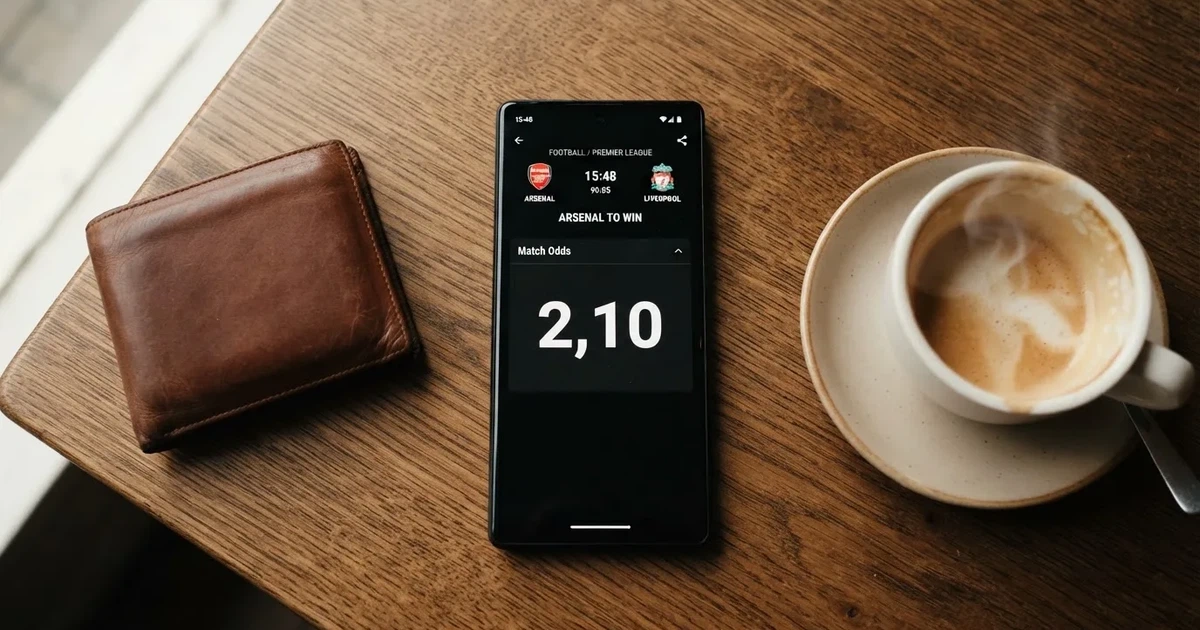
Bank transfer is the dullest payment method in the British bookmaker’s cashier, and that is exactly why it is worth a page. Faster Payments moves money in seconds, the operator charges nothing to take it, and there is no e-wallet or voucher standing between the punter and the bank statement. The catch is that the bank is now part of the betting transaction, and the same bank may already be watching.
This page is written for the punter who already has a British current account and wants to know which UKGC-licensed bookmaker will accept a bank transfer, what minimum and maximum the cashier imposes, how long a withdrawal takes, and what the operator’s own terms add to the picture. Ten operators sit in the shortlist that follows. None of them is the only licensed brand; several are run by the same parent; and the offer each describes is its own published terms, not a recommendation.
What “bank transfer” actually means at a British cashier
A bank transfer at an online bookmaker is not a single product. Three things arrive under that label, and they cost different amounts of time.

The first is the Faster Payments Service, launched in 2008 and operated by Pay.UK. It runs around the clock — twenty-four hours a day, seven days a week — and most payments clear instantly or within a couple of minutes, with the scheme’s own limit published at £1,000,000 per transaction, though individual banks can and do cap their own customers lower. The second is BACS, the older three-day batch system, which still shows up where a bookmaker insists on a named-account match. The third is CHAPS, same-day and used for the larger sums, usually with a fee at the sender’s end. Faster Payments is the one that matters for everyday deposits and withdrawals.
Open Banking transfers — Trustly, the “Pay by Bank” buttons some cashier pages now show — sit on top of Faster Payments. The punter authorises the transfer inside their banking app; the money moves through the same rails, and the cashier credits the account once Pay.UK confirms the transfer. Trustly’s own minimum at Smarkets, for example, is £10 on the way in and £10 on the way out.
Two timing points the operator can change but not the scheme. First, withdrawals are queued by the bookmaker before they are sent: an “instant” cashier really means instant once the operator hits it, and many will hold the withdrawal for a few hours to run internal checks. Second, a transfer that fails a name match — the account-holder name on the operator’s records does not match the sending bank account — will bounce. The British rule on named accounts is not a statute; it is the anti-money-laundering work the operator has to do anyway, and it is why a deposit from a partner’s or friend’s account is routinely rejected.
The cost is on the bank, not on the operator. Faster Payments is free at the sender’s bank for almost every personal current account in the country. The operator’s own published terms for the brands reviewed below add no processing fee on a deposit or a withdrawal by bank transfer.
The cashier across ten UKGC-licensed operators
The ten operators below are the brands the Gambling Commission’s public register lists under a remote betting licence for Great Britain. They are not ranked by speed or by generosity. The table is the starting point for the operator-by-operator section that follows; the section is where each brand is judged on what its own cashier and terms actually cost the punter.

| Brand | Licence | What the operator’s own terms say on bank transfer |
|---|---|---|
| LiveScore Bet | 056859-R-332720-005 · LiveScore Betting and Gaming (Gibraltar) Limited | Debit cards (Visa, Mastercard), Apple Pay, PayPal, Pay by Bank (Open Banking) and Revolut Pay accepted; bank transfer terms not separately published |
| Star Sports | 009177-R-104555-019 · Star Racing Limited | Bank transfer support carried only as the listings report; deposit limits, Play Break and self-exclusion in My Account |
| Sky Bet | 067370-R-341330-005 · SBG Sports Limited | Welcome offer: £30 in free bets as three £10 tokens after a £5 deposit and a first single or each-way bet of at least 5p at odds of 1/1 or greater; bank transfer not separately published for the welcome trigger |
| Midnite | 101839-R-342850-001 · Midnite Limited | App published by Dribble Media Limited; weekly rewards club and rapid payouts advertised; bank transfer terms not separately published |
| DAZN Bet | 048756-R-327274-019 · DZBT Limited | Deposits from £5 by debit card, Apple Pay, Paysafecard, Trustly and Skrill; from £20 by PayPal; no processing fees; bank transfer terms not separately published |
| Smarkets | 039173-R-319366-011 · Smarkets (Malta) Limited | Open bank transfer deposits instant from £10 to £10,000; withdrawals processed within 6 hours from £10 to £100,000 |
| Kalooki Sportsbook | 057730-R-333396-005 · Kalooki Sportsbook Limited | Instant withdrawals by bank transfer advertised within minutes; Best Odds Guaranteed on UK and Irish racing, in-play, daily boosts |
| Kwiff | 044448-R-323408-017 · Eaton Gate Gaming Limited | Deposits and withdrawals via Trustly described as quick; bank transfer not the headline method |
| Bet Ahoy | 100094-R-341742-003 · Bet Ahoy Ltd | Acca Bonus up to £1,000, Sub-Cover, Best Odds Guaranteed and Double Result on UK and Irish racing; bank transfer terms not separately published |
| Betboro | 044181-R-324363-007 · Webmedia Development N.V. | 100% matched free bet up to £25 on the first qualifying wager; deposit by debit card of at least £10 required; bank transfer not separately published |
Several rows name Trustly, Open Banking or “Pay by Bank” rather than a plain “bank transfer” label. In practice those routes are bank transfers on the Faster Payments rails; they only differ in how the punter authorises them inside the cashier. The minimum, the maximum and the queue time still come from Faster Payments and from the operator’s own payment page.
A second caveat the table cannot carry: several of these brands sit under shared parents, so the cashier experience can read the same across more than one of the entries above. The licence numbers, account holders and trading names are what the register shows; the parent company behind them is one layer above.
LiveScore Bet — Fast cashier, narrow published banking menu
LiveScore Bet runs on a debit-led cashier. The help centre lists debit cards from Visa and Mastercard, Apple Pay, PayPal, Pay by Bank through Open Banking, and Revolut Pay. That is a complete list of named methods on the company’s own page; the operator does not publish a separate bank transfer line, and any deposit that arrives from a UK current account will arrive as one of the methods above rather than as a free-text “bank transfer”.
The Pay by Bank option is the closest match for a punter who wants a bank-to-bookmaker transfer without typing sort code and account number. Open Banking sits on Faster Payments, so the deposit credits once the punter approves it in their banking app; the minimum is whatever the Open Banking provider sets, typically £5 or £10. Withdrawals go back along the same route to the account they came from, which is the standard anti-money-laundering pattern.
The £30 welcome package and the in-play product are where LiveScore Bet’s marketing sits, not the cashier. The cashier is competent rather than generous: no fee, no minimum above the operator’s standard £5, no published processing window longer than the Open Banking window. For a punter whose bank already has Open Banking turned up, this is the lowest-friction way to fund a bet in the set.
For a punter who wants a written “bank transfer accepted” line on the operator’s terms page, LiveScore Bet does not publish one. The methods above are the published methods, and the absence of a named bank transfer line is not a refusal — it is a cashier that has been redesigned around Open Banking.
Star Sports — Racing-focused bookmaker with the bank’s safer-gambling tools in mind
Star Racing Limited runs Star Sports in Great Britain under Gambling Commission account 9177. The app, listed in the UK and Ireland App Store, advertises deposit limits, a Play Break facility and self-exclusion inside My Account. Those three controls sit on top of whatever payment method the punter chooses, and the safer-gambling controls in My Account are the part of the terms that affects the cashier most: a punter who has set a £50 weekly deposit limit cannot push past it through a bank transfer any more than through a debit card.
Star Sports is built around British and Irish racing. The published product includes Best Odds Guaranteed, extra places and the racing-specific promotions the operator runs for the Cheltenham and Grand National meetings. The cashier carries the methods Star Racing Limited has agreed with its processor; the App Store listing is silent on the exact bank transfer menu, and the operator’s own payment page is the place to confirm what is on offer.
The brand carries a “listings only” caveat on the banking subject in this set, which means the rows above report only what third-party sources name. A visit to the cashier before the first deposit is the right read of what Star Sports actually accepts on the day.
For a racing punter who already has the safer-gambling controls set up inside My Account, Star Sports is a fit for purpose bookmaker. For a punter who wants the cashier’s published methods on the open web before signing up, the operator’s own payment page is the answer, not this page.
Sky Bet — Big welcome, but the qualifying bet is the constraint
Sky Bet’s welcome offer, taken from the operator’s own support page, credits £30 in free bets as three £10 tokens after a deposit of at least £5 and a first single or each-way bet of at least 5p at odds of 1/1 or greater. The arithmetic matters more than the headline. The deposit triggers the offer — Sky Bet does not require the deposit to be by bank transfer, and a debit card or Apple Pay deposit of £5 will do. The qualifying bet is what most first-time punters miss: a 5p single at 1/1 wins 10p, returns 10.05p, and the £30 in free bets lands only after that first settled bet.
Free bet tokens stake-not-returned by default at Sky Bet, which is the standard treatment for a British free bet. A £10 free bet token at odds of 4/1 pays £40 in money if it wins; the £10 stake is not returned with the win. That treatment is what a punter should price into the welcome offer before treating £30 as £30 of value.
The cashier accepts the usual British debit methods plus Apple Pay and the Open Banking routes Sky Bet runs through its processor. Bank transfer is not the headline route, and the welcome offer does not require it; the bank transfer option that does exist is the same Faster Payments rail Sky Bet’s other UK customers use for withdrawals.
For a punter who wants to test the cashier at the lowest possible cost, the £5 minimum deposit and 5p qualifying bet are a cheap entry. For a punter who prices free bets by stake-not-returned, the headline £30 is closer to half that on average across the markets Sky Bet runs.
Midnite — App-led bookmaker with rapid payouts as the promise
Midnite runs on Gambling Commission account 101839 and publishes its app under Dribble Media Limited. The in-house product — in-play events, an acca builder, popular accas and price boosts with maximum-stake limits — is what the operator’s home page leads with. The cashier is described in the App Store listing as offering “rapid payouts”; the operator’s own page does not publish a third list of named bank transfer limits beyond what the payment processor exposes.
Where Midnite differs from the rest of this set is in the distribution. The brand is built around its iOS and Android apps and the social product around them — weekly rewards clubs, acca-building tools and the price-boost feed that runs alongside live events. That is also where the cashier sits, and a bank transfer that arrives through Open Banking is the path of least resistance.
The price boost with a maximum-stake limit is worth a sentence on its own. A boost is a marketing offer: the operator raises the price on a chosen selection and caps the punter’s stake so the offer cannot cost it more than a fixed sum. A punter who likes boosts should read the cap before staking; a cap of £20 on a 10/1 boosted selection is not the same offer as an uncapped price on the same selection.
For an app-first punter who wants the cashier and the betting slip in the same place, Midnite is the right fit. For a punter whose bank transfer is a typed sort code and account number rather than an Open Banking handshake, the cashier will show whether a fallback is published.
DAZN Bet — Low minimum, no fees, debit-led cashier
DAZN Bet’s published deposit menu starts at £5 by debit card, Apple Pay, Paysafecard, Trustly and Skrill, and at £20 by PayPal, with no processing fees charged by the operator. That is a low minimum across most of the cashier — the PayPal minimum of £20 is the outlier — and it is what the help centre names as the set of accepted methods.
Bank transfer in the strict sense — a typed sort code and account number — is not separately published on DAZN Bet’s deposit page. The Trustly route is the Open Banking path on Faster Payments, and the debit card route covers the Visa and Mastercard transfers the operator takes from a UK current account. A withdrawal goes back along the route it came in, which is the standard anti-money-laundering rule; a deposit by Trustly returns by Trustly, a deposit by debit card returns by debit card.
The £5 minimum and the no-fee policy together make DAZN Bet one of the cheaper cashiers in the set for a small-stake punter. The £20 PayPal floor is a nudge toward the bank-based methods for anyone who would rather not pay the PayPal minimum.
For a punter with a £5 budget who wants a no-fee cashier, DAZN Bet is the obvious fit. For a punter who specifically wants a published “bank transfer accepted” line on the operator’s terms page, the cashier does not publish one — Trustly and the debit card route are what the help centre names.
Smarkets — The exchange with the fastest named bank transfer in the set
Smarkets publishes the clearest bank transfer terms in the set, partly because it is a betting exchange and the exchange’s profit comes from commission, not from a margin baked into the price. Open bank transfer deposits are instant from £10 to £10,000, and withdrawals are processed within 6 hours from £10 to £100,000. UK debit card deposits are instant from £10 to £15,000. Those numbers come from the help-centre page the operator publishes.
The 6-hour withdrawal window is the headline figure, and it is what most punters will read first. Faster Payments itself is instant; the 6 hours is the queue the operator holds the withdrawal in to run its own checks. A 6-hour queue on a £100 withdrawal is competitive with the rest of the British market and noticeably faster than the older one-to-three working-day windows some bookmakers still publish. The £100,000 maximum is a bet on large-stake customers; the £10 minimum is on the floor of what most British cashiers charge.
The exchange carries commission rather than a margin in the price, which is a structural difference from a traditional bookmaker and not a quality claim. A backer’s net return on a winning bet at Smarkets is the stake multiplied by the decimal odds minus the commission Smarkets charges on net winnings.
For a punter who backs and lays on the same site, the published bank transfer windows are the reason to look at Smarkets first. For a punter who wants a traditional sportsbook product — a price-boost feed, an each-way bet on a Saturday runner — the exchange format will feel like the wrong tool.
Kalooki Sportsbook — Racing-led, with “instant bank transfer” as the headline
Kalooki Sportsbook is operated by Kalooki Sports Book Ltd (company number 12938274), licensed by the Gambling Commission under account 57730, and a GAMSTOP member. The home page advertises instant withdrawals by bank transfer within minutes, Best Odds Guaranteed on UK and Irish horse racing, in-play betting, daily boosts and extra place races.
“Within minutes” is the claim. Faster Payments is the rail, so the claim is plausible at the scheme level; the operator still has a queue on the withdrawal before it sends, and “within minutes” is the operator’s own promise rather than a Faster Payments guarantee. The minimum and maximum the cashier publishes are the part of the terms the help centre sets out — the home page carries the marketing claim, not the cashier limits.
The racing product is the centre of gravity. Best Odds Guaranteed pays the SP if the SP is higher than the price the punter took; extra places extend the each-way payout beyond the standard place terms; the daily boosts are the operator’s chosen selection of the day. That is a coherent product for a racing-led punter and a narrow one for a punter who wants the breadth of a multi-sport bookmaker.
For a punter whose Saturday revolves around the racing and who wants the operator’s own promise of “instant bank transfer within minutes”, Kalooki is the right fit. For a punter who wants a deep in-play football menu, the product is the wrong shape.
Kwiff — Trustly-led cashier, “supercharged” odds as the brand promise
Kwiff runs on Gambling Commission account 44448 and is operated by Eaton Gate Gaming Limited. The app listing describes deposits and withdrawals via Trustly as quick and runs a casino with more than 3,500 games on top of the sportsbook. The brand’s marketing line is “supercharged odds” — random boosts the operator applies to chosen selections after the bet is placed, paid as cash, not as a free bet token.
The cashier is Trustly-led, which is Open Banking on Faster Payments. A punter who has used Trustly elsewhere will know the shape: a deposit screens-out to the banking app, the punter authorises, and the money arrives within the Faster Payments window. A withdrawal goes back along the same route. The minimum and maximum are set by the cashier rather than by the operator’s published help page; the App Store listing does not carry the numbers.
The supercharged odds are worth one careful read. A boost the operator adds after the bet is placed is more valuable than a boost at the price the punter took: the punter’s stake is locked at the price they took, and the boost is paid on top if the selection wins. The catch is that the operator chooses which selections qualify, and the punter does not see the boost until after the bet is on. A punter who likes surprises will like the product; a punter who prices bets at the price they took will find the condition less attractive.
For a punter who wants Trustly at the cashier and surprise boosts on the slip, Kwiff is a fit. For a punter who wants a written “bank transfer accepted” line on the cashier, the help centre will show whether the operator publishes one.
Bet Ahoy — Racing-led bookmaker with acca insurance in the marketing
Bet Ahoy runs on Gambling Commission account 100094 and is operated by Bet Ahoy Ltd. The app listing carries the marketing product: a 10% Acca Bonus up to £1,000, Sub-Cover for player substitutions, Best Odds Guaranteed on UK and Irish horse and greyhound racing up to £100, and Double Result payout on UK and Irish racing.
The cashier is not separately published, which means a punter who wants the bank transfer terms on Bet Ahoy needs to read the operator’s own cashier before the first deposit. The racing-led product is what the operator leads with; the cashier is the unstated part.
The Acca Bonus caps at £1,000 — a real ceiling rather than a marketing word. Sub-Cover is a settlement rule for player substitutions: where a player is substituted before a bet is settled, the operator’s rule decides how the bet pays; “Sub-Cover” means the bet stands under the operator’s published substitution list rather than being voided. Double Result pays both the order-of-finish and the in-running positions on UK and Irish racing; the punter should read the operator’s rule on what counts as the in-running position before treating it as a free upgrade.
For a racing and acca punter who wants the product on top of a UKGC-licensed cashier, Bet Ahoy fits. For a punter who specifically wants a published bank transfer minimum and maximum before signing up, the cashier is the right read.
Betboro — Matched free bet with a tight qualifying structure
Betboro’s sports welcome offer, taken from the operator’s own page, is a 100% matched free bet of up to £25 on the first qualifying wager, requiring a debit card deposit of at least £10 and a first bet of £5 to £25 with at least three selections each at odds of 3/5 (1.60) or higher. The bonus is matched on the stake of the first bet up to £25 — so a £25 first bet returns a £25 free bet token, not £50 in cash.
The qualifying structure is the part to price carefully. Three selections at 1.60 or higher means a treble at minimum combined odds of about 4.10 (1.60 × 1.60 × 1.60), and the free bet token is paid only on a winning qualifying bet. A losing qualifying bet frees the punter from the bonus; the £10 deposit is still the operator’s. The debit card deposit is the trigger — a deposit by bank transfer does not qualify, and the cashier will not credit the bonus on a deposit by any other route.
Bank transfer is not separately published as a Betboro method on the operator’s own page. A punter who wants the welcome bonus needs to fund the account by debit card; a punter who wants to bank-transfer into the account after the bonus is settled can ask the cashier whether the operator accepts it.
For a punter who wants to claim a £25 free bet on a £25 treble, the offer is straightforward. For a punter who specifically wants bank transfer on the welcome trigger, Betboro is the wrong brand.
The legal frame around a British betting account
The Gambling Commission licenses every commercial betting operator whose remote facilities are used in Great Britain under the Gambling Act 2005, as amended by the Gambling (Licensing and Advertising) Act 2014. The 2014 Act closed the previous loophole: an operator based in Malta, Gibraltar or Curaçao cannot serve the British market without a Commission licence. Several of the brands reviewed above are operated by companies in those jurisdictions, and the licence the operator holds for Great Britain is the one the Commission’s register lists.
Identity is verified before the first deposit. Since 7 May 2019 the Commission has required operators to confirm a customer’s name, address and date of birth before any deposit or any gamble — including a free bet or a bonus wager. A “no ID” British bookmaker does not exist in the licensed set. Anonymous betting with a bank transfer is the territory of unlicensed offshore operators, where the British protections — GAMSTOP, the Commission’s complaints route, the £150 financial vulnerability check, the 10x bonus cap — do not apply, and where the punter has no British consumer redress if funds are withheld. The right read of an unlicensed site is not that it is “legal to use” but that it offers none of the protections a British licence makes compulsory. A Curaçao, Maltese or Gibraltar operating licence is not a substitute for a Commission licence at a British-facing site.
Financial spread betting is a different regime. The Financial Conduct Authority regulates it, not the Commission. Spreadex, for example, runs fixed-odds betting under a Commission licence and spread betting under an FCA registration, and the two product types carry different risk warnings — losses on a spread bet can exceed the deposit, which is the spread-bet-specific risk the operator publishes.
Credit cards have been banned for gambling across all online and offline gambling products in Great Britain since 14 April 2020, with the only exception being non-remote lotteries paid for face-to-face. Debit card and bank transfer deposits were unaffected by the ban. The Commission’s 2018 evidence behind the ban estimated 800,000 UK consumers had used credit cards to gamble and that 22% of online gamblers who used credit cards were classed as problem gamblers. The bank may also be watching from the other side: Monzo’s gambling transaction block went live in April 2018, Barclays added a block at the end of 2018 and Starling’s block takes effect immediately when switched on, with a 48-hour cooling-off period before it can be removed; NatWest offers the block on its credit cards but not on its debit cards. Bristol University research found that around half of bank customers who opted into a gambling transaction block had spent less or no money on gambling after doing so. A punter whose bank has a block should expect the transfer to fail and the cashier to bounce the deposit, regardless of the operator’s own terms.
Betting winnings are not taxed on the punter in Great Britain. General Betting Duty is the operator’s tax on gross profits, currently 15% with a new remote betting rate of 25% taking effect from 1 April 2027 within it; remote bets on UK horse racing, pool betting and in-person betting stay at 15%. Whether operators pass duty on through odds is not established, and a punter should not be charged duty by the cashier.
Safer gambling controls at a UKGC-licensed bookmaker
GAMSTOP is the national multi-operator online self-exclusion scheme. It is a mandatory licence condition for online operators since 31 March 2020. Periods are six months, one year, five years, or five years with auto-renewal; after the minimum period the exclusion stays in place for a further seven years unless the customer asks GAMSTOP to remove it. Every UKGC-licensed bookmaker takes part, including all ten brands in the set above. Betting shops use a separate offline scheme.
A financial vulnerability check (LCCP condition 3.4.4, in force since 30 August 2024) applies to licensed remote betting when a customer’s deposits minus withdrawals exceed £150 in a rolling 30 days — a threshold the Commission tightened from 28 February 2025. It is a public-record check — bankruptcy, county court judgments and the like — not an income check and not a credit reference check. A punter crossing the threshold should expect a check before the next deposit; a bank transfer does not bypass it.
Financial risk assessments — the “affordability checks” of the press — are announced in a staged plan with no start date. The Commission article of 7 July 2026 sets out the staged approach but does not name a date; a punter reading about “affordability checks in force” should treat that wording as a forecast, not a fact.
Deposit limits are the customer’s choice, not the regulator’s. Operators must offer a gross deposit limit on a fixed time frame under RTS 12; the first changes applied from 31 October 2025 and a second phase was postponed to 30 September 2026. There is no state-set ceiling for betting; a £50 weekly limit set inside the operator’s safer-gambling page is the punter’s own choice, and the cashier will refuse a deposit that breaches it.
Help outside the operator: GamCare runs the National Gambling Helpline, GambleAware funds treatment and research, the NHS runs gambling clinics across the regions, and Gamblers Anonymous runs peer-support groups. A punter whose bank transfer is being declined by a gambling block on their account is at the start of a chain — the operator’s safer-gambling controls, the bank’s own block, GAMSTOP, GamCare — and the chain is there to be used.
Bonuses, free bets and the rules that came in on 19 January 2026
A “free bet” at a British cashier is a token whose stake is not returned with the win: a £10 free bet at odds of 4/1 pays £40 in money, not £50. That is the standard treatment, and it is what a punter should price into any welcome offer. A “risk-free” first bet is usually a free bet token credited after a losing first bet, not a refund in money. A “100% bonus” is usually a matched amount in bonus funds that needs to be turned over before it pays out as cash; a “100% matched free bet” is the better of the two because it pays out as cash from a winning free bet, with the stake-not-returned treatment.
Since 19 January 2026 the Commission’s promotion rules have capped wagering requirements on bonuses at 10x — a £10 bonus at 50x needs £500 of qualifying bets; under the cap no more than £100. Mixed-product promotions — an offer that requires gambling on two or more product types such as betting, casino, bingo and lottery, for example “bet on football to get free spins” — are banned. Whether the cap applies to free bets with no wagering condition is not established. There is no cap on the money value of a bonus itself, which is what makes the £30 in free bets at Sky Bet and the £25 matched free bet at Betboro feasible; a punter who treats “no cap” as licence to ignore the small print is the punter the small print is written for.
A “best odds guaranteed” promotion pays the starting price (SP) if the SP is higher than the price the punter took; that promotion is racing-specific and is offered by Kalooki Sportsbook, Bet Ahoy and others in the set. An “acca insurance” promotion refunds a stake as a free bet token if one leg of an accumulator lets the punter down; the refund is a token, not money, and the stake is not returned on the winning legs. A “price boost” offers a higher price on a chosen selection, usually with a stake cap that limits the punter’s exposure on the boosted selection. Each is what its own name says, and each carries the stake-not-returned treatment underneath.
A punter pricing the welcome offers above should read the qualifying bet, the wagering requirement and the stake-not-returned treatment together, because they are the three numbers that decide whether the offer is worth taking. A £30 headline at stake-not-returned across an average bookmaker margin is worth a fraction of £30 in real terms; a £25 matched free bet with a debit-card-only trigger costs the punter the difference between a debit card deposit and a bank transfer deposit on the welcome path. That is what each operator’s own terms cost, and that is what the welcome section above carries.
What the bank thinks of the transfer
The bank is now part of the betting transaction, and the British high-street banks have moved into the safer-gambling space from their own side. Monzo’s gambling transaction block went live in April 2018 and lets a customer turn it on instantly, with a 48-hour cooling-off period before the block can be turned off. Barclays added a gambling transaction block at the end of 2018 that customers can turn on and off instantly inside the Barclays banking app. Starling’s block takes effect immediately when switched on, with a 48-hour cooling-off period before gambling transactions are allowed again if removed. NatWest offers the block on its credit cards but not on its debit cards, which is the asymmetric part of the picture.
Bristol University research found that around half of bank customers who opted into a gambling transaction block had spent less or no money on gambling after doing so. The block is on the customer’s side of the transaction rather than on the operator’s, and the operator’s cashier does not see a block in advance: the transfer fails at the bank and bounces back. A punter whose bank transfer is being declined should check the banking app for an active gambling block before assuming the operator’s cashier is at fault.
The Commission has been given, or is about to receive, court-order DNS blocking powers. ISP-level blocking of unlicensed sites is not in operation as a general rule; enforcement against unlicensed operators runs through cease-and-desist notices, search-engine referrals, and work with registrars, hosts and payment providers. A licensed site has none of those risks; an unlicensed site has all of them.
What to check on a cashier before the first bank transfer
Five things sit on the cashier page and on the operator’s terms page that a punter should read before the first deposit.
The minimum and maximum the cashier publishes on bank transfer. The brands in this set name £5 or £10 as the floor; Smarkets names £100,000 as the ceiling; the rest are silent on the ceiling. A punter with a stake size larger than the cashier’s published maximum should ask the operator before depositing.
The processing window on a withdrawal. Faster Payments is the rail and is instant; the operator’s own queue is the delay. Smarkets names 6 hours; Kalooki names “within minutes”; the rest of the set is silent. A punter who needs the money back the same day should read the cashier’s published window before staking.
The named-account rule. A deposit from a partner’s or friend’s account is routinely rejected for anti-money-laundering reasons. The account-holder name on the operator’s records has to match the sending bank account; the cashier will bounce a mismatch. A joint account where the punter is one of the named holders usually passes.
The welcome trigger. Betboro’s £25 matched free bet requires a debit card deposit, not a bank transfer; Sky Bet’s £30 in free bets requires only a £5 deposit of any accepted method; the rest of the set’s welcome offers sit outside the table above. A punter claiming a welcome offer should fund the account by the route the offer’s small print names, and only then add a bank transfer if the operator accepts one on the cashier.
The safer-gambling controls inside My Account. A punter who has set a £50 weekly deposit limit cannot push past it through a bank transfer any more than through a debit card; a punter who has registered with GAMSTOP cannot open a new account at any of the brands in this set. The cashier does not override the safer-gambling controls; the safer-gambling controls override the cashier.
The shape of the offer one page over
The Faster Payments scheme sets a £1,000,000 per-transaction limit, and individual banks can and do impose lower limits on their customers. A punter moving a large sum — say, the proceeds of a settled free bet or a winning accumulator — should check the bank’s own transfer limit before relying on the scheme’s ceiling. The bank’s daily limit, not the scheme’s £1,000,000, is the limit the cashier will hit first.
Most payments arrive instantly or within a couple of minutes, though transfers can occasionally take up to two hours. A transfer that takes longer than two hours is unusual; a transfer that has not arrived by the next banking day should be raised with the operator’s customer service, with the bank statement as evidence. The operator’s cashier will not always volunteer that a withdrawal has been sent, and a punter who is waiting on a withdrawal should not assume the operator is the slow party.
The Faster Payments Service operates twenty-four hours a day, seven days a week, including weekends and bank holidays. A withdrawal queued at 11pm on a Saturday will go through the operator’s queue and onto Faster Payments; the rail itself does not sleep. The bank, on the other hand, may sleep — some banks apply a fraud check overnight, and a withdrawal queued at 11pm may be picked up by the bank’s fraud team before the operator’s queue clears. That is the bank-side delay a punter cannot fix by changing operator.
Frequently asked questions
Is it legal to bet with a bank transfer in Great Britain?
Yes, at any UKGC-licensed bookmaker. The Gambling Act 2005, as amended by the Gambling (Licensing and Advertising) Act 2014, requires any operator whose remote facilities are used in Great Britain to hold a Commission licence; a bank transfer to such an operator is a permitted payment method. Credit cards have been banned for gambling since 14 April 2020; debit cards and bank transfer deposits are unaffected.
Can a bank transfer betting account be opened without identity verification?
No. Since 7 May 2019 every UKGC-licensed operator has to verify the customer’s name, address and date of birth before the first deposit or any gamble, including a free bet. “Anonymous” British betting does not exist in the licensed market. An unlicensed offshore site does not verify identity, but it offers none of the British protections — GAMSTOP, the £150 vulnerability check, the 10x bonus cap, the Commission’s complaints route — and offers no British consumer redress if funds are withheld.
How fast does a bank transfer withdrawal arrive at a UKGC-licensed bookmaker?
Faster Payments is the rail and is instant or within a couple of minutes at the scheme level. The operator’s own queue is the delay. Smarkets publishes a 6-hour queue; Kalooki publishes “within minutes”; the rest of this set is silent on the cashier’s queue. A punter who needs the money back the same day should read the cashier’s published window before staking.
What payment methods do GB-licensed bookmakers accept, and are credit cards allowed?
Credit cards have been banned for gambling across all online and offline gambling products in Great Britain since 14 April 2020. Debit cards (Visa, Mastercard), bank transfer, Open Banking routes (Trustly, Pay by Bank), Apple Pay, PayPal and e-wallets such as Skrill and Neteller are accepted where the operator’s cashier publishes them. Each operator’s cashier page is the place to confirm what is on offer; the table above carries what each brand in this set publishes.
From what age can bets be placed in Great Britain, and when is identity verified?
The minimum age is 18. Name, address and date of birth are verified before the customer can deposit or gamble, including with a free bet or bonus, since 7 May 2019. A punter below 18 cannot open an account at any UKGC-licensed operator; an operator that accepts an under-18 deposit is in breach of its licence condition.
Payments & apps – Icehockeyoddshub.com
Content created by the «Icehockeyoddshub.com» team
