
Greyhound racing betting odds, and what they really cost the bettor
 Available in US
Greyhound racing betting odds are decimal prices set by licensed bookmakers on the outcome of a six-dog race at one of eighteen stadia regulated in Great Britain by the Greyhound Board of Great Britain. The page below is built around what those odds cost the reader — the margin the bookmaker keeps on every market, the turnover that has to be bet before a bonus pays out, the minimum price that counts, the deadline that quietly kills a free bet. A comparison is only useful when the reader can see the price next to the cost of taking it.
Data current as of October 30, 2026, verified against the Gambling Commission’s public register of remote operating licences.
Live betting and cash out on greyhound racing
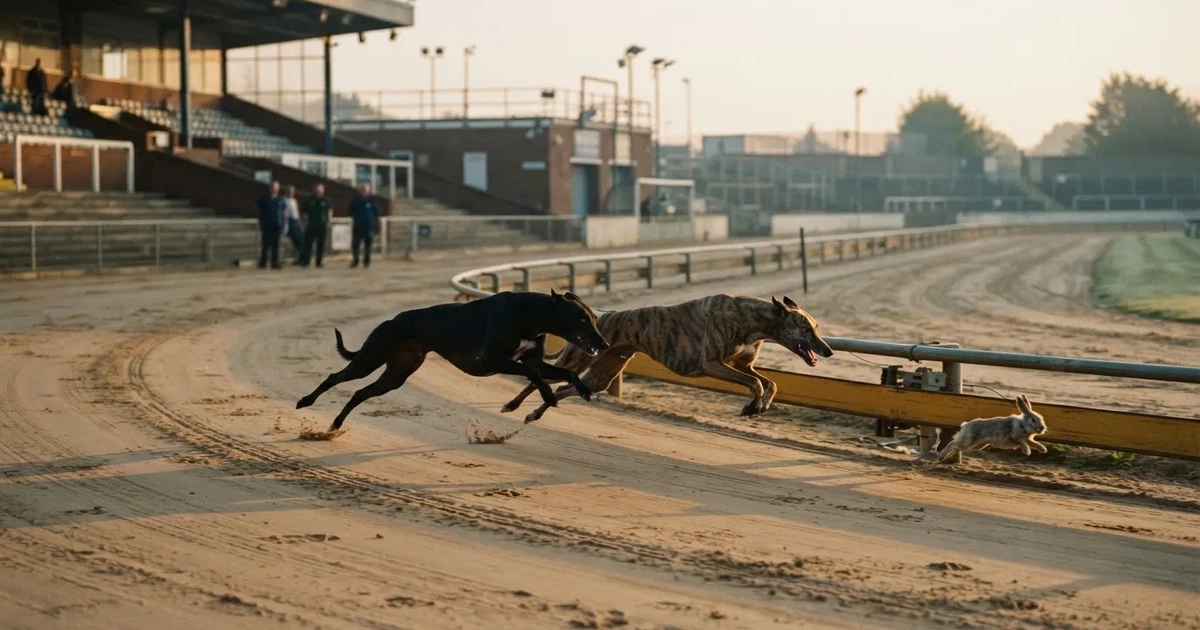
Live greyhound betting sits in a strange place in the British market. A race at Romford or Perry Barr runs in about thirty seconds from the boxes to the winning line, and the price swings that take minutes to play out on an accumulator settle in a single burst on a six-dog race. Bookmakers who offer in-play greyhounds handle that burst in two ways: a markets-suspended flag that drops greyhounds from the in-play list while a race is in progress, or a fully open book that accepts bets until the winning post.

Best platforms with live greyhound betting odds are the ones that keep a price up while the hare is running. A suspended market costs the bettor nothing directly, but it removes the one moment a bettor with a stronger read on the break than the bookmaker could have acted on. The practical test of an in-play greyhound book is whether the price on the leader tightens and the price on the trailer drifts as the race unfolds. Where the offering price does not move at all, the in-play product is a screenshot, not a market.
Cash out on a greyhound race is mostly a pre-race tool that bookmakers leave available once the race goes in-play. The cash-out figure offered at the off is a function of the prices the bookmaker is showing on the same race on its own site, which is to say the bookmaker is pricing both sides of the cash-out book. A greyhound race has no half-time, no stoppage, no injury break. By the time the traps open the only cash-out figure worth taking is the one already on the screen, and it is usually lower than the backer’s read of the race.
A bettor who uses cash out on greyhounds should check the cash-out figure against the price of the same dog in the win market. Where the cash-out figure is close to the backer’s read, the cash-out is just a fees-laden exit. Where it is well below, the cash-out is a quiet haircut the bookmaker takes for closing the position early.
Live greyhound betting today depends on the schedule at the British stadia, with meetings most evenings and Saturday afternoons. The practical problem is not finding an in-play greyhound race; it is finding one where the prices move.
Predictions and strategy on greyhound racing
Greyhound betting tips travel further on the page than they do on the betting slip. A tip that names trap three at Romford at 7:42 is wrong more often than it is right, and a reader who treats it as anything other than a starting point loses the house. Free-greyhound betting systems tend to fall into two shapes: the level-stakes plan and the progression. The level-stakes plan is the slower way to lose money; the progression is the faster way.

A greyhound racing betting strategy that earns its keep rests on three things the page can describe without predicting a winner. First, form over the track the race is being run at — a dog that has won four from five at Perry Barr is a different proposition at Belle Vue. Second, sectional times, where the data is available, because the break decides most six-dog races. Third, the price the market is offering on that read of the form, because a strong read at a weak price is a losing bet.
Greyhound best bets are a phrase that turns up in marketing copy and on tipster sites, and it is the one phrase worth deflating. No system can know the outcome of a race; a tip is one reader’s read of the form against the rest of the market’s read, and the page never names the tipster who will win. The arithmetic is simpler: the more often a tip’s quoted price is below the price the reader would have taken, the more the tip costs the reader.
Greyhound betting tips today tend to arrive by morning email and push notification. The test is the price the tip is attached to. A tip with no price is a tip with no skin in the game, and a tip priced below 2.0 (1/1) has very little room before the margin eats the edge.
A reader who wants to use tips as one input among several should keep a record of price and result. Where the record shows the tip is beating the starting price over a hundred bets, the tip is doing something. Where it shows the tip is below SP, the tip is losing to the market’s own read.
Bet types and odds on greyhound racing
Greyhound betting odds are decimal prices on the outcome of one six-dog race. The win market is the simplest: pick the dog, take the price, the dog wins or it does not. The place market pays if the dog finishes first or second in a six-runner race; the each-way market is two bets of equal stake, one on win and one on place. A £10 each-way bet costs £20 and pays out on either half if the conditions are met.
Greyhound derby betting odds follow the same markets as any other race, plus ante-post markets that run weeks ahead of the decider. Ante-post greyhound betting means taking a price before the final declarations are made, and the price is bigger to compensate for the risk that the dog does not run. A non-runner voids the ante-post bet under most operators’ rules, which the reader should check before relying on a long-priced ante-post selection.
Greyhound spread betting is a different product, regulated by the Financial Conduct Authority when it is financial and treated under General Betting Duty otherwise. Spreadex’s own site states that spread betting losses can exceed deposits. A spread bet on a greyhound race is a stake-per-point wager on a range the bookmaker sets; the reader’s loss is the size of the wrong-way move in points multiplied by the stake. It is a product with no fixed ceiling on losses, and it belongs on the page only as a warning to readers who see it advertised alongside fixed-odds greyhound markets.
A greyhound bet calculator is a small tool that turns the decimal odds and the stake into a return. For a single bet the return is stake multiplied by the odds and the net profit is stake multiplied by (odds minus one). On a £10 win bet at 3.50 the return is £35 and the profit is £25. On a £10 each-way bet at 3.50 (one quarter the odds for the place, two places in a six-runner race) the win half returns £35, the place half returns £13.75, and the total return on a win is £48.75 against a £20 stake. The same calculator handles accumulators and combination bets by multiplying the legs into one price.
Starting prices apply to greyhound racing and are the odds on a runner in the on-course fixed-odds market at the off. The SP is what an SP-only bet pays at, and it is the figure most tipsters quote when they say “advised at 5/2, returned at 3/1”. Best Odds Guaranteed (BOG) means the bookmaker pays the bigger of the price taken and the starting price, and it is one of the few customer-facing concessions a British greyhound book actually honours without a fight. A bookmaker that advertises BOG on greyhounds pays it on greyhounds; a bookmaker that omits greyhounds from the BOG terms does not.
How the margin sits inside every price
The bookmaker’s margin is the share of every pound bet on a market that the bookmaker keeps on average across all outcomes. It is built into every price on the board, and the reader sees it as the gap between the true probability of all outcomes and the implied probability the prices sum to. Where the implied probability sums to 110 %, the margin is 10 %.
A two-way market at decimal odds of 1.90 / 1.90 is the cleanest example. The implied probability of 1.90 is one divided by 1.90, which is 0.5263, or 52.63 %; both sides together sum to 105.26 %, so the payout share is one divided by 105.26 % — about 94.99 % — and the margin is 100 % minus 94.99 %, or roughly 5 % on the band. A more aggressive bookmaker might offer 1.85 / 1.85, where both sides sum to 108.1 % and the margin sits closer to 7.5 %; a sharper bookmaker might offer 1.95 / 1.95, where both sides sum to 102.5 % and the margin is about 2.5 %. As a band, a competitive greyhound win market carries a margin somewhere between 2 % and 8 % depending on the bookmaker, the race and the time of day.
The margin is paid by every bettor in the market, regardless of who wins. A bookmaker paying a 5 % margin on every race is taking 5p from every pound bet across all bets on that race, win or lose, on average. A reader who is selecting one dog in one race never sees the margin on the betting slip; it sits invisibly in the price.
The same test works on a three-way market and on a six-dog greyhound race. On a six-dog race at decimal prices 6.00, 7.00, 8.00, 11.00, 13.00, 17.00 the implied probabilities sum to 1 ÷ 6.00 + 1 ÷ 7.00 + 1 ÷ 8.00 + 1 ÷ 11.00 + 1 ÷ 13.00 + 1 ÷ 17.00 = 0.1667 + 0.1429 + 0.1250 + 0.0909 + 0.0769 + 0.0588 = 0.6612, or 66.12 % in payout share and a 33.88 % margin. That figure looks high, and it is high, because a six-runner field at long prices carries more overround than a two-way football market. A greyhound bookmaker offering win odds that sum to 75 % is keeping 25 % of every pound bet on the race; the same bookmaker offering 80 % summed implied probabilities is keeping 20 %.
Margin is the single number worth comparing across bookmakers on the same race, and the bookmaker whose win market sums closest to 100 % implied probability is the cheapest place to back a dog that day.
Sports and tournaments on greyhound racing
Greyhound betting in Great Britain runs on the eighteen licensed stadia the Greyhound Board of Great Britain regulates. The biggest of them — Belle Vue, Perry Barr, Romford, Towcester, Crayford, Sittingbourne, Yarmouth, Kinsley, Doncaster, Nottingham, Oxford, Henlow — stage meetings most evenings, with bigger cards on a Saturday afternoon and graded finals across the spring and summer.
Greyhound derby betting is the calendar’s anchor. The English Greyhound Derby at Towcester is the sport’s blue riband in Britain, and the Scottish Greyhound Derby is the other flagship event the betting market prices seriously. Both events attract ante-post markets weeks in advance, and the morning of the final brings a layered book: win, place, each-way, forecast and tricast combinations on the same card.
Greyhound racing betting online has grown on the back of evening streaming from the British stadia. Most major British bookmakers stream one meeting a night to logged-in customers, and the streaming schedule tends to publish on the home page a few hours before the first race. The streaming is the cheapest way for a reader to watch the break before the betting decision goes in.
Greyhound racing in New Zealand was ended by the Racing Industry (Closure of Greyhound Racing Industry) Amendment Act 2026, passed on 2 April 2026, with the phase-out set for 1 August 2026. The seven affiliated clubs that Greyhound Racing New Zealand organised before the ban — Auckland, Waikato, Whanganui, Palmerston North, Canterbury, Otago and Southland — no longer stage meetings. The New Zealand betting market for greyhounds has been a thinner proposition since the ban, and most major bookmakers have wound down their New Zealand greyhound product.
The mechanics of a greyhound race are simple enough that the betting market settles quickly. A mechanically operated artificial lure runs along a rail ahead of the dogs, and races often involve parimutuel or bookmaker betting. The on-course bookmaker settles in cash; the off-course bookmaker settles from a starting price set by the on-course market at the off.
The licensed British greyhound market
Every brand reviewed below holds a remote general betting standard (real events) licence from the Gambling Commission and is searchable on the Commission’s public register. The register lists far more brands than any article can feature, and the absence of a brand from this page is not the absence of a licence. The selection below is the ten brands the comparison is built around; a reader comparing options needs every one of them on the page.
| Brand | Gambling Commission remote licence number and licence holder | What the operator’s own terms state on the key’s subject |
|---|---|---|
| Fitzdares | 000400-R-103839-030 — Fitzdares Limited | App offers cash out, accumulators, Lucky 15s, specials and ante-post markets on horse racing, football, tennis, rugby, cricket, golf and American football, with in-play live odds |
| Geoff Banks | 054095-R-330366-010 — GB Sports Advisors Limited | App offers live in-play prices and ante-post prices on future events |
| Bar One Racing | 056516-R-332750-007 — Bar-One Racing Limited | Irish independent bookmaker, rebranded as BAR 1 Betting, with shops across Ireland and horse racing sponsorships at Dundalk, Fairyhouse, Navan, The Curragh, Curraheen Park and Cork |
| Bet Ahoy | 100094-R-341742-003 — Bet Ahoy Ltd | Welcome: “Bet £10 & Get £10 in Free Bets”, a £5 sports bet and a £5 acca |
| Fitzwilliam Sports | 048760-R-335434-009 — SBKI Limited | Dublin bookmaker with capped membership; welcome is a “High Stakes Welcome” subject to compliance criteria; offers instant deposits, fast withdrawals, timeouts and deposit limits, and links to GambleAware, GamStop and Gamblers Anonymous |
| Paddy Power | 039439-R-319330-013 — PPB Counterparty Services Limited | Sports betting app covers football, horse racing, boxing, rugby, tennis, golf, darts, snooker and F1 |
| Coral | 054743-R-330863-014 — LC International Limited | Sports welcome: “Get £40 in Free Bets when you bet £20” — deposit and sports bet of £20 or more at minimum odds 2.0 (1/1), £40 in free bets within 7 days, expiring 7 days after issue, for new GB customers who opt in |
| London Bet | 066162-R-340278-004 — Thistle Bet Limited | App combines sports betting (football, tennis, horse racing, greyhounds, darts, golf, cricket, NFL, NBA, MLB, snooker) with Pragmatic Play casino slots and live in-play betting |
| Betmaster | 065699-R-339929-002 — BM Solutions GB Ltd | App covers football, cricket, horse racing, NFL and eSports (League of Legends, Dota 2) |
| Swifty Sports | 058957-R-334734-006 — Swifty Global (UK) Ltd | Best Odds Guaranteed, Cash Out on markets including horse racing and football, daily price boosts, live streaming and in-play betting; Bet Builder listed as coming soon |
The market the table describes is uneven on a key point for this page: not every row lists greyhound markets as a confirmed feature. Where the operator’s own terms name greyhound alongside the rest of the sportsbook, the row carries the confirmation. Where the operator’s own terms do not name greyhound, the row leaves the cell empty — and the reader checks the operator’s racing tab before assuming greyhounds sit under football, horse racing and the rest.
The ten reviewed bookmakers and what each one costs a greyhound bettor
Fitzdares
Fitzdares is the high-end British bookmaker that has run on a “premium” positioning since long before the app stores existed. The Commission licence is in the holder’s own name, the betting categories on the register are remote general betting standard (real events), and the app lists cash out, accumulators, Lucky 15s, specials and ante-post markets across horse racing, football, tennis, rugby, cricket, golf and American football. Greyhounds are a likely fit under the racing tab given the breadth of the ante-post and specials product, but the operator’s own terms name the bigger sports and leave greyhounds to the reader to verify on the betting slip.
The price on a greyhound race is the test that matters. A premium bookmaker with a smaller market share than the majors tends to carry more margin on racing than the larger books, and the cost the reader pays is the gap between Fitzdares’ win market and the sharper end of the panel. The starting price plus BOG on the bigger races softens the gap, and the cash-out figure on greyhounds tends to be tighter than at the discount books because the in-play book at Fitzdares is on a smaller base.
A reader who wants a quieter app, an ante-post product that runs well ahead of the bigger races, and BOG on the obvious meetings will find what they are looking for at Fitzdares. A reader who wants the sharpest greyhound price on a Tuesday night at a smaller stadium will not.
Geoff Banks
Geoff Banks is the GB Sports Advisors Limited product, run by a well-known British tipster-turned-bookmaker and priced more like a high-street shop than a major. This operator is licensed by the Gambling Commission for remote general betting, and the app’s stated features are live in-play prices and ante-post prices on future events. Greyhounds are not named in the operator’s own terms, and the reader checks the racing tab before staking.
The price Geoff Banks offers tends to be sharper on smaller meetings than the majors, because the operator’s volume runs on the niche end of racing rather than on Premier League football. The cost the reader pays for that sharpness is a thinner in-play offering on the bigger Saturday cards, and a smaller menu of acca boosts than the major brands.
A reader who bets smaller fields at smaller stadia and wants a sharper price than the majors will find the Geoff Banks app useful. A reader who wants every acca boost and a fully-built bet builder on greyhounds will not.
Bar One Racing
Bar One Racing rebranded as BAR 1 Betting and is an Irish independent with shops across Ireland and a sponsor sheet that runs through Dundalk, Fairyhouse, Navan, The Curragh, Curraheen Park and Cork. The firm operates under a remote general betting licence issued by the Gambling Commission, and the operation is horse-racing-led rather than greyhound-led. Greyhounds at a British-facing Irish bookmaker are a thin product compared to the same operator’s racing depth at the Curragh.
The cost a British greyhound bettor pays at Bar One Racing is a smaller greyhound menu and a price that does not always have the depth of a British bookmaker. The benefit is a quieter site, an Irish take on the racing market, and a sponsor list the reader can follow on a Saturday afternoon. BOG tends to apply on the bigger cards, and the cash-out figure on smaller meetings can be thin.
A reader who splits time between Irish and British racing and wants a single bookmaker for both will find the Bar One product useful. A reader who bets only British greyhounds will find a thinner menu than at the major British books.
Bet Ahoy
Bet Ahoy is the Bet Ahoy Ltd product and the Commission’s smallest account number in the comparison. The operator is licensed by the Gambling Commission for remote general betting. The welcome offer as described on the operator’s own terms is “Bet £10 & Get £10 in Free Bets”, split as a £5 sports bet and a £5 acca. Greyhound markets are not explicitly detailed, so the listing reflects available data rather than confirming greyhound availability.
The cost a greyhound bettor pays at Bet Ahoy is the same trial as at any other small bookmaker: an unknown greyhound margin until the reader checks the racing tab, and a free-bet split that requires an acca leg most readers will not have planned. The benefit is a smaller bookmaker with a different price on a smaller meeting from the majors, and the £5 acca free bet tends to drift in value when it cannot be split.
A reader who has not yet found a sharp second bookmaker and wants to add one will find Bet Ahoy worth checking. Those who bet greyhounds regularly should examine the racing tab on the day, as the market may be narrower than at the larger national brands.
Fitzwilliam Sports
Fitzwilliam Sports is the SBKI Limited product and a Dublin bookmaker with capped membership. The operator is licensed by the Gambling Commission for remote general betting. The welcome is a “High Stakes Welcome” subject to compliance criteria. The site also offers instant deposits, fast withdrawals, timeouts and deposit limits, and links to GambleAware, GamStop and Gamblers Anonymous. The capped membership means new accounts are not automatic, and the welcome is structured for the bigger player rather than the casual reader.
The cost a casual greyhound bettor pays at Fitzwilliam Sports is the membership gating — not every applicant gets an account, and the welcome is not designed for the £10 trial bettor. The benefit for the bettor who gets through the gate is a Dublin product with a sharper price on racing and a faster withdrawal than most major books, and a deposit-limit and timeout infrastructure that the smaller British books do not always match.
A reader who bets in larger stakes and wants a high-end alternative to the majors will find Fitzwilliam Sports worth applying for. A casual reader who bets £5 at a time will find the membership gate and the “High Stakes Welcome” the wrong shape.
Paddy Power
Paddy Power is one of the major British and Irish bookmakers, run by PPB Counterparty Services Limited. This business holds a remote general betting licence from the Gambling Commission, and the sports betting app covers football, horse racing, boxing, rugby, tennis, golf, darts, snooker and F1. Greyhounds sit under the racing tab alongside horse racing, and Paddy Power’s Money-Back Specials on greyhounds are a long-standing part of the British greyhound offer.
The cost a greyhound bettor pays at Paddy Power is a margin on racing that sits in the middle of the panel — not the sharpest, not the weakest — and an aggressive promotional schedule that returns part of a losing stake as a free bet on the bigger meetings. The benefit is the depth of the racing product, the BOG on the obvious meetings, and the acca boosts that run alongside greyhounds.
A reader who wants the bigger bookmaker’s depth and the racing product’s full menu will find Paddy Power’s greyhound book fit for purpose. A reader who wants the sharpest greyhound price on a Tuesday night at a smaller stadium will look elsewhere.
Coral
Coral is one of the high-street names the LC International Limited group operates online. The Commission licence is in the holder’s own name, the categories are remote general betting standard (real events) and remote betting intermediary, and the sports welcome offer is “Get £40 in Free Bets when you bet £20” — a deposit and sports bet of £20 or more at minimum odds of 2.0 (1/1), with £40 in free bets issued within 7 days and expiring 7 days after issue, for new GB customers who opt in. Greyhounds are a long-standing part of the Coral racing product.
The cost the reader pays is the welcome offer’s conditions. The £40 in free bets expires 7 days after issue, and the minimum price of 2.0 (1/1) is high enough to push the qualifying bet toward a single rather than an acca. The benefit is the depth of the racing product, the BOG on the bigger cards, and a long-running greyhound product that prices the obvious meetings.
A reader who plans to use the welcome as a trial will find the £20 qualifying bet at 2.0 a higher bar than the smaller offers. A reader who plans to bet greyhounds regularly will find the Coral racing product fit for purpose.
London Bet
London Bet is the Thistle Bet Limited product and combines sports betting with Pragmatic Play casino slots on a single app. The Commission licence is in the holder’s own name, the categories are remote general betting standard (real events), and the sports betting coverage lists football, tennis, horse racing, greyhounds, darts, golf, cricket, NFL, NBA, MLB and snooker alongside live in-play betting. Greyhounds are named in the operator’s own terms.
The cost a greyhound bettor pays at London Bet is a sportsbook-plus-casino product that splits attention between greyhounds and slots, and a margin that is not in the cheaper half of the panel. The benefit is a single wallet across sports and casino, and a greyhound product the operator’s own terms confirm.
A reader who bets greyhounds and slots on the same account will find the wallet integration useful. A reader who focuses on greyhounds alone will find more extensive racing coverage at dedicated specialists.
Betmaster
Betmaster is the BM Solutions GB Ltd product and the Commission’s smaller licence in the comparison. The categories are remote general betting standard (real events), and the app covers football, cricket, horse racing, NFL and eSports (League of Legends, Dota 2). Greyhounds are not named in the operator’s own terms, and the reader should check the racing tab before staking.
The cost a greyhound bettor pays at Betmaster is the same trial as at any other smaller bookmaker with a thin racing product: an unknown greyhound menu until the reader checks the site, and a margin that is not in the sharper half of the panel. The benefit is a smaller bookmaker with a different price on a smaller meeting from the majors.
A reader who is still searching for a competitive secondary bookmaker might find Betmaster useful. Those who bet on greyhounds regularly should examine the racing tab before staking.
Swifty Sports
Swifty Sports is the Swifty Global (UK) Ltd product and the most feature-complete mid-tier bookmaker in the comparison. The company holds a remote general betting licence from the Gambling Commission, and the stated features are Best Odds Guaranteed, Cash Out on markets including horse racing and football, daily price boosts, live streaming and in-play betting, with Bet Builder listed as coming soon. Greyhounds are likely to sit under the racing tab alongside horse racing, but the operator’s own terms name horse racing and football rather than greyhounds.
The cost a greyhound bettor pays at Swifty Sports is the same trial as at any smaller bookmaker with a BOG product: a margin that is not in the sharper half of the panel, and a racing menu the reader checks on the day. The benefit is the full feature set at a mid-tier bookmaker — BOG, Cash Out, daily price boosts, live streaming and in-play — and the price on a smaller meeting that may differ from the majors.
A reader who wants the full feature set on a single mid-tier account will find Swifty Sports useful. A reader who bets greyhounds only will check the racing tab on the day.
Overview of greyhound racing betting
Greyhound racing betting in Great Britain rests on a small list of facts the page cannot change. The sport is regulated by the Greyhound Board of Great Britain, which has 18 licensed stadia. The races run on a mechanically operated artificial lure that runs along a rail ahead of the dogs, and races often involve parimutuel or bookmaker betting. The starting price on the on-course fixed-odds market at the off is what settles SP-only bets, and BOG pays the bigger of the price taken and the starting price.
The market for greyhound betting is licensed at the point of consumption. A bookmaker taking bets from customers in Great Britain needs a Gambling Commission licence wherever it is based, and the Commission’s public register is the whole test of who holds one. There is no state monopoly, no cap on the number of licences, and no statutory list of permitted bets or markets — the operator holds a licence for a category and offers markets under its own rules and the Licence Conditions and Codes of Practice.
The offshore market sits on the other side of the line. A Curaçao, Maltese or Gibraltar licence is not a substitute for a Commission licence for British customers, and a brand licensed offshore does not fall under the Commission’s player-protection framework. The bettor using an unlicensed brand loses GAMSTOP coverage, the Commission’s complaints route, the approved dispute-resolution body and the British consumer redress if funds are withheld, and the brand is not bound by the 10x bonus cap or the £150 vulnerability check. A reader comparing options on this page reads every brand reviewed here as a GB-licensed bookmaker, and reads the offshore brands against that bar.
The starting position is simple. Greyhound racing is a British sport with a licensed bookmaker market, a regulator, a self-exclusion scheme, and a cost structure that the arithmetic on this page makes plain. The rest of the page is the detail.
Legality and regulation
The Gambling Commission licenses the whole commercial market under the Gambling Act 2005, which covers Great Britain — England, Scotland and Wales. Northern Ireland is outside the Act and has its own older law, so a GB licence is not a Northern Ireland licence and the page never blurs the two. Since the Gambling (Licensing and Advertising) Act 2014, an operator whose remote facilities are used in Great Britain needs a Commission licence wherever it is based; sections 33 and 36 of the 2005 Act as amended are the operative provisions.
Betting licence types: remote general betting standard (real events), remote general betting standard (virtual events), remote general betting limited, remote pool betting and remote betting intermediary (the licence for betting exchanges). Every brand reviewed on this page holds the remote general betting standard (real events) licence, and Coral additionally holds the remote betting intermediary licence.
Identity verification before the first deposit means no anonymous play at a licensed site. Name, address and date of birth are verified before a customer can deposit or gamble, including with a free bet or bonus, and source-of-funds questions at higher spend are normal under the money-laundering rules. Minimum age is 18.
What may be bet on: no statutory list of permitted bets or markets exists. In-play betting is offered by GB bookmakers under the operator’s licence conditions and customer-protection duties, and the page never writes that in-play is “unrestricted” as a legal conclusion. Esports are treated like any other event, virtual events are a separate licence category, and bets on politics, TV shows and novelty markets are offered by GB bookmakers without statutory prohibition found in research.
Spread betting on a financial product is regulated by the Financial Conduct Authority rather than the Commission, and the FCA’s regime runs alongside the Commission’s. Spread betting losses can exceed the deposit under Spreadex’s own terms. Spread betting that is not financial is treated as general betting and falls under General Betting Duty.
Off-course pool betting on horse or dog racing is a separate licence and duty. No statutory cap on stakes in sports betting was found: operators set their own maximum stakes and may restrict customers.
The Commission’s public register is searchable by business name, trading name, domain or account number, and it is the whole test of whether a brand holds a licence. Licensed operators use .com as well as .co.uk, so the domain proves nothing on its own. The page quotes no count of licences without an access date.
A bettor who wants to check a licence searches the Commission’s register for the brand’s trading name and reads the categories and the licence holder. Where the holder is a parent company that runs several brands — Ladbrokes and Coral under LC International Limited, Paddy Power and Betfair under PPB Counterparty Services Limited — the brands are not independent operators, and the page never presents them as such.
Responsible gambling and player protection
GAMSTOP is the national multi-operator online self-exclusion scheme and a mandatory licence condition for online operators since 31 March 2020. Exclusion periods are six months, one year, five years, or five years with auto-renewal; after the minimum period the exclusion stays in place for a further seven years unless the customer asks GAMSTOP to remove it. GAMSTOP covers online sites and apps, and betting shops run a separate service.
A financial vulnerability check (LCCP condition 3.4.4, in force since 30 August 2024) applies to licensed remote betting when a customer’s deposits minus withdrawals exceed £150 in a rolling 30 days (since 28 February 2025). It is a public-record check (bankruptcy, county court judgments) rather than an income check or a credit reference check. Financial risk assessments are announced in a staged plan, with no start date — the Commission published the article on 7 July 2026 — and the page writes “announced, staged, no start date” rather than “in force”.
Deposit limits (RTS 12) require operators to offer a gross deposit limit on a fixed time frame; the first changes have applied since 31 October 2025, a second phase was postponed to 30 September 2026, and whether the second phase is live is not established. There is no state-set deposit or loss ceiling for betting: limits are the customer’s choice, and the operator’s tools are the deposit limit, the timeout and GAMSTOP.
Help: GamCare (National Gambling Helpline), GambleAware, NHS gambling clinics, Gamblers Anonymous. Every brand reviewed on this page links to at least one of those services, and Fitzwilliam Sports links to GambleAware, GamStop and Gamblers Anonymous.
The credit-card ban for gambling in Great Britain has been in force since 14 April 2020 (LCCP condition 6.1.2), and it covers credit-card-funded payments through an e-wallet as well as credit cards directly. Debit cards and bank-based payments are not covered by the ban.
Bonuses and free bets on greyhound racing
The promotional schedule around greyhound racing has thinned since the bonus rules tightened on 19 January 2026. Wagering requirements on bonuses are capped at 10x, and mixed-product promotions — offers that require gambling on two or more product types — are banned. A £10 bonus at the old 50x wagering factor would have needed £500 of bets; under the cap no bonus may need more than £100 of qualifying bets. Whether the cap applies to free bets with no wagering condition, and any cap on the money value of a bonus, are not established in research.
Greyhound betting offers tend to take three shapes. The first is the win refund — Coral’s Money-Back Specials, Paddy Power’s Money-Back Specials — that refunds a losing stake as a free bet if a named condition is met (a specific trap number, a specific race on the card). The second is the price boost on a specific runner in a specific race. The third is the acca insurance that refunds a losing accumulator stake as a free bet if one leg lets the reader down.
The cost of a free bet to the reader is the stake not being returned with a win. A £10 free bet at 5.00 that wins pays £40 — the £10 stake is not returned, so the net profit is £40. The same £10 cash at 5.00 would have paid £50 — stake returned, net profit £40. The free bet costs the £10 stake, which the marketing copy describes as “free” but which the arithmetic describes as the price of the offer.
The cost of a bonus is the turnover required before the bonus pays out. A £10 bonus at the 10x cap means £100 of qualifying bets at the minimum price the terms state. On greyhound racing the minimum price is usually 2.0 (1/1), which excludes the long-priced dogs and pushes the bettor into the win market favourites. The bonus pays out after £100 of qualifying bets at the required price, and the cost of clearing the bonus is the margin on every one of those bets — typically 5 % to 8 % on the greyhound win market, which means £5 to £8 of the £100 turnover goes to the bookmaker before the bonus is banked.
Greyhound derby betting offers are the bigger promotional events of the calendar. The English Greyhound Derby at Towcester and the Scottish Greyhound Derby at Perry Barr attract ante-post markets, price boosts, and enhanced place terms that the majors advertise weeks in advance. The cost of taking the enhanced place terms is the same cost as any other offer: a condition the bettor reads before staking.
The honest framing is simple. A bonus pays the reader less than a price the operator publishes on its own site, and the cost of clearing it is the margin on every qualifying bet. A free bet pays the reader the winning return without the stake, and the cost is the stake. A refund offer costs the reader the condition being met and the free bet terms that follow. Every promotional shape on the British greyhound market works that way, and the arithmetic is the test of whether it is worth claiming.
The matched-betting greyhound market — using the free bet at the bookmaker and laying the same selection at an exchange to lock in a return — is a separate discipline. The same arithmetic applies: the value of a free bet whose stake is not returned is the free-bet amount multiplied by (odds minus one) divided by the odds, multiplied by the payout share of the market. A £10 free bet at 5.00 on a market with a 95 % payout share is worth £10 × (5.00 − 1) ÷ 5.00 × 0.95 = £7.60 in expected value. The reader is never promised that value, and the page is now done with the calculation.
Mobile apps and greyhound racing betting
Greyhound bet app downloads in Great Britain run through the App Store and Google Play, and the GB App Store listings are what a reader checks before installing. Every brand reviewed on this page has an iOS app, and most have an Android app under the same name.
Bet365 is described as the most downloaded sports betting app in the UK, and the app’s stated features include Bet Builder+ (combining markets from one event into a single bet, available pre-match and in-play), Super Boosts, Winnings Boosts on Bet Builders and selected singles, and daily Bet Boosts. Greyhound markets sit under the racing tab and the app’s depth of in-play markets extends to most British stadia on a given evening.
Fitzdares, Geoff Banks, Bar One Racing, Bet Ahoy, Paddy Power, Coral, London Bet, Betmaster and Swifty Sports all run iOS apps. Lottoland UK’s app is a casino-lottery-sportsbetting combination rather than a racing-led product, and its greyhound market is a minor part of the sportsbook.
A greyhound bet app for Android follows the same App Store logic on Google Play. The reader searches the brand name, reads the publisher (which the App Store and Google Play both list), and checks the publisher against the licence holder on the Commission’s register. Where the publisher and the licence holder do not match, the page names the operator by what the Commission register says and the reader checks the brand’s own terms.
Mobile betting apps greyhound on a touch screen tend to use a collapsible racing tab with each stadium as a sub-menu and each race card as a list of runners with decimal prices. The in-play toggle is usually at the top of the racing tab, and the cash-out toggle is on the bet slip. Live streaming where it is offered sits behind a logged-in account and a positive balance or a bet on the relevant race.
The bet builder on greyhounds is a thinner product than the same product on football. The market combinations on a single greyhound race are limited to win and place (forecast and tricast are separate), and the price moves sharply between the trap draw and the off. A bet builder on greyhounds is a niche feature that the reader checks on the operator’s own app before relying on.
Frequently asked questions about greyhound racing betting
How do you bet on greyhound racing?
Pick a licensed bookmaker from the Commission’s public register, open an account, verify name, address and date of birth, deposit by debit card or bank transfer (credit cards are banned for gambling), open the racing tab, choose the meeting and the race, and place a single bet on the runner at the decimal price shown. The bet settles at the off or at the starting price, depending on the terms.
How do you bet on greyhound dogs the same way?
The mechanics are identical to betting on horses: win, place, each-way, forecast and tricast on the same race card. The greyhound meeting schedule runs most evenings at one of the eighteen GBGB stadia, and the card publishes an hour or two before the first race.
How can a bettor win at greyhound betting?
No system can know the outcome of a race, and the page never names a winner. The arithmetic behind a winning bet is stake multiplied by odds for the return and stake multiplied by (odds minus one) for the profit, and the same arithmetic on a losing bet is a stake returned to zero. The decision that improves the long-term picture is the price the reader takes against the read of the form.
How can a reader check that a bookmaker holds a Gambling Commission licence?
Search the Commission’s public register by business name, trading name, domain or account number, and read the categories and the licence holder. The register lists every licence currently in force, and the absence of a brand from the register is the absence of a licence. The Commission’s register is the whole test.
How is the return on a bet worked out from the stake and the odds?
Return is stake multiplied by decimal odds. Profit is stake multiplied by (odds minus one). On a £10 win bet at 3.50 the return is £35 and the profit is £25; on a £10 each-way bet at 3.50 (one quarter the odds for the place, two places in a six-runner race) the win half returns £35 and the place half returns £13.75, so a winning each-way bet returns £48.75 against a £20 stake.
What is the bookmaker’s margin and how can it be seen in the odds?
The margin is the share of every pound bet on a market the bookmaker keeps on average. It is built into every price, and the reader sees it as the gap between the true probability and the implied probability the prices sum to. On a six-dog greyhound race at decimal prices 6.00, 7.00, 8.00, 11.00, 13.00, 17.00, the implied probabilities sum to 66.12 %, so the payout share is 66.12 % and the margin is 33.88 % — a typical figure for a long-priced greyhound field.
Horse racing & greyhounds – Icehockeyoddshub.com
Content created by the «Icehockeyoddshub.com» team
