
Cricket betting tips 2026: the maths, the market and the cost
 Available in US
Current as of October 30, 2026 · Gambling Commission public register
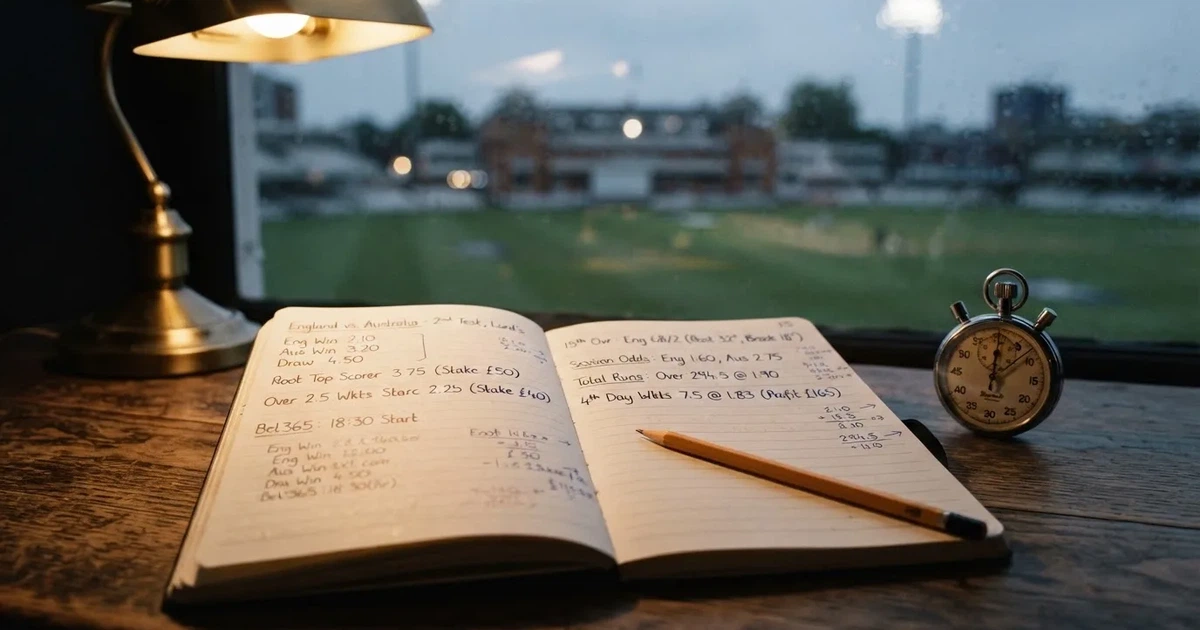
Cricket betting is a market before it is a sport. A tip is a price first and a forecast second, and the difference between a price worth taking and a price worth leaving alone lives inside a small piece of arithmetic that every serious punter eventually learns to do in their head. This page works through that arithmetic, the formats cricket is played in and the markets they generate, the licence and protection regime that wraps UK betting, and ten bookmakers licensed by the Gambling Commission to take bets from customers in Great Britain. The angle from start to finish is what each piece of the puzzle costs the reader — not as a marketing line, but as the figure research has and the maths will deflate.
Live Cricket Betting and Cash Out: What the Market Holds Back
In-play cricket betting is one of the more demanding disciplines a bookmaker can offer, and the reason is structural. A Test innings can last a full day; an ODI is 50 overs per side; a T20 is over in roughly three hours of play. Across those hours the odds on every market move with every ball, and the bookmaker’s job is to reprice a contest whose state can change on a single delivery. Most large UK bookmakers offer live cricket, but the depth of the in-play offering varies hugely — match odds on the outright winner is the floor, and ball-by-ball markets on the next over, the next wicket method or the next batter’s runs are the ceiling, and only a few brands carry the ceiling.
Cash out sits beside live betting because it solves the same problem from the punter’s side. A bookmaker offers a real-time price to buy a bet back, locking in either a small profit or a reduced loss before the bet has settled. The headline of cash out is “control your bet”: the trader in the user’s hand, the ability to walk away when the match turns. The catch is the same as every other market the bookmaker offers: the cash-out price carries its own margin, and that margin is hidden inside the spread between the live odds for back and lay. A punter who cashes out at the moment the price is best still takes a worse deal than a punter whose bet settles at full odds — by design, not by accident.
The practical effect is that cash out rewards timing and punishes hesitation. A bet that looks safely in front at the innings break is not the same price five overs later after the second innings has begun, and a punter who waits “to be sure” usually finds the cash-out value has compressed. The trade-off is the discipline that every serious punter builds for themselves: a rule on when to take the cash, written down before the bet is placed and not changed in the heat of the match.
For live cricket specifically, three practical limits apply. First, not every market is available in-play — outright tournament winner markets are typically pre-match only, because the live inputs are too sparse. Second, the cash-out button is disabled by the bookmaker during critical moments (a wicket falling, a DLS recalculation, a Super Over), because the firm needs a moment to reprice and protect itself from a stale quote being hammered. Third, streaming matters: a punter watching a stream on the bookmaker’s own app sees prices move in lockstep with what they are watching, while a punter relying on a radio commentary is permanently a few seconds behind. The bookmakers that invest in live streaming — and in keeping their in-play markets deep and well-priced — earn a real edge over competitors that show only the match odds on the winner.
How Predictions Become Bets — And Why Every Tip Is a Price
A “tip” in cricket betting is usually a forecast presented as a certainty: this side will win, that batter will score more than fifty, the total will clear 320. Presented that way, the tip is a story about the future. Presented properly, the tip is a probability — and a probability becomes a bet when the punter compares it to the price.

That comparison is what makes a value bet, and the rest of cricket betting strategy is engineering around it.
What a value bet actually is
A value bet is a price the bookmaker offers that is higher than the probability the punter estimates for the outcome. If the bookmaker offers 3.00 (2/1) on a side the punter genuinely believes has a 40% chance of winning, the implied probability in the odds is 1 ÷ 3.00 = 33.3%, and the punter’s 40% estimate gives an edge of 6.7 percentage points. Over many bets at prices like that, the punter comes out ahead before commission or marketing noise.
Most tips that arrive in a punter’s inbox carry no such arithmetic. They state a result and assume the price will tag along. A punter who treats tips as probabilities has to do the conversion themselves, and most of the time the tip is a worse price than the punter’s own estimate would offer.
Building the estimate
The estimate is built from inputs the punter can name. Recent form matters, but recent form in cricket is more granular than in football: a side’s record in the last three matches against this opposition, the form of two or three batters who carry the innings, the form of the strike bowler on the type of pitch expected. Conditions — pitch, weather, dew, the time of day — act as multipliers on these inputs rather than inputs themselves. A flat pitch flattens the difference between a strong batting side and a weak one; a turning square exaggerates the difference between a side with a quality spinner and one without.
Statistics are the second layer. Strike rate, average, dot-ball percentage, economy, partnership patterns — each carries information that a probabilistic estimate can use. The trap is treating the stats as the answer rather than an input to a judgement that the punter is still making; a tidy spreadsheet in cricket often reads out as confidently wrong, because cricket is a sport of long tails and small samples where three matches of form can be noise rather than signal.
What no tip can do
No tip can make a losing bet a winning one. Cricket is a sport of variance; even the heaviest favourites in an ODI lose roughly one in six matches, and that ratio is for the strongest sides in the world. A punter who follows tips rather than prices is paying the bookmaker’s margin on every bet and getting no return for the subscription fee. A punter who uses tips as one input to an estimate, and only bets when the price exceeds the estimate, has a chance of long-run profit and accepts the variance that makes the chance smaller than it looks.
The line is the same as the one any honest investment guide draws: past performance is not a guide to future results, and the only edge a punter can build is the one inside their own arithmetic.
Bet Types and How Odds Settle in Cricket
Cricket is unusual among team sports in the length of its contests and the variety of formats, and that variety produces a market depth that other sports do not. A Test match creates markets on session runs, fall of next wicket, method of dismissal, player performance across days. An ODI compresses everything into the same match, but the run totals and milestone markets sit at the centre of the book. A T20 turns the match into a flat sprint where the biggest markets are top batter, top bowler, total runs and the outright winner.
The match odds market
Match odds are the market on the outright winner — back one of two sides (or three, with the draw in a Test), and the bet settles according to the result. In Test cricket, the draw is a third outcome, so the book is a three-way book and the margin of the market is the bookmaker’s edge across all three prices.
In an ODI or T20, the draw typically does not exist as a bet (tied matches go to a tie market or, in limited-overs cricket, a Super Over). The match winner is a two-outcome book.
Totals and lines
The “total” market bets on whether the combined runs scored by both sides will be over or under a line the bookmaker sets. Cricket’s totals are higher than in most sports — a T20 team total typically lines at 150-180 runs, an ODI innings total at 250-320, and a Test match innings total sits around 250-400 depending on the conditions.
The line is a margin device as much as it is a forecast. A line set 10 runs higher than the bookmaker’s true estimate collects the same vig as a line set at the estimate, and a punter who bets the total learns to read whether the line is generous or tight without being told.
Top batter, top bowler and player markets
Player markets are where depth shows up. Each side’s top batter is a market; each side’s top bowler is another; head-to-head match-ups between two players in the same XI sit beside them. Player markets are harder for the bookmaker to price than team markets, because the inputs are more granular (a batter’s record at this ground, against this bowling type, in this format) and the variance is wider. A sharp punter who watches cricket closely can find edges in player markets more often than in match odds, but the trade-off is lower liquidity: the bookmaker accepts less money on these markets, so the punter’s stake is capped.
Innings runs and fall of wicket
Innings runs markets bet on how many a side will score in a particular phase of the match — the powerplay, the middle overs, the death overs. Fall of wicket markets bet on the score at which the next wicket falls. These markets are the most granular in cricket, and they are where the bookmaker’s automated pricing engines work hardest. For the punter, they are also where the limits bite hardest — most firms cap stakes on these markets at modest levels, because the input data is sparser.
Method of dismissal
The method of dismissal market asks how the next batter out will be dismissed — bowled, caught, LBW, run out, stumped, hit wicket. The market is small, the prices are wide, and the inputs are the bowler, the batter, the field setting and the pitch. It is rarely a primary market for any punter, but it illustrates the depth of the cricket offer.
The settled bet
A settled bet is one the bookmaker has paid out according to the rule of the market — the team winning, the total crossing the line, the player reaching the milestone, the DLS target being chased down. Bets on abandoned, washed-out or no-result matches are settled according to each market’s rule, and most cricket rules state explicitly what happens: outright winner markets on abandoned matches typically void the stake; totals and player markets follow the rules of the match.
How to Read Cricket — the Formats and Why They Matter for Markets
The formats of the game shape the markets more than the names suggest. A punter who treats “cricket” as one sport will misprice every bet on the second format they meet.
Test cricket
A Test match is played over up to five days between teams that hold Test status. Each side bats twice, four innings in total, and ninety overs is the minimum scheduled each day. A match that neither side wins is a draw, and that draw is one of three outcomes in the outright market. Sessions — morning, afternoon, evening — create their own markets, and the length of the match makes live betting a slow, deliberate process rather than the fast-twitch discipline of the shorter formats.
The long-form contest rewards patience in reading. A side 80 runs behind with six sessions to play is a different betting proposition to the same side 80 runs behind with one session remaining. The bookmaker’s odds reflect the surface read; the value is in understanding the underlying state more accurately than the firm does.
One Day Internationals
An ODI is fifty overs per side, with the same structure regardless of venue. Tie and no-result outcomes exist as separate markets, and rain-affected matches are settled by the Duckworth-Lewis-Stern method, which adjusts the target for the chasing side according to the overs available. The DLS is the single most important rule for an ODI punter to know, because a match that reaches the reduction point looks settled one way and ends another. DLS is the reason bookmakers suspend betting while the calculation is being communicated.
The ODI is the format where totals markets are most active and where the outright winner is most often decided in the closing overs — the death overs, with both sides knowing roughly what is required.
Twenty20
Twenty20 is the shortest international format. Each side bats a maximum of twenty overs (120 legal deliveries), a bowler may bowl no more than four overs, and a tied match is decided by a Super Over. The format has spread well beyond international cricket into franchise leagues around the world (the IPL, the Big Bash, the Hundred, the PSL, the CPL, and others), and the proliferation of leagues has multiplied the betting calendar: there is now meaningful cricket to bet on through most of the year.
T20 markets reward reading pace and aggression. A side 40 runs after ten overs is ahead of the rate; the same side 40 runs after fifteen overs is behind. The market moves fast, and so do the punter’s errors.
Tied matches, no-results and DLS
Cricket’s tie rules are unlike most team sports. A tied ODI stays tied as the betting result; a tied T20 goes to a Super Over, and the Super Over winner takes the match. A rain-affected ODI settles by DLS — the chasing side is set a target scaled to the overs available. A Test match is drawn if neither side wins. The markets price each of these outcomes explicitly where the bookmaker offers them, and a punter who treats “the draw” as a niche outcome misses the largest single market on a long-form match.
Who runs the sport
Cricket is governed globally by the International Cricket Council, whose twelve full members hold Test status. The World Test Championship, with its league structure and final, began its inaugural season in 2019 and now provides a multi-year narrative arc that ties Tests together in a way that bilateral series alone cannot. The T20 World Cup, won by India in 2026, runs on a separate cycle.
Top 10 Cricket Bookmakers for UK Punters — Comparison and Verdict
What follows is ten bookmakers, each holding a Gambling Commission remote licence to take bets from customers in Great Britain, each reviewed on the same axes: the licence, the company’s own terms on cricket markets, in-play and the things that go with in-play, and a verdict that names the kind of punter who gets the best out of this brand. Every brand on this list is licensed by the Commission, which is a floor not a ceiling: the field is the floor of what a UK punter should be using, and the comparison on top of the floor is what this section provides.
Landsca of licensed cricket bookmakers for UK punters
| Brand | Gambling Commission licence (number, holder) | What the operator’s own terms cover |
|---|---|---|
| Paddy Power | 039439-R-319330-013 — PPB Counterparty Services Limited | Pre-match and in-play cricket, Bet Builder+ and Popular Bet Builders, Super Sub (a selected player’s bet rolls to the named substitute), player and ACCA statistics |
| Ladbrokes | 054743-R-330863-014 — LC International Limited | Pre-match and in-play cricket, odds boosts (heavily weighted to horse and greyhound racing, available on cricket), Acca Boosts on multi-leg bets |
| Fitzdares | 000400-R-103839-030 — Fitzdares Limited | Pre-match and in-play cricket, cash out, accumulators, ante-post markets on horse racing, football, tennis, rugby, cricket, golf and American football |
| Lottoland | 038991-R-319408-020 — EU Lotto Limited | Casino, lottery betting, sports betting (including cricket) and scratchcards in one account |
| Swifty Sports | 058957-R-334734-006 — Swifty Global (UK) Ltd | Pre-match and in-play cricket, Cash Out on selected markets, Best Odds Guaranteed, daily price boosts, live streaming, Bet Builder announced as coming soon |
| Hollywoodbets | 053028-R-330019-013 — Hollywoodbets International UK Limited | A dedicated UK brand with focus on horse racing, football, and other major sports; cricket offered as part of the wider sportsbook |
| 888sport | 039028-R-319297-014 — 888 UK Limited | Pre-match and in-play betting, Cash Out, Bet Builder, racing streams, BetFinder form tools, a live bet feed and daily boosted odds |
| BetTom | 064959-R-339314-003 — Bet Tom Limited | Pre-match and in-play cricket with a focus on football and racing, bet builders and accumulators across the major sports |
| Sky Bet | 067370-R-341330-005 — SBG Sports Limited | Pre-match and in-play betting on cricket plus a deep request-a-bet feature, regular price boosts and Super Boosts on selected markets |
| BetGoodwin | 002927-R-327985-008 — Goodwin Racing Limited | Pre-match and in-play betting focused on horse and greyhound racing with Best Odds Guaranteed to £1,000; cricket is part of a broader sportsbook rather than the headline |
Paddy Power
Paddy Power runs its UK betting under a Gambling Commission remote licence held by PPB Counterparty Services Limited. The app carries Bet Builder+, a feature that lets a punter combine multiple selections from one match into one priced bet, and Super Sub, a rule that rolls the selection over to a named substitute if the player originally backed is replaced. Player and ACCA statistics sit inside the app to support the markets. Cricket is offered pre-match and in-play, and the brand’s marketing routinely carries price boosts and money-back specials on selected cricket events.
Paddy Power suits the punter who likes bet builders, wants same-game multis on cricket, and prefers a brand with a deep promotional layer. The trade-off is that promotional layers carry their own arithmetic — the boost on a price that was already generous is cheap; the boost on a price that was tight is the same offer with louder marketing.
Ladbrokes
Ladbrokes is a UK high-street name now run alongside Coral under LC International Limited’s Commission licence. The odds boost feature is weighted to horse and greyhound racing, with cricket boosts appearing on selected events, and Best Odds Guaranteed applies to UK and Irish horse racing markets rather than to cricket. In-play cricket is offered alongside acca boosts on multi-leg accumulators. The pricing on cricket markets sits in line with the major UK brands rather than at either extreme.
A punter who values a brand with a high-street history and a strong horse-racing offer may prefer Ladbrokes for the breadth of markets; a punter who bets only on cricket will find the horse-racing-centric boosts less directly useful.
Fitzdares
Fitzdares is a smaller, premium-positioned UK bookmaker whose licence is held by Fitzdares Limited. The brand is known in horse racing circles for a more boutique pitch than the major firms, and the spread of sports with ante-post markets — horse racing, football, tennis, rugby, cricket, golf, American football — reflects that. Cricket is offered pre-match and in-play, with cash out available on selected markets.
For a cricket punter, Fitzdares is worth a look because the in-play depth on smaller competitions can be better than the depth at the majors, where margin compression is fiercer. The opposite trade-off holds: liquidity on the most-bet cricket matches is lower at a smaller bookmaker, so stakes are capped.
Lottoland
Lottoland’s UK site is run by EU Lotto Limited under a Commission licence and bundles casino, lottery betting, sports betting and scratchcards in one account. The brand is best known for lottery products (betting on the outcome of overseas lotteries), with cricket offered as part of the broader sportsbook rather than as a stand-alone selling point.
A punter who already uses Lottoland for lotteries or casino may prefer to keep all gambling in one place and use the same account for cricket; a punter whose priority is the depth of cricket markets will find a major sports-focused brand a better home.
Swifty Sports
Swifty Sports is a newer UK brand whose Commission licence is held by Swifty Global (UK) Ltd. The app lists Cash Out on markets including horse racing and football, Best Odds Guaranteed on selected racing markets, daily price boosts, live streaming and in-play betting. Bet Builder is announced as coming soon.
Swifty’s draw is a fresh app and a willingness to add features rapidly; the trade-off is that depth takes time to build. For a punter comfortable with a smaller player that is investing in its product, the price may be worth it; for a punter who wants the deepest cricket markets immediately, the established brands still lead.
Hollywoodbets
Hollywoodbets runs its UK sportsbook under a Commission licence held by Hollywoodbets International UK Limited. The brand is well known in horse racing and football, with cricket part of the wider sportsbook. The welcome offer attached to the brand is a money-back offer on a first qualifying losing accumulator, stake £10 or more, three or more legs, odds of 4/1 or greater, settled within seven days, one free bet per customer.
The free-bet token returned on a losing acca is the upside; the conditions (minimum stake, minimum number of legs, minimum price, settlement window) are what the punter needs to weigh. For a punter who places accumulators anyway, the safety net is meaningful; for a single-bet punter the conditions do not align with normal betting patterns.
888sport
888sport is operated by 888 UK Limited under a Commission licence. The app covers pre-match and in-play betting, Cash Out, Bet Builder, racing streams, BetFinder form tools (a form-analysis tool built into the app), a live bet feed and daily boosted odds on selected events. Cricket is offered across formats.
A punter who values a broad feature set inside one account — streaming, form tools, bet builders, cash out — will find most of the standard toolkit at 888sport. The trade-off on a multi-feature app is that depth in any one feature is sometimes thinner than a specialist.
BetTom
BetTom is a newer UK brand operating under a Commission licence held by Bet Tom Limited. The welcome offer is split: 50% back as a free bet up to £50 on the sports side, matching 50% back up to £50 as free slot funds on casino, with full terms applying.
For a punter whose betting is exclusively on cricket, the sports half of the offer is the relevant part, and the condition to read is what counts as a qualifying bet, when the free bet is credited and what the free bet’s value is when it lands. A punter who uses both products gets the full value; a punter who only uses sports leaves half the offer on the table.
Sky Bet
Sky Bet is a major UK bookmaker, run by SBG Sports Limited under a Commission licence. The welcome offer for new customers is £30 in free bets, credited as three £10 tokens after a deposit of at least £5 and a first single or each-way bet of at least 5p at odds of 1/1 or greater.
The minimum bet of 5p at odds of 1/1 is the cheapest qualifying bet among the major UK brands, which is the point: Sky Bet is designed to let a punter qualify cheaply, receive three £10 tokens, and then decide where the tokens go. The trade-off is that the qualification bet itself does not generate a meaningful win; the value is in the tokens.
BetGoodwin
BetGoodwin is a UK racing-led bookmaker, run by Goodwin Racing Limited under a Commission licence, with horse and greyhound racing the headline and Best Odds Guaranteed to £1,000 on UK and Irish racing. Cricket is part of a broader sportsbook rather than the centrepiece.
The strongest offer is on racing, where Best Odds Guaranteed pays the SP or the taken price, whichever is higher. Cricket is a secondary product. A punter whose betting is racing-heavy may find BetGoodwin a useful second account; a cricket-only punter will find a more cricket-focused brand a better fit.
How Cricket Betting Is Regulated in the UK
Cricket betting in Great Britain is licensed under the Gambling Act 2005 by the Gambling Commission, a non-departmental public body sponsored by the Department for Culture, Media and Sport. The Act covers England, Scotland and Wales; Northern Ireland runs under a separate regime and is not covered by a GB licence. Since the Gambling (Licensing and Advertising) Act 2014, a remote operator whose facilities are used in Great Britain needs a Commission licence wherever the firm itself is based — Gibraltar, Malta, the Isle of Man, Curaçao — none of these substitutes for the GB licence. A GB-licensed brand is the rule for a UK resident.
The categories of licence
The Commission’s remote betting licences split into remote general betting standard (real events), remote general betting standard (virtual events), remote general betting limited, remote pool betting and remote betting intermediary (the licence for a betting exchange). The category on the licence is what the operator is licensed to do, and the public register is searchable by business name, trading name, domain or account number. The register is the whole test of whether a brand holds a licence. A domain proves nothing: licensed UK operators use .com as well as .co.uk, so a .co.uk suffix is not a guarantee of a licence and a .com suffix is not evidence against one.
Verification, age and customer checks
The minimum age for gambling in Great Britain is 18. Identity, address and date of birth are verified before the customer can deposit or place a bet, including a free bet or a bonus bet (the rule has been in force since 7 May 2019). The verification requirement is what makes anonymous play impossible at a licensed site, and it is the price of every protection the customer receives in exchange.
Financial spread betting is regulated separately by the Financial Conduct Authority, not the Commission. Punters who trade sports as a spread bet are dealing with a different regime and a different set of risks — including losses that can exceed the deposit. The two should not be confused.
What may be bet on, and what may not be credited
No statutory list of permitted bets exists. Each licensed operator offers markets under its own rules, the Licence Conditions and Codes of Practice and the Commission’s social responsibility code. In-play betting is offered across the major UK brands; the controls on it are operator-level conditions and customer-protection duties, not statutory rules. Bets on politics, TV shows and novelty markets are offered by GB bookmakers and no statutory prohibition on them was found.
Credit cards are banned for gambling in Great Britain (the rule has been in force since 14 April 2020, LCCP condition 6.1.2), including credit-card-funded payments made through an e-wallet. Debit cards and bank-based payments are not covered by the ban. There is no state-set deposit or loss ceiling for betting — limits are a customer-set tool, which the rules require the operator to make available.
Bonuses and promotions
Promotion rules in force since 19 January 2026 cap wagering requirements on bonuses at 10x (a £10 bonus at 50x wagering is not allowed; under the cap no more than £100 of betting is required per £10 of bonus), and mixed-product promotions (an offer that requires betting on two or more product types, for example “bet on football to get free spins”) are banned. The cap applies to bonuses that carry a wagering condition; whether it applies to a free bet with no wagering condition, and any cap on the money value of a bonus, are not settled by the published rule and are read from each operator’s own terms.
The whistle-to-whistle rule is an industry code rather than statute: since 1 August 2019, betting advertisements have not been broadcast on television from five minutes before a live sporting event to five minutes after, before the 9pm watershed, excluding horse and greyhound racing. The Premier League clubs’ withdrawal of gambling sponsorship from the front of matchday shirts from the 2026/27 season is voluntary, not law. Sleeves and hoardings remain permitted until the clubs themselves change the rule.
Tax
The punter pays no tax on betting winnings in Great Britain. General Betting Duty is the operator’s tax on gross profits, currently 15%, and from 1 April 2027 a new remote betting rate of 25% applies within it for non-UK-horse-racing bets and remote bets generally; horse racing, pool betting and in-person betting stay at 15%. Spread betting has its own rates (3% financial, 10% other). Whether operators pass duty through to customers in lower odds is not established.
Offshore brands
A GB licence is compulsory at the point of consumption. Providing gambling facilities in Great Britain without the licence the Act requires is an offence under section 33 of the Gambling Act 2005, aimed at the operator. No offence aimed at the customer who merely bets on an unlicensed site was found — the cost is the loss of protection: no GAMSTOP coverage, no Commission complaints route, no approved dispute resolution, no British consumer redress if funds are withheld, and not bound by the 10x bonus cap or the £150 vulnerability check. Enforcement is disruption rather than blocking: cease-and-desist notices, search-engine referrals, work with registrars, hosts and payment providers, with court-order DNS blocking powers given or about to be given to the Commission.
Responsible Gambling — Tools, Checks and Help
Cricket betting at a GB-licensed brand carries a layer of customer-protection machinery, and the cost is to the punter in time and information. Most of these tools exist because Parliament and the Commission have decided, over the past decade, that betting is a regulated consumer product with a duty of care on the seller.
GAMSTOP
GAMSTOP is the national multi-operator online self-exclusion scheme and a mandatory licence condition for online operators in Great Britain. Periods are six months, one year, five years, or five years with auto-renewal, and after the minimum period the exclusion remains for a further seven years unless the customer asks GAMSTOP to lift it. Coverage is online — sites and apps — and a separate scheme covers betting shops. Every GB-licensed online operator is a GAMSTOP member; an offshore brand is not.
Financial vulnerability checks
A financial vulnerability check (LCCP condition 3.4.4, in force since 30 August 2024) applies to licensed remote betting when a customer’s deposits minus withdrawals exceed £150 in a rolling 30-day window (the threshold has been live since 28 February 2025). It is a public-record check — bankruptcies, county court judgments and similar records — not an income check and not a credit reference check. The further financial risk assessments (the “affordability checks” of the press) are announced in a staged plan, with no start date.
Deposit limits
Operators must offer a gross deposit limit on a fixed time frame. The first changes applied on 31 October 2025, a second phase was postponed to 30 September 2026, and whether the second phase is live is not established. There is no state-set ceiling for either deposits or losses — limits are a customer-set tool that the operator must make available.
Safer gambling tools offered by bookmakers
UK-licensed bookmakers offer deposit limits, time-outs, reality checks (periodic pop-ups showing session length and net position), product restrictions (the ability to block specific markets, such as in-play or casino, while leaving the rest of the account open), self-exclusion at the operator level (separate from GAMSTOP) and access to safer-gambling information inside the app. Major brands also list links to GamCare, GambleAware, GAMSTOP, Gambling Therapy and the Betting and Gaming Council on their safer-gambling pages.
Help
GamCare runs the National Gambling Helpline. GambleAware funds treatment and education. NHS gambling clinics operate in several regions. Gamblers Anonymous runs peer-support meetings. The account verification the operator runs, the deposit limits the punter sets, the time-outs the punter takes and the GAMSTOP sign-up when it is needed are the operator-side parts; the help lines and the clinics are the human-side parts when the operator-side machinery is not enough.
Bonuses and Free Bets — What “Free” Usually Costs
Cricket-specific offers at UK bookmakers fall into three families, and each carries a different cost. The headline on the welcome offer is rarely the figure the punter should weigh.
Welcome offers at the major brands
Hollywoodbets’ sports welcome offer returns stake as a free bet, up to £30, on a first qualifying losing accumulator (stake £10 or more, three or more legs, odds of 4/1 or greater, settled within seven days, one free bet per customer). BetTom’s sports welcome offer is 50% back as a free bet up to £50 on the sports side. Sky Bet’s welcome offer for new customers is £30 in free bets, credited as three £10 tokens after a deposit of at least £5 and a first single or each-way bet of at least 5p at odds of 1/1 or greater. The bonus cap (10x wagering for a bonus with a rollover condition, effective from 19 January 2026) limits how punishing the rollover on a bonus can be; free bets without a rollover condition sit outside the cap.
What a “free bet” actually pays back
A free bet whose stake is not returned with the winnings is worth less than its face value. On a market with a 5% margin, a £10 free bet at decimal odds of 4.00 (3/1) is worth roughly £10 × (4.00 − 1) ÷ 4.00 × 0.95 = £7.13 in expected return, and the punter gives up the £10 stake regardless of outcome. The headline “£30 in free bets” is a face value; the realised value is the stake-multiplied-by-edge figure, and the edge on a competitive cricket market is roughly the margin of the market the punter places the free bet on.
Enhanced odds and price boosts
Price boosts move a price on a selected market from where it would have been to a more attractive level — for example, a back-to-lay boost that lifts 3/1 to 4/1 on a named batter to score fifty. The cost of the boost is hidden inside the margin of the market itself; on a market the bookmaker prices tightly, a price boost is a small gift, and on a market the bookmaker already gives generous odds, the “boost” is the book being loud about its own generosity.
Accumulator insurance
Accumulator insurance returns stakes as free bets or bonus funds when one leg of a multi-leg accumulator lets the punter down. Like a free bet, the recovered stake is not a cash return, and the cost is the bonus rollover (capped at 10x) attached to the credited funds.
Why the maths matters more than the offer
The arithmetic of whether to take an offer is the same for every offer. The punter estimates the value of what is being offered against the cost of qualifying for it (a minimum deposit, a minimum first bet, a minimum number of legs, a minimum price, a settlement window, a rollover). Offers that look small on these terms can beat offers that look large, and offers that look free carry their cost in what is given up. The cheapest offers require nothing of the punter; the most generous offers require the most.
Cricket Betting on Mobile
Cricket is a long sport. A Test match stretches across five days; an ODI runs most of a day; a T20 is over in roughly three hours but the league schedule and broadcast windows mean cricket flows through most waking hours of the calendar. Mobile betting on cricket is, in practice, the only way most UK punters will engage with the sport’s betting calendar — the matches are too long to sit at a desktop and too many to watch live in person.
What a good cricket betting app has to do
Three features matter more than any others. First, in-play depth — match odds on the outright winner is the floor, and ball-by-ball or over-by-over markets are the test of a serious app. Second, streaming — the ability to watch the match inside the app while seeing the live odds move, the same way the punter on a betting site on a desktop does. Third, bet builders — the ability to combine multiple selections from one cricket match into one priced bet, with the same controls as the desktop version.
App differences between brands
The differences between apps are mostly in how they trade off depth against simplicity. A simpler app is faster to learn but lighter on markets; a deeper app takes longer to navigate but offers more. The bigger UK brands (Paddy Power, Ladbrokes, Sky Bet, 888sport, Betfair) have apps that are dense with markets and stay legible only because of how the navigation is grouped. Smaller brands (Swifty Sports, Hollywoodbets in the UK, BetGoodwin) have lighter apps that fit a cricket-only betting pattern more comfortably and force the punter into the desktop site for everything outside the headline sports.
Streaming and live data
Live streaming inside the app requires rights, and the rights for cricket are split: some series are streamed freely inside the bookmaker’s app, others require the punter to have placed a bet or to be in a particular jurisdiction. Live data feeds (the over-by-over score, the batter-on-strike, the bowler’s figures) are the second layer; a serious cricket betting app carries both. An app with a stale score is a liability, because the punter cannot bet on what they cannot see.
What to check before picking an app
The test is whether the app does the things cricket betting needs without sending the punter to the desktop. A punter who bets pre-match on totals and outrights will find almost every UK-licensed brand’s app adequate. A punter who bets in-play on session markets needs to test the live depth before committing an account. A punter who wants bet builders on the same match needs to test the Bet Builder feature on cricket specifically, because some brands build it for football and short-cut cricket.
Why a Tip Is Never a Sure Thing
Cricket is a sport of variance. In any ODI the strongest side in the world loses roughly one match in six; in any T20 the variance is wider still; in Test cricket a draw is the most common single result. A tip that promises a winner is a tip that denies the variance, and a punter who follows tips without pricing them is paying the bookmaker’s margin on every bet they place.
The honest answer to “how do I win at cricket betting?” is that a punter cannot guarantee a win. A punter can build an edge by pricing bets better than the bookmaker on markets where the book’s margin is thinner than the punter’s accuracy, and the punter can manage the variance with a bankroll discipline that keeps stakes small enough to survive a losing run. The two together produce a long-run expectation that may be positive, depending on the punter’s edge in any given market.
Three numbers a punter should keep in mind. First, the margin (also called the overround): the slice of every pound bet that the bookmaker keeps on average across a market, built into the prices. Second, the stake as a fraction of bank: the share of the bank that any single bet exposes to variance, kept small (1-2% is a common discipline) so a losing run does not deplete the bank. Third, the closing line: the price at which a market settles just before the match begins, which is the cleanest read of where the market ended up after all the information had been priced in. Beating the closing line is one definition of being a sharp punter.
The arithmetic of the bookmaker’s margin is what every tip comes up against. On a market priced at 1.90 / 1.90 (decimal), the implied probabilities are 1 ÷ 1.90 and 1 ÷ 1.90, summing to roughly 105.3%, and the margin is roughly 5.0% to 5.3% of the market, depending on rounding. That figure is the slice of every pound bet on the market that the bookmaker keeps on average, before any promotional cost. A punter who has to beat the bookmaker on average on every bet they place is fighting against that 5% before they begin.
The figure 5% is illustrative — it depends on the market. A tightly priced match odds market on a major match may carry a margin below 5%; a player market on a less-followed game may carry a margin well above 8%. The arithmetic is the same in shape: implied probabilities sum to more than 100%, and the gap is the book’s edge.
A tip that does not engage with the price and the margin is a tip the punter pays for, and the punter gets back less than the price on average. A tip that is combined with the price — and only followed when the implied probability is below the punter’s estimate — is a tip the punter can use.
The Maths of a Bet — Worked From the Stake and the Odds
The maths of a settled bet is short.
For a single bet at decimal odds, the return is stake × odds. The net profit on a win is stake × (odds − 1); on a loss the net result is the stake given up. A £10 bet at 3.00 returns £30 in profit on top of the £10 stake — total £40 back — and £10 down on a loss. The two-outcome arithmetic is the same for any selection; only the odds and the probability of each outcome change.
For a combination bet (a double, a treble, an accumulator — “acca” in British usage) the odds of the legs multiply into a single price. A double at 3.00 and 4.00 prices at 12.00; a treble at 3.00, 4.00 and 1.50 prices at 18.00. Each leg has to win for the combination to settle, and the multiplying odds carry the margin of each leg into the final price, so a combination bet is more expensive to the punter per unit of expected return than the same selections priced as singles.
A free bet whose stake is not returned is worth its face value × (odds − 1) ÷ odds × the payout share of the market on which it is placed. A £10 free bet at 4.00 on a market with a 95% payout share is worth £10 × 3 ÷ 4 × 0.95 = £7.13 in expected return, with no return of the £10 stake regardless of outcome. This is the realised value of a “free bet”, and it is the figure a punter compares against the qualifying bet the offer required.
The bookmaker’s margin is calculated across every outcome of a single market. For a two-way market priced at 1.90 and 1.90, the implied probabilities are 1 ÷ 1.90 = 52.63% on each side, summing to 105.26%; the payout share is 1 ÷ 105.26% = 95.00%, and the margin is 1 − 95.00% = 5.00% (the small differences in the trailing digit come from rounding in the implied probabilities). Across the range of cricket markets, margin varies from the low single digits on the most competitive match odds on a major fixture to the high single digits or low double digits on less-followed player markets. The punter’s edge against the bookmaker is the difference between the punter’s probability estimate and the implied probability in the price, and the punter needs that edge to clear the margin before the bet becomes value.
Frequently asked questions
How does betting on cricket work?
Betting on cricket means placing a stake on a market — the match winner, a total, a top batter — at a price set by the bookmaker. The book holds a margin in every price, so the punter’s edge is the gap between their own probability estimate and the implied probability in the decimal odds. The result settles according to the rules of the market and the rules of the match format — DLS for rain-affected ODIs, Super Over for tied T20s, draw as a third outcome in Tests.
Where do I start with betting on cricket?
Start with a UK-licensed bookmaker on the Commission’s public register, and verify the licence before depositing. Fund the account with a debit card or a bank-based method (credit cards are banned for gambling in Great Britain). Place a small first bet — £5 to £10 — on a single market rather than a combination, and use the settlement as a way to learn the operator’s withdrawal flow before sizing up.
Is there a way to win at cricket betting?
No tip is ever a certainty, and the strongest side in an ODI loses around one match in six on average. A punter can build an edge by pricing bets better than the bookmaker on markets where the book’s margin is thin and the punter’s information is sound, and the punter can manage the variance with bankroll discipline that keeps single bets at 1-2% of the bank. Long-run profit is the goal; a winning streak is not.
What is a value bet and why is no tip certain?
A value bet is a price the bookmaker offers that exceeds the punter’s probability estimate for the outcome — the implied odds probability is below the punter’s own probability. A tip is uncertain because cricket is a sport of variance: small samples, format-specific conditions, the run of play on the day. The punter’s job is to price the uncertainty honestly rather than to deny it.
What is the bookmaker’s margin and how does it show in the odds?
The margin is the slice of every pound bet that the book keeps on average across a market, built into the prices. For a two-way market at 1.90 / 1.90 decimal odds, the implied probabilities sum to around 105%, so the bookmaker’s margin is about 5%. The gap between 105% and 100% is the book’s edge, and it shows up in every price the book offers.
How is the return on a bet calculated from stake and odds?
For decimal odds, the total return on a winning single bet is stake × odds. The net profit is stake × (odds − 1). For a combination bet, the prices of the legs multiply into one figure, and every leg must win for the bet to settle. A free bet whose stake is not returned is worth its face value × (odds − 1) ÷ odds on average, with no return of the stake itself.
Rugby, cricket & Gaelic – Icehockeyoddshub.com
Content created by the «Icehockeyoddshub.com» team
