
Boxing betting odds: what the bookmaker's margin really takes off every price
 Available in US
Boxing betting looks like two names and a price. Behind that line sits a margin, a calculation each licensed operator runs differently across match-winner, method-of-victory and round-grouping markets. The work below goes through how that margin is built, what it costs the punter, which brands shorten the price the least, and where the rest of a typical boxing bet — live in-running markets, the cash-out button, the welcome free bet — quietly adds to what you pay.

Current as of October 30, 2026, verified against the Gambling Commission’s public register and each operator’s own published terms.
The shape of a boxing betting market on a UK site
A bout is short, the markets are not. A scheduled twelve-round contest between two professionals can run to thirty or forty separate selections before the first bell, and the menu gets longer when the same site offers Olympics bouts, women’s bouts and the four-round variety common earlier in a fighter’s career. Each market carries its own margin, and the headline number the punter notices — the price on the favourite, the plus-money on the underdog — is what is left after that margin has been taken off.

A licensed UK bookmaker picks its own markets and frames them under the Gambling Commission’s licence conditions. Boxing has no statutory carve-out in the Gambling Act 2005 — no list of “permitted” bets, no rule on whether round-grouping markets may be offered and no requirement that draw be priced in a head-to-head. The whole menu is the operator’s call, the licence categories (remote general betting standard, real events) and the LCCP define the floor under it. That menu covers three blocks a punter meets at every licensed site.
The first block is pre-match outrights: match winner (often called “to win”), method of victory (KO/TKO, decision, draw or disqualification), the round the fight finishes in, and the over/under on total rounds. A second block, more on it below, is the in-play offering once the bell has gone: moneyline in-running, method markets that may close at specific cut-off points, and the same over/under on the remaining rounds. A third block sits on top of both: the accumulator, where the punter strings two or more boxing selections together with selections from other sports and the price of the whole acca is the multiplied product of each leg’s odds.
Three things are not optional on a UK site and are easy to miss. Pre-match and in-play bets settle in pounds sterling on the operator’s platform; no foreign-currency equivalent is published for Great Britain customers. The bookmaker’s account screens show each bet’s “rule 4” treatment only where a non-runner rule applies — boxing rarely triggers it, but a late substitute in a multi-sport acca can. And every bet settled on a GB-licensed site is settled under British consumer law and the Commission’s complaints route, which is the one protection a customer of an offshore site loses and the one a comparison on this page keeps referring back to.
The maths behind all of it is the next section, and it is the same maths whether the headline price is on a heavyweight unification or a Friday-night club show.
How a boxing price is built — and what the margin takes off
Decimal odds on a UK site hide a number that nobody prints: the margin. Take an illustrative two-way market with both fighters at decimal odds of 1.90. The implied probability at each side is one over the price — 1 ÷ 1.90, which is just over 52.6 per cent. Add the two probabilities together and you get 1.0526, or 105.26 per cent. The bookmaker pays out a fraction of 1 over that sum on every unit staked — that is the payout share. With both sides at 1.90 the payout share works out to about 95.24 per cent, and the margin — the slice the bookmaker keeps before any money changes hands — is roughly 4.76 per cent.
That is the band to keep in mind for a clean two-way price. It is also the floor, not the average: real boxing markets sit higher. Method-of-victory markets run three ways (win by KO/TKO, win by decision, draw or disqualification) and can sit above 8 per cent once each runner is priced. Round-grouping markets, where the operator sets ten or more brackets, can climb into the teens depending on how the over/under rounds is framed. The underdog price on a close match typically stretches the margin less than the favourites’ side, which is why a punter who backs favourites pays more in margin than a punter who picks the longer shot.
A worked example shows the cost. On a £10 single bet at decimal odds of 1.90 the return is £19.00 — the £10 stake returned plus a £9 profit. The implied probability of the bet was 52.6 per cent and the payout share from a balanced 1.90 / 1.90 book was 95.24 per cent, so the statistical expected profit on this single bet from the margin alone is £10 × (0.9524 × 0.526) – 10, or roughly a 50p loss for the punter over many such bets. That is what the margin costs in plain pounds, before any other line of the operator’s house edge starts to apply.
The headline number on any price is the payout, what a winning bet returns. A winning acca returns the stake multiplied by the multiplied decimal prices of every leg. That is also what the margin bites into, leg by leg.
The single punter takeaway: a price at or near 1.90 / 1.90 is roughly a 5 per cent margin for a clean two-way price. Anything tighter than that on a close match-up is unusual, anything looser costs the punter money over the long run.
Boxing markets you will meet at a UK-licensed bookmaker
The fullest menus on a UK site are heavy on outrights and simple to navigate. The shape runs from the small to the unusual.
Match winner, the headline price, picks one of two named fighters to win inside the distance or on the cards. Draw is sometimes priced, sometimes listed only as part of the method-of-victory menu.
Method of victory handles the *way* the fight ends — knockout, technical knockout, decision on the judges’ scorecards, disqualification or a draw — and is the market the bigger-priced selections live on. Some fights carry eight or nine method options, with the longest price on a draw that nobody took.
Round grouping groups the fight into halves, thirds or specific round windows (rounds 1 to 4, 5 to 8, 9 to 12, fight goes the distance). The bookmaker sets the brackets, not the punter. Round-grouping markets tend to clear faster than the method-of-victory market on the cut-off rules a site states.
Total rounds over/under takes a number of rounds set by the operator — typically the halfway mark in a scheduled contest — and asks whether the bout finishes before or after it. Three-minute rounds and one-minute rest periods are the timing reference, so a “over 9.5 rounds” market settles on whether the tenth round bell rings before the fight ends.
Fight to start the card and method double-result markets layer two outcomes from the same fight — winner plus method, for example — and price the combination.
Accumulator leg is a market of its own: the price is just the decimal price on the bout, written into a multi-sport accumulator where the whole ticket’s price is the multiplied product of each leg. Same-game multiples do the same work in one fight, combining a match-winner and a round-bracket into one ticket. Both price into the same kind of margin the singles do, but stacked.
Each market sits under the operator’s licence and inside the LCCP, no matter which brand serves it.
Bet types and how each one settles
Single. One selection, one stake, one price. Decimal odds of 2.20 on a £10 stake return £22, with £12 of profit. The price on the bet slip is exactly the price the site settles on if the bet wins.
Each-way. Two bets of equal stake — one on the win, one on the place — so the stake doubles and the punter gets the win price plus a fraction (typically a quarter or a fifth) of the place price. Each-way is a racing-side term that has spread into boxing on some sites; check the operator’s terms before treating it as standard.
Double. Two selections, stake paid once. The two prices multiply. A 2.00 and a 3.00 produce an accumulator price of 6.00 on the same £10 stake.
Treble and accumulator (acca). Three or more selections; the price is the multiplied decimal odds of every leg, the stake is paid once, and one loser kills the ticket outright.
System bets. The Patent (7 bets on 3 selections), Yankee (11 bets on 4), Lucky 15 (15 bets on 4), Canadian/Super Yankee (26 on 5), Heinz (57 on 6) and Goliath (247 on 8) — combinations that spread the stake across subsets so that several combinations can pay out even if not every leg wins. The published stake is per bet, not for the whole unit; a £1 Lucky 15 costs £15.
Cash out. Settle the bet before the final outcome is known, at a price the operator sets. The button gives the punter a number the operator has computed for that moment; it is rarely the same as the true mathematical value of the position, and the gap is part of the margin again. Boxing in-play is one of the markets where cash out is offered most often: a heavy favourite ahead on the cards makes an in-running cash-out price attractive to a punter nervous about a late knockout.
Bet builder / same-game multi. Combine markets from the same fight into one price, with a margin the operator sets across the combined legs. A bet builder at decimal odds of 4.50 sits somewhere between the multiplied product of the constituent prices (the theoretical “true” price) and what the operator offers to pay. The gap is the marginal cost of using the product.
Betting exchange. Matchbook runs an exchange model: customers back and lay against each other, and the operator takes a commission on net winnings rather than a margin across the prices. The headline odds tend to sit closer to the “true” market than a bookmaker’s, because the exchange pays out only on the match between two opposing customers.
Spread betting. Spreadex is regulated by the FCA for spread betting and by the Gambling Commission for fixed-odds betting; it states that spread betting losses can exceed the deposit. The model is different: a level is set (the spread), the punter buys or sells at the level, and the loss or win is multiplied by the size of the stake per point. A boxing spread market is rare enough on a UK site that the punter is more likely to meet spread betting elsewhere.
Reading prices: fractional to decimal and back
UK bookmakers advertise in fractional by default and quote decimal on the bet slip — 5/1 becomes 6.00, 11/4 becomes 3.75, evens is 2.00. The conversion is a/b → a ÷ b + 1. The punter who thinks in fractional terms needs the conversion worked out once; the punter who thinks in decimal terms needs to know that odds-on means anything shorter than evens and odds-against means anything longer.
The price on the slip determines the return = stake × odds, not the profit. Profit = stake × (odds − 1). A £10 win at 3.00 returns £30, of which £20 is profit; the £10 stake comes back as part of the return.
Where UK sites differ is in how a price is shown and updated. Some quote fractional only on the menu, decimal on the slip only. Some have switched fully to decimal. Best Odds Guaranteed on horse racing means a back bet is settled at the higher of the price taken and the starting price; on boxing the equivalent policy is unusual on most UK sites and the punter should not assume it applies.
In-play boxing and cash out
Once the opening bell rings, the markets change shape. On a licensed UK site, in-running markets typically stay open across the duration of a bout for the simple selections — match winner in-running and total rounds over/under on the rounds remaining. Method-of-victory markets close earlier (a market on “win by KO/TKO” is hard to settle after a contest has been decided by decision), and round-bracket markets usually close at the start of the named round.
In-play odds are the live re-price of the same market under new information. They are not a separate market, and the margin sits inside them the same way. A favourite ahead on the cards drifts from 1.50 to 1.30 to 1.10 as the bout unfolds — the price shortens because the implied probability has grown. A contender who has caught the favourite with one clean shot can move from 4.00 to 9.00 in a single exchange of punches, and that is the moment when the cash-out button becomes attractive on the favourite’s ticket and ruinous on the underdog’s.
Cash out is the operator’s price for closing the bet now. The price the punter sees combines the current in-running odds with the operator’s margin, and a further haircut for the cash-out product itself. A punter who cashes out at 1.40 on a £10 bet at the original price of 1.90 gets £14 back — a flat £5 locked in versus the £19 the original price would have returned at the final bell. The trade-off is winning-now against winning-later, with a chunk of margin on top.
In-play boxing is the area where the discipline of the licensed UK product matters. Bookmaker systems state at what point in a round they suspend a market, how long before a stoppage they halt all in-running markets, and how a corner retirement is settled under their rules. Read the site terms before laying a price into round twelve on a long card.
An app at the ringside: what a UK boxing betting app does
A punt on a Saturday night title fight usually goes through a phone, not a desktop. The licensed UK sites reviewed below each run a published app and a mobile browser fallback; some run app-only features (price alerts, biometric login, bet-build saved templates) the desktop lacks. The native iOS build is what most casual punters meet; the Android build tends to follow the iOS one with a small lag.
Three things make an app better or worse for boxing. Live in-play updates — how fast the app republishes the in-running price after a meaningful exchange in the ring. Cash-out reliability — the cash-out button under load, especially on a Saturday-night blockbuster. Bet-builder ergonomics — the same-game-multi product, which is where the punter spends the most screen time combining two or three of the bout’s markets.
Each site in this pack has a published app; the speed and depth of the live in-play offering varies. Bet365 is described as the most downloaded sports-betting app in the UK and offers bet builder plus in-play betting and live streaming on a wide range of fixtures. Coral and Betfred run long-established apps built around accas and horse racing; DragonBet’s app is a slimmer Welsh-market build with boxing in the wider menu. The punter picking an app for boxing specifically should test an in-running market live during a smaller card before committing on a title night — that is where the latency of the live price is most visible.
App downloads and OS support are listed on each operator’s App Store listing. Push notifications for price alerts and bets-settled are standard. No app on a UK site runs without the full identity verification flow required by the regulator; that verification happens once per account and is invisible on a returning punter’s device.
Tactics and strategy — what the page can and cannot promise
A boxing punter reading a tips page is reading prediction, not analysis. No published source reliably names a winner of an unscheduled contest. Pages that sell “expert tips” or “sure bets” run them as marketing, not as analysis; the licence regime has not licensed anybody to forecast the outcome of a contest. A reader who acts on a predicted outcome is acting on a tipster’s opinion.
What a strategy page can and should describe is the surrounding machinery.
Bankroll. A fixed unit (1 to 5 per cent of bank as the stake) protects a punter from one bad night. Reading the same bank as a punter who bets on boxing the same week is a Rule 4 lookalike for bankroll management.
Specialisation. A punter who follows one weight class has more information on round-fitness and opponent records than a punter reading every card. Specialisation is the read-edge an amateur can build with public statistics.
Form reading. Public records (BoxRec-style) carry the last result, the opponent’s record, the round-by-round pattern and the knockout share. This is the base data, not the predictive model.
Value betting. A price that is bigger than the punter’s own estimate of probability is a value bet. The estimate is the only thing the punter brings; the price is the market’s view. The margin is the friction in between.
Accumulators. A pure acca punter pays margin on every leg; the maths on a six-fold at average per-leg margin of 6% is roughly a 30% margin on the combined price. Single bets dominate on long-term bankroll; accumulators are short-term entertainment with a known cost in margin.
Stopping. A bankroll discipline that ends a session after a defined loss is the only strategy that survives. The licensed UK operator tools — deposit limits, time-outs, GAMSTOP — are part of this section in a practical sense.
The page above this one does not contain a single named selection for an upcoming bout, and that is by design. The maths above is the part of strategy the punter can use; the prediction is the part nobody can.
What the welcome offer actually costs the punter
The headline “free bet” lands as “£X in free bets when you bet £Y”. The free bet is a credit whose stake is not paid back on a win — a £10 free bet at decimal odds of 3.00 returns £30 of profit, not £40. That is the most common quiet shift from a cash bonus to a free bet, and it shows up in every promo line on a licensed UK site.
Whether the offer is worth taking depends on three things.
The minimum price. BoyleSports’ £20-in-free-bets offer for £10 staked asks the qualifying bet to be at a minimum price; Hollywoodbets’ £30 stake-back offer on a losing accumulator asks for a 3+ leg acca at 4/1 or greater. Higher minimums shorten the list of qualifying bets the punter can lay.
The deadline. Unibet’s free bets expire 7 days after issue; Coral’s the same. A free bet that expires inside a week is an urgency the regulator allows under the 19 January 2026 promotion rules but that the punter should read as a clock: claims that cannot be turned over in 7 days are wasted.
The wagering requirement. From 19 January 2026 the maximum wagering requirement on a bonus is 10x — a £10 bonus at 50x turnover would have needed £500 of qualifying bets; under the cap it is no more than £100. A “free bet” with no wagering condition sits outside this requirement; the punter’s job is to know which version each operator uses.
The value of a £10 free bet at odds of 3.00 on a market with a payout share of, say, 95% comes out roughly to the free-bet amount multiplied by (odds − 1) divided by odds, with the payout share layered on — about £10 × 0.667 × 0.95, or £6.30 of statistical expected value. That is the average value over many such bets at the same price and on the same margin, not what any single free bet returns.
The operator-reviewed brands meet the promotion rules in force since 19 January 2026: wagering requirements on bonuses are capped at 10x, and mixed-product promotions requiring bets on two or more product types are banned. Mixed promotions — “deposit on boxing to get free spins” — are not available on a UK-licensed site under the current rule.
Boxing tournaments and events a UK punter can bet on
The four body sanctions run professional world championships — the WBA, WBC, IBF and WBO — and each sanction has its own heavyweight, light-heavyweight and lower-weight divisions with multiple belts at the same weight. A title fight is typically the heaviest-priced card on the licensed UK sites; a £10 bet on the favourite is the commonest stake and the heavy-favourite price is where the margin sits widest on a big card.
Olympics boxing sits under its own calendar — the Paris cycle closed in 2024 and the next Games sit out from the Olympics-eligible weight classes the bookmaker lists under its Olympic-sports menu. Olympics boxing has a different licensing footprint on a UK site (amateur, scored contests) and the markets a bookmaker offers on the Games themselves vary. Olympics boxing is named on some sites as a standalone sport category; on others it sits under “other sports” or a special-event tag and is not present all year round.
Women’s professional boxing has grown its own card and sanction structure over the last decade. Most UK books price the same markets on a women’s bout that they do on a men’s bout at the same level — match winner, method of victory, round grouping, total rounds — but the menu of secondary markets (win-in-round, exact round, fight to go the distance) varies. A bookmaker pricing one of the longer shots on a women’s heavyweight unification will tend to keep the menu tighter than for the men’s equivalent.
Lower-tier professional boxing — club shows, four-rounders, six- and eight-round contests — runs most weekends across smaller UK venues. Coverage on a UK-licensed site is patchy: the major fights are priced on most operators, the smaller cards are priced on a subset. The four-round fights common earlier in a fighter’s career are easier to miss on the menu.
The basic sport facts every bookmaker uses to set the markets: professional boxing bouts run 10 to 12 rounds, each round three minutes with one minute of rest between rounds. Four-round fights are common for newer fighters. The bout can end by knockout, technical knockout (stoppage by the referee, doctor or corner), a decision on the judges’ scorecards, or disqualification for fouls. A draw occurs when the judges give both fighters equal scores. None of those facts changes the structure of a betting market; the market names cover each of them.
Top boxing betting sites in Great Britain — the reviewed set
Ten brands hold the relevant licence and serve boxing markets to GB customers, in the order set by research:
- BoyleSports — a long-running independent with a serious boxing menu and a published app.
- Hollywoodbets — South African-rooted bookmaker with a strong South African boxing interest and a UK-licensed app.
- Bet600 — a newer-look sportsbook with Best Odds Guaranteed on horse racing.
- Tote — pool-betting heritage on horse racing and a GB-licensed sportsbook on the side.
- Unibet — long-established operator, multi-product menu, full mobile and desktop coverage.
- Coral — a major high-street name with one of the heavier acca boosts on football and a wide boxing offering.
- DragonBet — Wales-rooted bookmaker with Welsh football and rugby as the named strengths.
- DAZN Bet — newer sportsbook entry built around the DAZN streaming platform and instant deposits.
- Matchbook — a betting exchange where customers bet against each other rather than against the house.
- Betfred — a long-established high-street bookmaker covering 21 sports plus casino.
The licensed UK boxing-bookmaker landscape includes more brands than this set — every GB-licensed operator with a sportsbook takes part in GAMSTOP and is on the Commission’s public register; the ten here are the ones ranked for this page. None of the ten is “the only” licensed operator; a GB customer checking the public register will see more entries than this list.
A side-by-side view of the licensed status, the account number and what each operator’s own terms say about the page’s subject follows.
The licensed picture
| Brand | Gambling Commission remote licence | What the operator’s own terms state on boxing |
|---|---|---|
| BoyleSports | Remote general betting standard (real events), account 39469 on the Commission’s public register | Sports welcome offer for UK players: £20 in free bets when a £10 bet is placed; €30 in free bets for a €10 bet for Irish players |
| Hollywoodbets | Remote general betting standard (real events), account 53028 on the Commission’s public register | Sports welcome offer: stake back as a free bet up to £30 on the first qualifying losing accumulator; stake £10+, 3+ legs, odds of 4/1 or greater, settled within 7 days; one free bet per customer |
| Bet600 | Remote general betting standard (real events), account 44731 on the Commission’s public register | Best Odds Guaranteed on horse racing: starting price used when the SP is bigger than the price taken |
| Tote | Remote general betting standard (real events), account 54779 on the Commission’s public register | Tote pool-betting heritage: from the Commission’s public register entry for TDCO Limited |
| Unibet | Remote general betting standard (real events), account 45322 on the Commission’s public register | £40 in free bets when you bet £20 — minimum odds 2.0 (1/1), debit card or instant bank transfer, free bets expire 7 days from issue; new GB customers |
| Coral | Remote general betting standard (real events) and remote betting intermediary, account 54743 on the Commission’s public register | £40 in free bets when you bet £20 — minimum odds 2.0 (1/1), free bets issued within 7 days and expiring 7 days later; new GB customers who opt in |
| DragonBet | Remote general betting standard (real events), account 64908 on the Commission’s public register | App published by DragonBet Ltd; Welsh football and rugby markets, racing, American football, in-play betting and bet builder |
| DAZN Bet | Remote general betting standard (real events), account 48756 on the Commission’s public register | Deposits start at £5 by debit card, Apple Pay, Paysafecard, Trustly and Skrill, £20 by PayPal; no processing fees |
| Matchbook | Remote general betting standard (real events) and remote betting intermediary, account 39504 on the Commission’s public register | Betting exchange: customers bet against each other; Bet Builder, multiples, in-play betting and live streaming of horse racing and greyhounds |
| Betfred | Remote general betting standard (real events), account 39544 on the Commission’s public register | The Betfred Sports, Casino & Games app covers 21 sports plus over 2,000 casino-style games |
The brand-by-brand reviews below take each operator on its own terms.
BoyleSports
A long-running independent bookmaker with one of the deeper boxing menus on a UK-licensed site. BoyleSports’ sports welcome offer is built around a small qualifying stake — £10 placed, £20 in free bets back — and the trade-off is the list of qualifying markets the punter can use to clear it. A £10 qualifying bet on a 1.80 price drains less of the qualifying bank than the same £10 on a 1.50 favourite, so the minimum price the offer carries matters more than the headline free-bet value. BoyleSports’ app provides live betting on boxing without requiring a separate product, the cash-out button is present on the headline markets and the menu of round-grouping brackets is as extensive as you would find at a major bookmaker.
Verdict. A clean pick for a punter who wants the lighter qualifying bet and the longer free-bet window; the £20 free-bet headline against a £10 qualifying stake reads as plain value compared with the £40-against-£20 headline on bigger brands.
Hollywoodbets
Hollywoodbets is a UK arm of a South African-rooted brand and the boxing menu leans into the South African sanction structure — heavyweight and middleweight names from that scene tend to be priced first. The welcome offer is structured differently: a stake-back on a losing accumulator, capped at £30, with a 3+ leg minimum, 4/1 or greater each leg, settled within seven days. That is a structure that rewards a multi-sport acca punter, not a single-bet punter, and the time-pressure of “settled within seven days” is a clock the punter must read.
Verdict. Better for the boxing-following acca punter with a multi-sport card than for the singles punter; the stake-back limit and the seven-day rule both compress the offer.
Bet600
A newer-look sportsbook on a UK licence. Bet600 pays Best Odds Guaranteed on horse racing — if the starting price is bigger than the price the punter took, the bet is settled at the SP. The “BOG” model is a horse-racing convention; boxing rarely extends it because each bout’s price settles at the bell. The publishing cadence, the in-running markets and the boxing menu are all accessible without a separate product story; the offer line on boxing consists of the regular markets rather than price-boost products.
Verdict. A clean default for a punter who likes the BOG-on-racing plus standard boxing markets on one site, and does not need a boxing-specialist menu.
Tote
The Tote brand is rooted in pool betting on British and Irish racing — TDCO Limited operates tote.co.uk under the relevant remote betting licence. The sportsbook sitting beside the pool product carries the regular boxing menus: match winner, method of victory, round grouping, total rounds, and the same-game-multi product. The pool heritage shows up on the site (place-pools on racing, the Tote-settled dividend) and not on the boxing side, where pricing follows the regular bookmaker approach.
Verdict. Better for a punter who already uses the pool product and wants the boxing menu on the same account; the boxing-specific depth does not run beyond a regular bookmaker’s.
Unibet
Unibet has operated since 1999 and its UK site is run by Platinum Gaming Limited under Gambling Commission account 45322. The sports welcome offer on Unibet UK is “Get £40 in Free Bets when you bet £20” — a deposit and qualifying bet of £20 at minimum odds of 2.0 (1/1), free bets issued within hours and expiring seven days from issue, on a debit card or instant bank transfer deposit. The £40-against-£20 headline is the same shape as Coral’s; the £20 minimum qualifying stake is heavier than BoyleSports’ £10, and the seven-day expiry is the same. Unibet’s boxing menu offers the regular breadth of markets and includes a dedicated in-play tile for live betting.
Verdict. The £40 headline free bet is generous against the £20 qualifying stake; the seven-day expiry is the calendar the punter watches, and the minimum odds 2.0 cuts out the shorter-priced favourites from the qualifying bank.
Coral
Coral is a major high-street name with one of the bigger football acca boosts on a UK site. The £40-in-free-bets-when-you-bet-£20 headline offer carries the same shape as Unibet’s and the same expiry clock. Coral operates two licence categories on the GB register — remote general betting standard (real events) and remote betting intermediary — so the site carries an exchange-style or betting-intermediary segment alongside the regular sportsbook. The boxing menu offers full coverage and live betting is available through its own dedicated tile.
Verdict. Coral is the right pick for a punter who values the betting-intermediary segment as well as the sportsbook and who wants the £40 free-bet line; for a boxing-only account, the regular sportsbook menu carries no special edge over the other nine brands reviewed here.
DragonBet
DragonBet’s app is published by DragonBet Ltd and the boxer’s product line leads with Welsh football and rugby markets; racing, American football, in-play betting and bet builder are also present. Boxing sits inside the wider menu rather than as a named specialty. The welcome-offer headline on a smaller bookmaker of this profile is not always as generous as a big-name £40, but the brand’s regional focus gives it a smaller, more focused product around Welsh and UK customers.
Verdict. A punt that suits a customer who follows Welsh and British boxing closer than global boxing and wants a smaller menu to navigate; the wider boxing menu is not the strongest of the ten.
DAZN Bet
DAZN Bet is a newer sportsbook entry built around the DAZN streaming platform. Deposits start at £5 by debit card, Apple Pay, Paysafecard, Trustly and Skrill, and at £20 by PayPal — the £5 debit-card floor is the lightest minimum in the reviewed set. DAZN Bet is built on the streaming-customer account model, where the user already has a DAZN account and layers the sportsbook on top. The boxing menu covers the regular outrights and the in-play section; the live-streaming tie-in is the natural product edge over a non-streaming sportsbook.
Verdict. A good fit for a customer who already has a DAZN subscription and wants the streaming-plus-betting tie-in; the £5 deposit floor is the easiest entry of the reviewed set.
Matchbook
Matchbook is the only betting exchange on the reviewed list — customers back and lay against each other rather than against the house. Matchbook carries Bet Builder, multiples, in-play betting and live streaming of horse racing and greyhounds; the exchange model produces prices that are typically tighter to the “true” market than a bookmaker’s, with the operator taking a commission on net winnings rather than a margin baked into every price. The cash-out product is different on an exchange (the equivalent is the lay function at any time before settlement).
Verdict. The right pick for a punter who is comfortable with an exchange model and is willing to pay commission on net winnings to keep the margin out of every headline price; less suitable for a punter who wants a single-ticket sportsbook flow.
Betfred
Betfred’s sports, casino and games app covers 21 sports plus over 2,000 casino-style games. The sportsbook carries the regular boxing menu and a long-standing acca and in-play product. Betfred’s roots on the high street and the licence held by Petfre (Gibraltar) Limited put it among the bigger bookmakers on this list; the product news is less headline-grabbing than a streaming tie-in or a deposit-floor than the rest.
Verdict. A clean default for a punter who values the long-established sportsbook and the heavier app on a single licence, and who does not need the streaming-tie-in or the exchange model.
What the regulator says about boxing betting in Great Britain
The Gambling Commission licenses the whole commercial market under the Gambling Act 2005 — covering Great Britain (England, Scotland and Wales). Northern Ireland sits outside the Act and has its own older law, so any GB-licensed brand serves GB only on the regulated terms. Since the Gambling (Licensing and Advertising) Act 2014 an operator whose remote facilities are used in Great Britain needs a Commission licence wherever it is based — a Curaçao, Maltese or Gibraltar licence is not a substitute, although a Gibraltar-registered company can hold a GB licence (Unibet’s UK site is run by Platinum Gaming Limited, Gibraltar). The Commission’s public register is the test of who holds one, and the account number on each review above is checked against that register. The licensed status of every reviewed brand is confirmed by the register entry, not announced by the brand alone.
A licensed site carries a verification before the first deposit. Name, address and date of birth are confirmed before a customer can deposit or gamble. That is the regulator’s customer-protection design: every GB-licensed site asks, every offshore site does not.
There is no statutory list of permitted sports or markets for boxing. The LCCP sets the floor and the operator chooses what sits on top. No rule prohibits in-play boxing; the operator’s licence conditions and customer-protection duties define when a market is open. No statutory cap on stakes, deposits, or losses exists: operators set their own maximum stakes and may restrict customers. The promotion rules in force since 19 January 2026 cap bonus wagering at 10x and ban mixed-product promotions requiring bets on two or more product types.
The Commission’s online self-exclusion scheme, GAMSTOP, is mandatory for every GB-licensed online operator. A punter who excludes via GAMSTOP stays excluded for the chosen period plus seven years unless they ask GAMSTOP to remove it.
The rule on payment methods is clear: credit cards are banned for gambling in Great Britain (since 14 April 2020, including credit-card-funded payments through an e-wallet); debit cards and bank-based payments are not. Cryptocurrency deposits at GB-licensed operators are not established in the public framework — describe payments qualitatively only from each operator’s terms.
A GB-licensed customer pays no tax on betting winnings. General Betting Duty is the operator’s tax on gross profits, currently 15%; from 1 April 2027 a new remote betting rate of 25% applies within it. From 1 April 2027 the remote rate rises; the rate currently in force is 15%.
The honest framing of licensing is what it does and does not change: a GB-licensed site carries GAMSTOP, the bonus cap, the credit-card ban and the verification gate; an offshore site does not. Neither framing is “the safe choice” by default.
Responsible gambling on a boxing betting site
A GB-licensed site offers the same baseline of safer-gambling tools and points to the same help services.
The site-side controls:
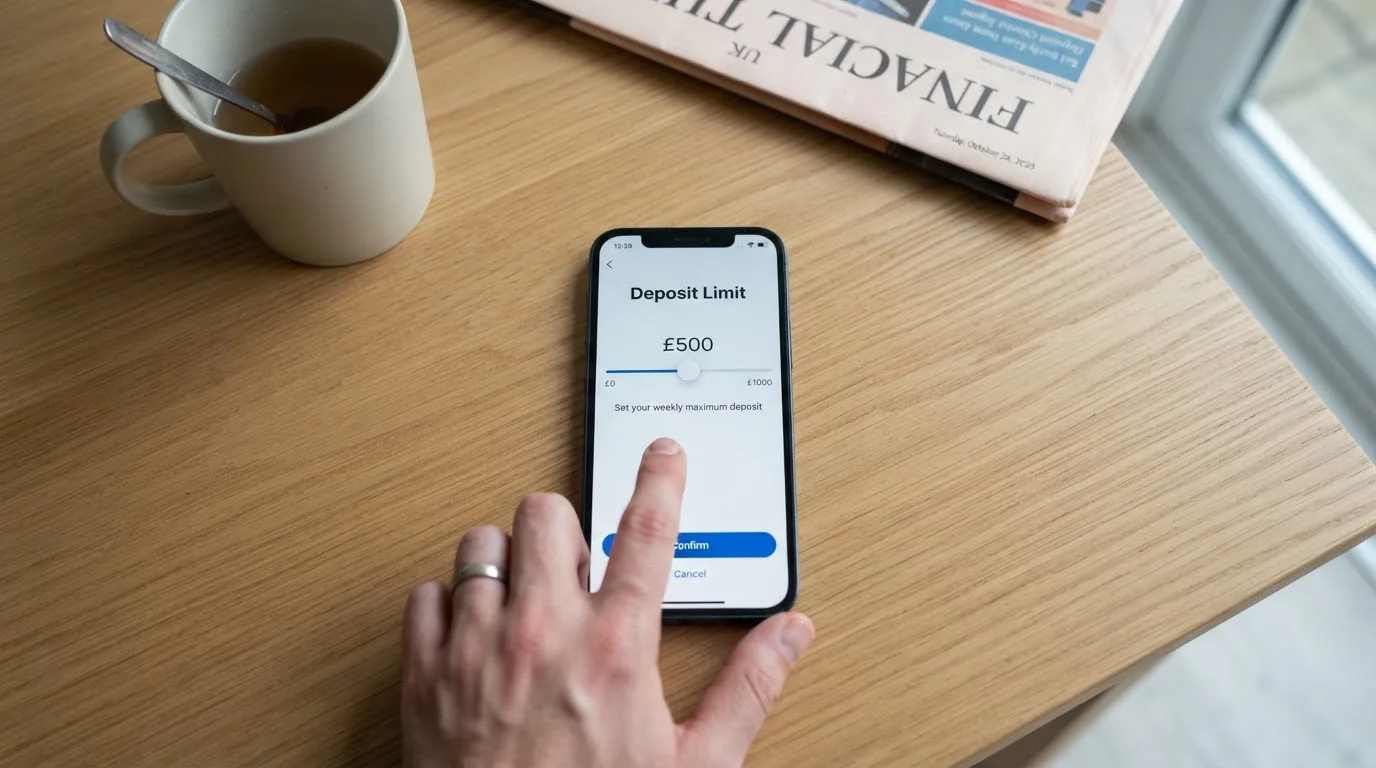
- Deposit limits. The operator must offer a fixed-time-frame gross deposit limit (RTS 12). The first changes have applied since 31 October 2025; a second phase was postponed to 30 September 2026.
- Time-outs. A short break from the account, typically 24 hours to six weeks.
- Self-exclusion via GAMSTOP. A national multi-operator exclusion scheme, mandatory for online operators since 31 March 2020. Periods: six months, one year, five years, or five years with auto-renewal, with a further seven years after the minimum period.
- Financial vulnerability check. A public-record check (not an income check, not a credit-reference check) where deposits minus withdrawals exceed £150 in a rolling 30 days.
- Financial risk assessments have been announced in a staged Commission plan (article of 7 July 2026), with no start date. Until a start date, do not treat affordability checks as in force.
The help-side services:
- GamCare runs the National Gambling Helpline.
- GambleAware funds treatment and the National Gambling Treatment Service.
- NHS gambling clinics run in several regions.
- Gamblers Anonymous runs peer-support meetings.
The runtime of self-exclusion matters: a punter who signs up for one year is locked out for eight years (the year plus seven) unless they ask GAMSTOP to remove it. The pattern is by design and not a typo.
The page’s reference to the offshore vs licensed framing picks up one more time here. An offshore site does not cover a punter under GAMSTOP, does not enforce the £150 vulnerability check, does not cap bonus wagering at 10x, does not offer the deposit limit, and does not sit inside the Commission’s complaints route. None of those protections depends on the punter being “in trouble”; they run by default on every GB-licensed account.
The crypto question is the one that surfaces in this section. Cryptocurrency deposits at GB-licensed operators are not established as a feature of the regulated product; an unlicensed site offering “anonymous crypto betting” runs without the GAMSTOP, the verification, the bonus cap, the £150 vulnerability check and the Commission complaints route. The trade-off — anonymity against every protection above — is the choice the punter makes.
Crypto and boxing betting on a UK-licensed site
The British crypto question is a plain one. Cryptocurrency deposits at GB-licensed operators are not established in the public framework. No GB-licensed bookmaker runs a Bitcoin or Litecoin account as a mainstream deposit option. Several unlicensed offshore sites do.
The difference matters because each licensed protection layer above (GAMSTOP, the vulnerability check, the bonus cap, the credit-card ban, the verification) does not run on an unlicensed account by design. The bitcoin punter on a licensed site pays the verification before the first deposit; the bitcoin punter on an unlicensed site does not. That is not a margin question, it is a protection question.
The licensed route for a punter who values pseudo-anonymity is not anonymous; the operator carries the identity. The unlicensed route is anonymous but unprotected. The compromise the punter reaches is between those two — and that is also the basis on which the regulator frames the question, not on whether one is “safer” by default.
Boxing betting bonuses and free bets on the reviewed set
The promoted offer on every reviewed brand is structured roughly the same way: a free-bet-on-qualifying-bet headline with a price minimum, a deadline and (where applicable) a stake-back on a losing accumulator.
BoyleSports: £20 in free bets when a £10 bet is placed (€30 in free bets for a €10 bet for Irish players).
Hollywoodbets: stake back as a free bet up to £30 on the first qualifying losing accumulator; stake £10+, 3+ legs, odds 4/1+, settled within seven days; one free bet per customer.
Unibet: £40 in free bets when you bet £20; minimum odds 2.0 (1/1); debit card or instant bank transfer; free bets expire 7 days from issue; new GB customers.
Coral: £40 in free bets when you bet £20; minimum odds 2.0 (1/1); £40 in free bets issued within seven days and expiring seven days later; new GB customers who opt in.
Bet600, Tote, DragonBet, DAZN Bet, Matchbook, Betfred: the headline offer varies by operator and includes the Betfred app’s standard free-bet or stake-back product on the running sportsbook promo line.
The free-bet value versus the qualifying-bet stake is the headline number. £20 free bets on a £10 qualifying bet (BoyleSports) carries a bigger headroom than £40 free bets on a £20 qualifying bet (Unibet / Coral). The free-bet stake is not paid back on a win, which the calculation above already priced in. The minimum odds and the expiry rule are the read-it-before-claiming points.
The promotion rules in force since 19 January 2026 are the framework above the offers:
- Wagering requirements on bonuses are capped at 10x — a £10 bonus at 50x would have needed £500 of qualifying bets; under the cap the equivalent is no more than £100.
- Mixed-product promotions requiring bets on two or more product types are banned. A “deposit on boxing to get free spins” style offer is no longer lawful.
The 10x cap is the cleanest piece of consumer protection the regulator has put in place over the last decade; its full effect is on the bonus that would have been the worst value. A punter reading any offer line on a UK site should check the wagering multiplier first.
Putting the cost side of boxing betting into numbers
The margin calculation in plain language, repeated once so the cost side is clear: the payout share of a market is 1 ÷ (1/odds on outcome 1 + … + 1/odds on outcome n) summed over every outcome of a single market. The margin is 1 minus that payout share. A clean two-way market at 1.90 / 1.90 carries a payout share of about 95.24 per cent and a margin of about 4.76 per cent.
For the methods-of-victory market on a competitive fight, each runner’s price is set by the operator and the implied probabilities add up to more than 100 per cent by a wider margin than the two-way price suggests. The cost to the punter rises from there.
For round-grouping markets, the brackets multiply and the implied probabilities add up further; the margin climbs again.
A single bet at a 1.90 price on a £10 stake returns £19.00 — stake × odds — for £9.00 of profit. A winning accumulator at a multiplied price of 6.00 on a £10 stake returns £60 for £50 of profit. The price is what the operator pays; the margin is what the operator has already taken off the price before the bet is placed. The return is the price stake times odds; the net profit is the stake times (odds − 1). The punter loses the margin every time on a single bet and gains the multiplied margin on every acca leg.
The expected cost of clearing a bonus is the turnover × margin: a £10 bonus with a 5x wagering requirement asks for £50 of bets, and at a market margin of 5% the statistical expected cost is roughly £2.50, before the bonus value is counted back. The required turnover is the bonus base times the wagering factor — in this case the £10 bonus multiplied by the 5x wagering requirement. The punter’s net depends on the value of the bonus minus the expected cost of clearing it.
The 10x cap in force since 19 January 2026 caps the maximum required turnover at 10x the bonus. A £10 bonus at 5x needs £50; a £10 bonus at 50x would have needed £500 and is no longer lawful.
The bookmaker’s margin in the headline number is the single biggest cost. The wagering requirement is the second. The credit-card ban and the verification gate are gates on the way in, not fees on the way through.
Boxing betting on a UK site in plain English
The shape on a licensed site reduces to four choices. The betting menu is the operator’s, the licence is the Commission’s, the menu does not include a list of “permitted” boxing bets, and every site carries GAMSTOP, the bonus cap and the £150 vulnerability check.
The cost of an outright on a heavy favourite is heavier than the cost of a price on a close match. The cost of an acca is the multiplied sum of every leg’s cost. The cost of an in-running bet is the same margin repriced live with the cash-out product layer on top.
A punter picks a brand by what it costs the punter in margin, what it offers in market depth, and what it does under the regulator. The reviews above name those for each brand; the comparison table summarises the licence and the boxing-side terms. The read on every brand is the one the previous section already landed, and the table is the one-stop view.
The verification before the first deposit, the credit-card ban, the bonus cap, the GAMSTOP coverage and the Commission’s complaints route are the licensed-side baseline a punter keeps in front of every other comparison.
What the next card on the calendar costs the punter to back
The headline price on the next title fight is the place the margin is most visible. The headline price on a long card is the place the menu is most uneven across the reviewed set. A Saturday-night main event at 1.30 against the underdog at 4.50 is roughly the same shape across the ten brands; a four-rounder on a smaller card is where the menu differences show. The punter running a single-ticket account on a close match and a multi-ticket account on a long card carries two different products on the same site.
The “free bet” headline on a welcome offer is a credit, not a refund, with a calendar and a minimum price. A punter who reads the calendar and the minimum price before claiming keeps more of the headline’s value than one who reads it after. A punter who acts on a predicted winner on the page is acting on a tipster’s word, not the licensed product; the licensed product carries a margin and a cash-out button, not a forecast.
Frequently asked questions
How does a bet on boxing actually work?
A bet picks one outcome from a market on a licensed UK site — most commonly a fighter to win, the method of victory, the round the fight ends in, or the over/under on total rounds. The decimal price on the bet slip is the multiple of the stake that pays out on a win. A winning £10 single at 3.00 returns £30 — the £10 stake back and £20 of profit. The bookmaker’s margin sits inside the headline price and is the same hidden cost on a heavy favourite as on an underdog.
How does boxing betting work in the UK — is it legal and how is it licensed?
Boxing betting in Great Britain is licensed under the Gambling Act 2005. Every operator taking bets from GB customers — wherever the operator is based — needs a Gambling Commission remote licence, and the Commission’s public register is the test of who holds one. The reviewed brands on this page each hold a remote general betting standard licence (real events); Matchbook and Coral also carry a remote betting intermediary category, the licence type for exchanges. The Act covers Great Britain (England, Scotland and Wales); Northern Ireland is outside the Act. There is no statutory list of permitted boxing markets; the operator’s licence conditions and the LCCP set the floor under what is offered.
How do I bet on boxing online without a credit card?
The credit-card ban for gambling in Great Britain has been in force since 14 April 2020 and covers credit-card-funded e-wallet payments. The licensed UK operators on this page accept debit cards, instant bank transfers and a set of e-wallets — Apple Pay, Paysafecard, Trustly, Skrill and PayPal across the reviewed brands. Each operator carries its own minimum deposit: DAZN Bet’s debit-card floor of £5 is the lowest in the reviewed set; PayPal deposits there start at £20. Verification of name, address and date of birth happens before the first deposit on every GB-licensed site.
How can I check that a bookmaker holds a Gambling Commission licence?
The Commission’s public register is searchable by business name, trading name, domain or account number. The register lists every licensed operator against a Commission account number and a set of licence categories — remote general betting standard (real events) is the relevant category for the reviewed set. The Commission’s own entry against each brand is the confirmation; the brand’s own page citing the licence number is a step to the register, not the licence itself. Licences quoted on a brand’s site are verifiable; licences announced without a number are not. Where the data has a hole, a punter who cannot find a brand on the register has found one worth avoiding.
How is the return on a bet worked out from the stake and the odds?
The return is stake × odds, where odds is the decimal price on the bet slip. The net profit is stake × (odds − 1). A £10 win at 2.50 returns £25 and makes £15 of profit. On a combination bet (double, treble, accumulator) the decimal price of the ticket is the multiplied product of the legs’ decimal prices. The bookmaker’s margin is already priced into every leg of the ticket and is the second-order cost of the bet.
What is the bookmaker’s margin and how can I see it in the odds?
The margin is what the bookmaker keeps, on average, of every unit staked on a market. It is calculated by adding the implied probabilities of every outcome of the market together — 1 ÷ decimal odds for each outcome — and subtracting the result from 1. A clean two-way market at 1.90 / 1.90 carries a payout share of about 95.24 per cent and a margin of about 4.76 per cent. Heavier-margin markets on boxing run method of victory and round grouping; the margin there is often 6 per cent to 10 per cent, sometimes higher on thinly-priced undercards. The margin is what a punter gives up on every bet and is the single biggest cost in a normal betting account.
Combat & motorsport – Icehockeyoddshub.com
Content created by the «Icehockeyoddshub.com» team
